Kingdom
Pseudomonadati
Phylum
Pseudomonadota
Class
Gammaproteobacteria
Order
Pseudomonadales
Family
Pseudomonadaceae
Genus
Pseudomonas
Description
Taxonomy
| Kingdom | Pseudomonadati |
|---|---|
| Phylum | Pseudomonadota |
| Class | Gammaproteobacteria |
| Order | Pseudomonadales |
| Family | Pseudomonadaceae |
| Genus | Pseudomonas |
| Species | Pseudomonas fluorescens |
| Strain | strain LBUM677 |
Profile
| Physiology | |
|---|---|
| Gram staining properties | Negative |
| Shape | Rod |
| Mobility | Yes |
| Flagellar presence | Yes |
| Number of membranes | 2 |

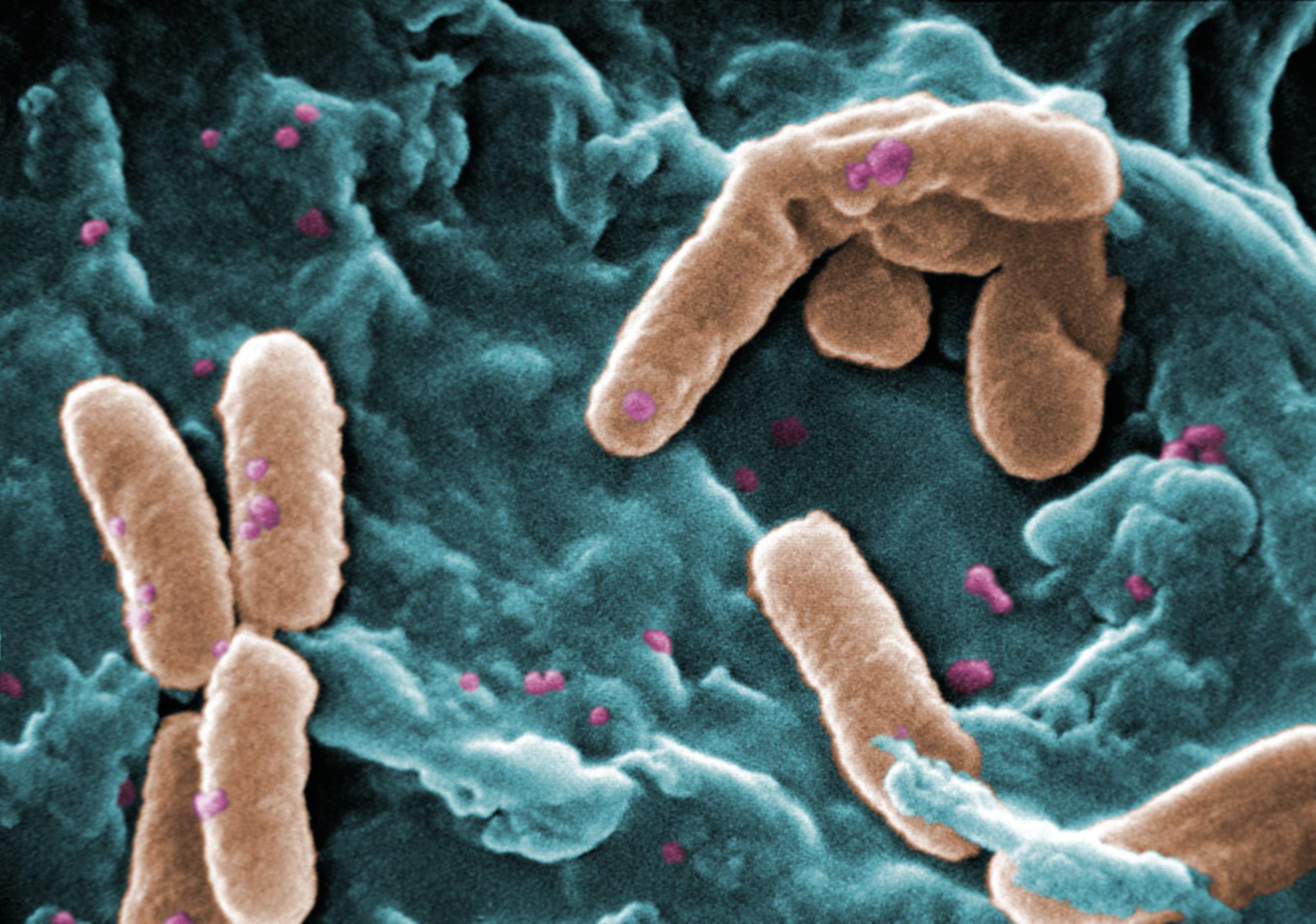
Image source: Wikipedia/Wikimedia
| Ecology, Host, and Life Cycle | |
|---|---|
| Oxygen requirements | Aerobe |
| Optimal temperature | 25 |
| Temperature range | Mesophilic |
| Habitat | Multiple |
| Biotic relationship | Free living |
| Host(s) | Homo sapiens, Metazoa, Viridiplantae |
| Cell arrangement | Singles |
| Sporulation | Not Available |
| Energy source | Heterotroph |
| Pathogenicity | Animal |
Gene Summary
Adenine Count
1222612 bp
Thymine Count
1214022 bp
Guanine Count
1849421 bp
Cytosine Count
1854265 bp
Genome Length
6140320 bp
Protein-coding Genes
5336 genes
Non-Coding Genes
181 genes
# of Chromosomes/Plasmids
1
Genes
| Name | Locus Tag | UniProt ID | Strand Orientation | Gene Start/End | Protein Molecular Weight |
|---|---|---|---|---|---|
| dihydroneopterin aldolase | E4T63_RS25520 | Not Available | Negative | 5505352 - 5505708 | 13194.8 |
| glycerol-3-phosphate 1-o-acyltransferase plsy | E4T63_RS25525 | Not Available | Positive | 5505783 - 5506352 | 20297.6 |
| trna (adenosine(37)-n6)-threonylcarbamoyltransferase complex transferase subunit tsad | E4T63_RS25530 | Not Available | Negative | 5506388 - 5507413 | 36406.2 |
| 30s ribosomal protein s21 | E4T63_RS25535 | Not Available | Positive | 5507613 - 5507828 | 8386.25 |
| dna primase | E4T63_RS25540 | Not Available | Positive | 5508310 - 5510274 | 73052.5 |
| rna polymerase sigma factor rpod | E4T63_RS25545 | Not Available | Positive | 5510342 - 5512189 | 69307.8 |
| bifunctional diguanylate cyclase/phosphodiesterase | E4T63_RS25550 | Not Available | Positive | 5512316 - 5516062 | 139967.0 |
| Trna-met | Not Available | Not Available | Positive | 5516078 - 5516154 | Not Available |
| phosphomannomutase/phosphoglucomutase | E4T63_RS28580 | Not Available | Positive | 5516281 - 5516983 | 25705.4 |
| duf262 domain-containing protein | E4T63_RS25570 | Not Available | Positive | 5517367 - 5518470 | 43285.6 |
Pathways
0 pathways
No pathways found
No metabolic pathways have been associated with this bacterium yet.