Kingdom
Pseudomonadati
Phylum
Verrucomicrobiota
Class
Verrucomicrobiia
Order
Verrucomicrobiales
Family
Akkermansiaceae
Genus
Akkermansia
Description
Taxonomy
| Kingdom | Pseudomonadati |
|---|---|
| Phylum | Verrucomicrobiota |
| Class | Verrucomicrobiia |
| Order | Verrucomicrobiales |
| Family | Akkermansiaceae |
| Genus | Akkermansia |
| Species | Akkermansia muciniphila |
| Strain | strain 139 |
Profile
| Physiology | |
|---|---|
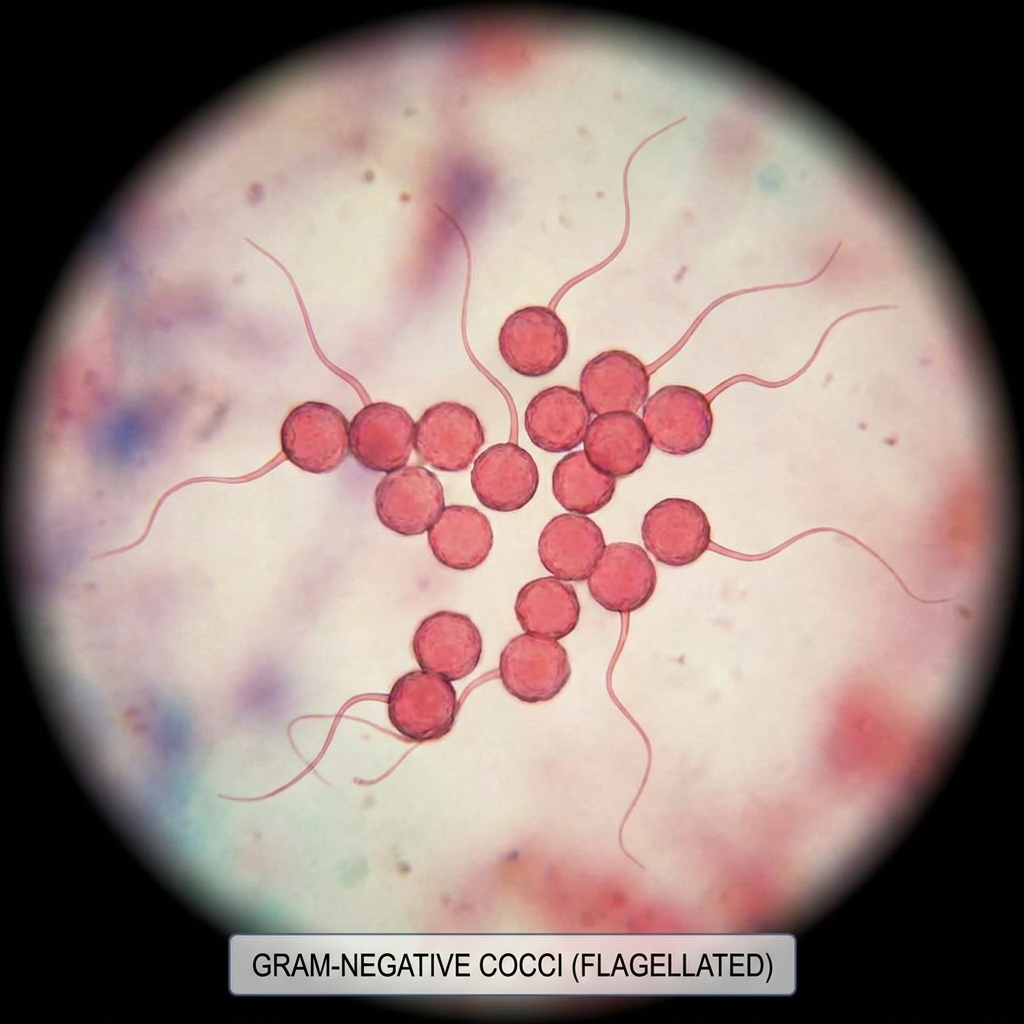
| Gram staining properties | Negative |
| Shape | Cocci |
| Mobility | No |
| Flagellar presence | Yes |
| Number of membranes | 2 |

Image source: Wikipedia/Wikimedia
| Ecology, Host, and Life Cycle | |
|---|---|
| Oxygen requirements | Anaerobe |
| Optimal temperature | 37 |
| Temperature range | Mesophilic |
| Habitat | HostAssociated |
| Biotic relationship | Free living |
| Host(s) | Homo sapiens, Metazoa |
| Cell arrangement | Pairs - Singles |
| Sporulation | Nonsporulating |
| Energy source | Not Available |
| Pathogenicity | Not Available |
Gene Summary
Adenine Count
622875 bp
Thymine Count
617287 bp
Guanine Count
780467 bp
Cytosine Count
781288 bp
Genome Length
2801917 bp
Protein-coding Genes
2319 genes
Non-Coding Genes
66 genes
# of Chromosomes/Plasmids
1
Genes
| Name | Locus Tag | UniProt ID | Strand Orientation | Gene Start/End | Protein Molecular Weight |
|---|---|---|---|---|---|
| ion transporter | EYB66_RS00305 | Not Available | Negative | 73719 - 74489 | 29329.3 |
| arsenate reductase family protein | EYB66_RS00310 | Not Available | Negative | 74498 - 74857 | 13502.3 |
| mbl fold metallo-hydrolase rna specificity domain-containing protein | EYB66_RS00315 | Not Available | Negative | 75025 - 76431 | 52422.9 |
| twin-arginine translocase tata/tate family subunit | EYB66_RS12265 | Not Available | Negative | 76936 - 77235 | 10902.3 |
| tetratricopeptide repeat protein | EYB66_RS00325 | Not Available | Negative | 77293 - 78720 | 52461.0 |
| pseudouridine synthase | EYB66_RS00330 | Not Available | Negative | 78739 - 80334 | 60403.8 |
| small basic protein | EYB66_RS00335 | Not Available | Negative | 80538 - 80693 | 5702.06 |
| trna (guanosine(37)-n1)-methyltransferase trmd | EYB66_RS00340 | Not Available | Negative | 80815 - 81534 | 26318.7 |
| peptide chain release factor 2 | EYB66_RS00345 | Not Available | Negative | 81547 - 82650 | 41433.8 |
| metal-dependent transcriptional regulator | EYB66_RS00350 | Not Available | Negative | 83012 - 83413 | 14967.2 |
Pathways
0 pathways
No pathways found
No metabolic pathways have been associated with this bacterium yet.
Health Effects
| Health Condition | Relation | Reference |
|---|---|---|
| Food allergy | Causes | PMC11210198 |
| Thinning of the jejunum mucus layer | Causes | PMC7527075 |