Kingdom
Pseudomonadati
Phylum
Verrucomicrobiota
Class
Verrucomicrobiia
Order
Verrucomicrobiales
Family
Akkermansiaceae
Genus
Akkermansia
Description
Taxonomy
| Kingdom | Pseudomonadati |
|---|---|
| Phylum | Verrucomicrobiota |
| Class | Verrucomicrobiia |
| Order | Verrucomicrobiales |
| Family | Akkermansiaceae |
| Genus | Akkermansia |
| Species | Akkermansia muciniphila |
| Strain | strain 139 |
Profile
| Physiology | |
|---|---|
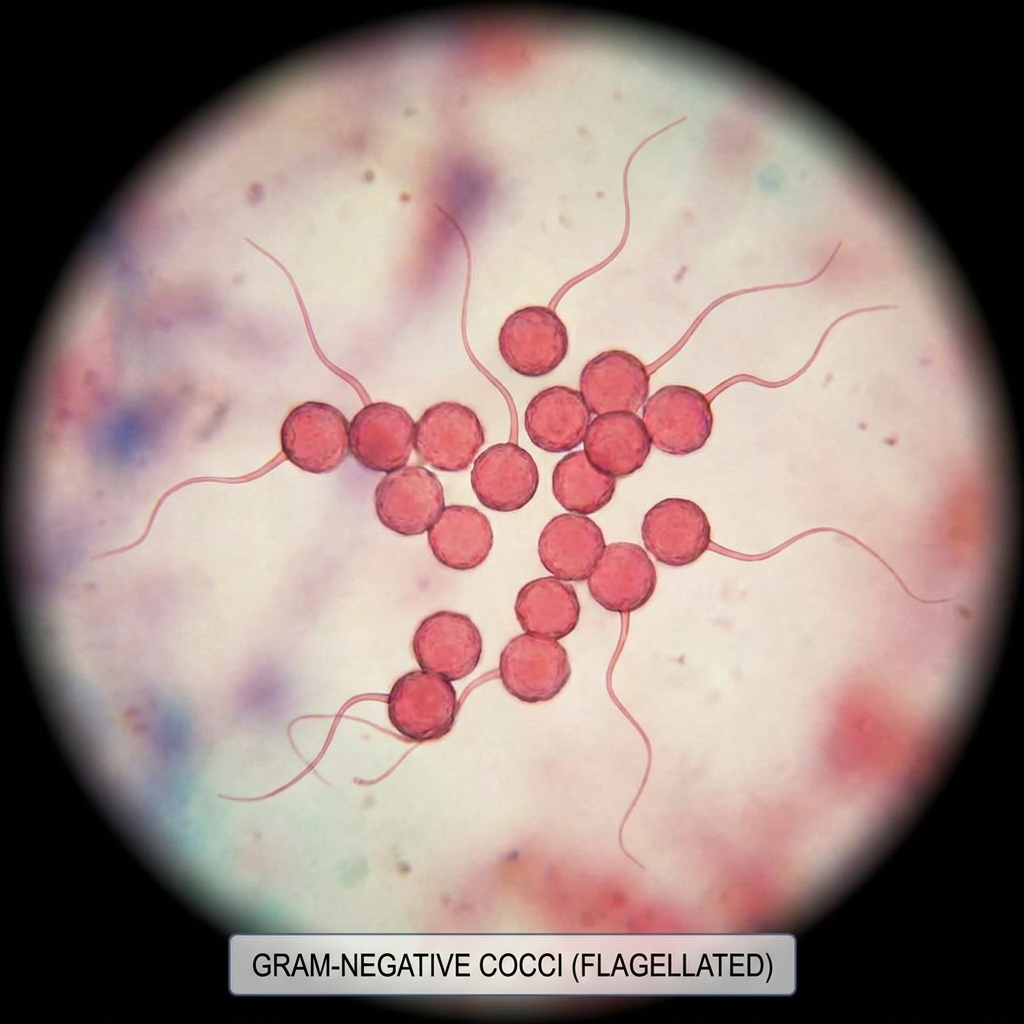
| Gram staining properties | Negative |
| Shape | Cocci |
| Mobility | No |
| Flagellar presence | Yes |
| Number of membranes | 2 |

Image source: Wikipedia/Wikimedia
| Ecology, Host, and Life Cycle | |
|---|---|
| Oxygen requirements | Anaerobe |
| Optimal temperature | 37 |
| Temperature range | Mesophilic |
| Habitat | HostAssociated |
| Biotic relationship | Free living |
| Host(s) | Homo sapiens, Metazoa |
| Cell arrangement | Pairs - Singles |
| Sporulation | Nonsporulating |
| Energy source | Not Available |
| Pathogenicity | Not Available |
Gene Summary
Adenine Count
622875 bp
Thymine Count
617287 bp
Guanine Count
780467 bp
Cytosine Count
781288 bp
Genome Length
2801917 bp
Protein-coding Genes
2319 genes
Non-Coding Genes
66 genes
# of Chromosomes/Plasmids
1
Genes
| Name | Locus Tag | UniProt ID | Strand Orientation | Gene Start/End | Protein Molecular Weight |
|---|---|---|---|---|---|
| hydroxymethylbilane synthase | EYB66_RS11375 | Not Available | Negative | 2698746 - 2699723 | 35147.5 |
| glutamyl-trna reductase | EYB66_RS11380 | Not Available | Negative | 2699713 - 2700714 | 36854.8 |
| cytochrome c biogenesis protein ccsa | EYB66_RS11385 | Not Available | Negative | 2700735 - 2701493 | 27625.9 |
| gtp cyclohydrolase fole2 | EYB66_RS11390 | Not Available | Negative | 2701514 - 2702308 | 30080.0 |
| 30s ribosomal protein s18 | EYB66_RS11395 | Not Available | Negative | 2702415 - 2702660 | 9604.97 |
| 50s ribosomal protein l33 | EYB66_RS11400 | Not Available | Negative | 2702692 - 2702865 | 6829.48 |
| trar/dksa family transcriptional regulator | EYB66_RS12335 | Not Available | Negative | 2702899 - 2703720 | 29475.9 |
| rok family protein | EYB66_RS11410 | Not Available | Positive | 2703956 - 2704915 | 33911.0 |
| rsmb/nop family class i sam-dependent rna methyltransferase | EYB66_RS11415 | Not Available | Positive | 2704920 - 2705888 | 35446.7 |
| metallophosphoesterase family protein | EYB66_RS11420 | Not Available | Positive | 2705895 - 2706404 | 18892.6 |
Pathways
0 pathways
No pathways found
No metabolic pathways have been associated with this bacterium yet.
Health Effects
| Health Condition | Relation | Reference |
|---|---|---|
| Food allergy | Causes | PMC11210198 |
| Thinning of the jejunum mucus layer | Causes | PMC7527075 |