
Xanthomonas oryzae strain NCPPB4346

Gram-negativeRodMotileAerobe

Kingdom

Pseudomonadati

Phylum

Pseudomonadota

Class

Gammaproteobacteria

Order

Lysobacterales

Family

Lysobacteraceae

Genus

Xanthomonas

Description

Xanthomonas oryzae strain NCPPB4346 is a gram-negative, rod-shaped bacterium that is classified as an aerobe, requiring oxygen for its metabolic processes. This strain is known to be motile due to the presence of flagella, which facilitates its movement in the environment. X. oryzae is mesophilic, thriving in moderate temperature ranges that are conducive to its growth and reproduction. This bacterium is specifically associated with the host plant Oryza sativa, commonly known as rice. It plays a significant role in the pathogenesis of bacterial leaf blight, a serious disease that affects rice crops, leading to substantial agricultural losses. The strain NCPPB4346 is categorized as free-living, indicating that it can exist independently in the environment but typically interacts closely with its plant host. X. oryzae strain NCPPB4346 possesses a single replicon and is characterized by a double membrane structure, which is typical for gram-negative bacteria. The accession number for this strain is NZ_CP036253.1, which provides a reference point for further research and genomic studies. The ecological insight from this information highlights the interaction between X. oryzae and its rice host, emphasizing the importance of understanding microbial pathogens in agricultural systems. Effective management strategies are crucial to mitigate the effects of bacterial leaf blight and ensure food security, particularly in regions dependent on rice cultivation.

Taxonomy

KingdomPseudomonadati
PhylumPseudomonadota
ClassGammaproteobacteria
OrderLysobacterales
FamilyLysobacteraceae
GenusXanthomonas
SpeciesXanthomonas oryzae
Strainstrain NCPPB4346

Profile

Physiology
Gram staining propertiesNegative
ShapeRod
MobilityYes
Flagellar presenceYes
Number of membranes2
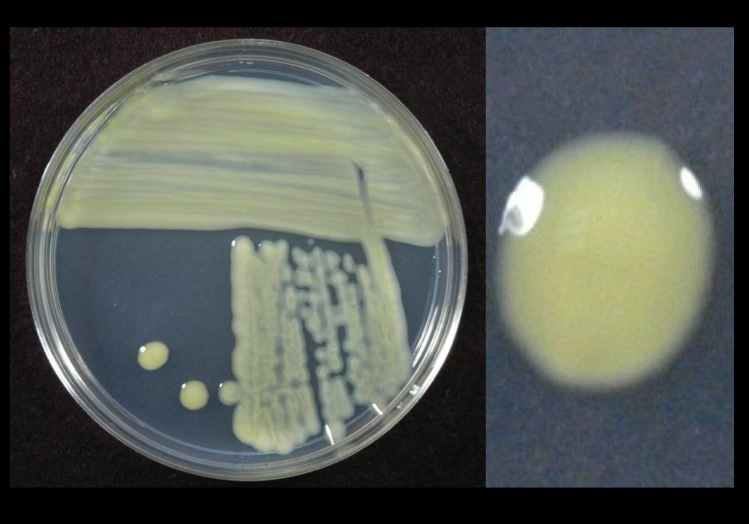
Image of Xanthomonas oryzae strain NCPPB4346
AI-generated image based on bacteria physiology
Ecology, Host, and Life Cycle
Oxygen requirementsAerobe
Optimal temperatureNot Available
Temperature rangeMesophilic
HabitatHostAssociated
Biotic relationshipFree living
Host(s)Oryza sativa
Cell arrangementNot Available
SporulationNot Available
Energy sourceNot Available
PathogenicityNot Available

Genome Summary

Xanthomonas oryzae strain NCPPB4346 chromosome, complete genome.

Gene Summary

Adenine Count

892004 bp

Thymine Count

893262 bp

Guanine Count

1582493 bp

Cytosine Count

1581815 bp

Genome Length

4949574 bp

Protein-coding Genes

4236 genes

Non-Coding Genes

300 genes

# of Chromosomes/Plasmids

1

Genes

NameLocus TagUniProt IDStrand OrientationGene Start/EndProtein Molecular Weight
pyridoxal kinaseEYR26_RS14610Q1LFU5Negative3085481 - 308638931920.4
molecular chaperone dnajEYR26_RS14620Q2P458Negative3086917 - 308804740450.7
molecular chaperone dnakEYR26_RS14625Q2P459Negative3088200 - 309012568759.0
nucleotide exchange factor grpeEYR26_RS14630Q2P460Negative3090267 - 309078518927.4
heat-inducible transcriptional repressor hrcaEYR26_RS14635Q5H188Negative3090886 - 309191737540.4
dna repair protein recnEYR26_RS14640Q9PB02Positive3092055 - 309371959540.4
ferric iron uptake transcriptional regulatorEYR26_RS14645Q03456Negative3094159 - 309456915775.8
outer membrane protein assembly factor bameEYR26_RS14650Q8PAL4Positive3094674 - 309506914892.7
rnfh family proteinEYR26_RS14660Q9PAZ9Negative3095417 - 30956929823.92
type ii toxin-antitoxin system rata family toxinEYR26_RS14665O68560Negative3095706 - 309613716230.5

Displaying genes 2821 – 2830 of 4536 in total

Pathways

0 pathways

No pathways found

No metabolic pathways have been associated with this bacterium yet.
Metabolites

244 records
Metabolite IDMetabolite nameStructureCAS number
BASm0000047sophoroseC12H22O11Chemical structure of sophoroseNot available
Average342.297Da
Monoisotopic342.116211528Da
BASm0000217alpha-ribazoleC14H18N2O4Chemical structure of alpha-ribazoleNot available
Average278.3037Da
Monoisotopic278.126657074Da
BASm0000237(R)-4'-phosphopantothenateC9H18NO8PChemical structure of (R)-4'-phosphopantothenateNot available
Average299.2149Da
Monoisotopic299.0770031Da
BASm00002502,5-didehydro-D-gluconateC6H7O7Chemical structure of 2,5-didehydro-D-gluconate53736-12-2
Average191.1156Da
Monoisotopic191.019177578Da
BASm00002512-dehydropantoateC6H9O4Chemical structure of 2-dehydropantoateNot available
Average145.1333Da
Monoisotopic145.050083776Da
BASm00002543-hydroxy-2-methylpropanoateC4H7O3Chemical structure of 3-hydroxy-2-methylpropanoateNot available
Average103.098Da
Monoisotopic103.0400677Da
BASm0000274aldehydo-D-galacturonateC6H9O7Chemical structure of aldehydo-D-galacturonateNot available
Average193.132Da
Monoisotopic193.0353762Da
BASm0000377(S)-malateC4H4O5Chemical structure of (S)-malateNot available
Average132.0716Da
Monoisotopic132.005873238Da
BASm0000387(6R)-5,10-methylene-5,6,7,8-tetrahydrofolateC20H21N7O6Chemical structure of (6R)-5,10-methylene-5,6,7,8-tetrahydrofolateNot available
Average455.432Da
Monoisotopic455.1564286Da
BASm0000399(S)-allantoinC4H6N4O3Chemical structure of (S)-allantoin97-59-6
Average158.1154Da
Monoisotopic158.0439901Da

Displaying 1–10 of 244 metabolites

Health Effects

Health ConditionRelationReference
Bacteria leaf blightCausesPMC10512380

Displaying health effects 1 – 1 of 1 in total
