
Kingdom
Thermoproteati
Phylum
Thermoproteota
Class
Thermoprotei
Order
Sulfolobales
Family
Sulfolobaceae
Genus
Saccharolobus
Description
Taxonomy
| Kingdom | Thermoproteati |
|---|---|
| Phylum | Thermoproteota |
| Class | Thermoprotei |
| Order | Sulfolobales |
| Family | Sulfolobaceae |
| Genus | Saccharolobus |
| Species | Saccharolobus solfataricus |
| Strain | strain SARC-N |
Profile
| Physiology | |
|---|---|
| Gram staining properties | Negative |
| Shape | Cocci |
| Mobility | No |
| Flagellar presence | Yes |
| Number of membranes | 1 |
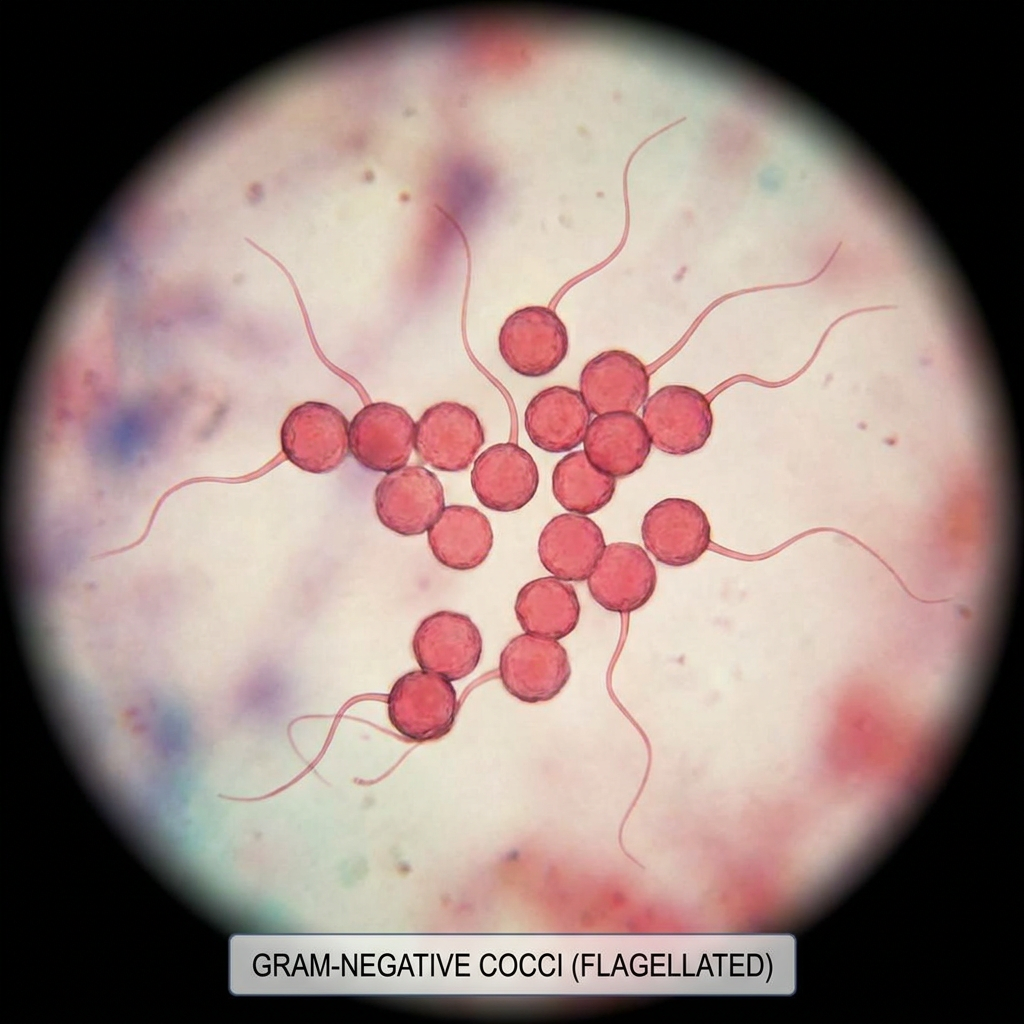
AI-generated image based on bacteria physiology
| Ecology, Host, and Life Cycle | |
|---|---|
| Oxygen requirements | Aerobe |
| Optimal temperature | 85 |
| Temperature range | Hyperthermophilic |
| Habitat | Specialized |
| Biotic relationship | Free living |
| Host(s) | Not Available |
| Cell arrangement | Singles |
| Sporulation | Not Available |
| Energy source | Lithotroph |
| Pathogenicity | Not Available |
Gene Summary
Adenine Count
845692 bp
Thymine Count
860194 bp
Guanine Count
474735 bp
Cytosine Count
477518 bp
Genome Length
2658139 bp
Protein-coding Genes
2883 genes
Non-Coding Genes
49 genes
# of Chromosomes/Plasmids
1
Genes
| Name | Locus Tag | UniProt ID | Strand Orientation | Gene Start/End | Protein Molecular Weight |
|---|---|---|---|---|---|
| sugar abc transporter permease | SULN_RS10920 | Not Available | Negative | 1916372 - 1917253 | 32457.9 |
| carbohydrate abc transporter permease | SULN_RS10925 | Not Available | Negative | 1917264 - 1918142 | 33569.7 |
| rhodanese-like domain-containing protein | SULN_RS10930 | Not Available | Negative | 1918151 - 1919722 | 56783.9 |
| glycoside hydrolase family 57 protein | SULN_RS10935 | Not Available | Positive | 1919921 - 1922629 | 101486.0 |
| apc family permease | SULN_RS10940 | Not Available | Negative | 1922637 - 1923890 | 45687.4 |
| sodium:calcium antiporter | SULN_RS10945 | Not Available | Negative | 1923927 - 1924850 | 33730.5 |
| hypothetical protein | SULN_RS10950 | Not Available | Positive | 1925033 - 1926838 | 65106.9 |
| holliday junction resolvase hje | SULN_RS10955 | Not Available | Negative | 1926827 - 1927234 | 15453.0 |
| aminotransferase class i/ii-fold pyridoxal phosphate-dependent enzyme | SULN_RS10960 | Not Available | Positive | 1927306 - 1928376 | 40504.7 |
| rhodanese-like domain-containing protein | SULN_RS10965 | Not Available | Negative | 1928535 - 1929513 | 35468.5 |
Pathways
0 pathways
No pathways found
No metabolic pathways have been associated with this bacterium yet.
Health Effects
No health effects information available for this bacterium.