Kingdom
Pseudomonadati
Phylum
Pseudomonadota
Class
Betaproteobacteria
Order
Burkholderiales
Family
Oxalobacteraceae
Genus
Massilia
Description
Taxonomy
| Kingdom | Pseudomonadati |
|---|---|
| Phylum | Pseudomonadota |
| Class | Betaproteobacteria |
| Order | Burkholderiales |
| Family | Oxalobacteraceae |
| Genus | Massilia |
| Species | Massilia sp. YMA4 |
| Strain | No strain |
Profile
| Physiology | |
|---|---|
| Gram staining properties | Gram-negative |
| Shape | rod |
| Mobility | Not Available |
| Flagellar presence | Not Available |
| Number of membranes | Not Available |

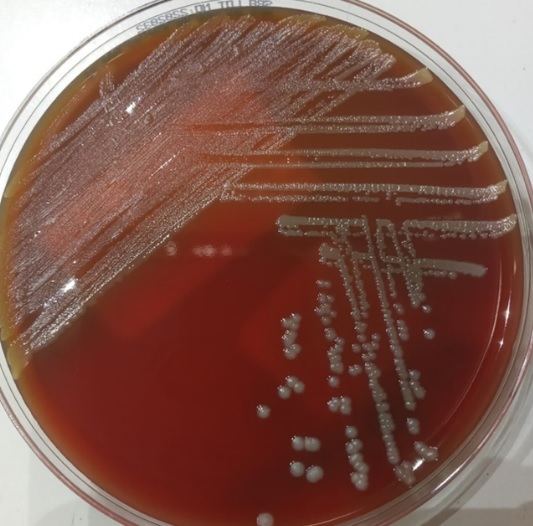
Image source: Wikipedia/Wikimedia
| Ecology, Host, and Life Cycle | |
|---|---|
| Oxygen requirements | Not Available |
| Optimal temperature | Not Available |
| Temperature range | Not Available |
| Habitat | Not Available |
| Biotic relationship | Not Available |
| Host(s) | Not Available |
| Cell arrangement | Not Available |
| Sporulation | Not Available |
| Energy source | Not Available |
| Pathogenicity | Not Available |
Gene Summary
Adenine Count
1071224 bp
Thymine Count
1068726 bp
Guanine Count
2090094 bp
Cytosine Count
2098737 bp
Genome Length
6328781 bp
Protein-coding Genes
5413 genes
Non-Coding Genes
108 genes
# of Chromosomes/Plasmids
1
Genes
| Name | Locus Tag | UniProt ID | Strand Orientation | Gene Start/End | Protein Molecular Weight |
|---|---|---|---|---|---|
| hypothetical protein | DPH57_RS08555 | Not Available | Positive | 2028843 - 2029310 | 17141.7 |
| pep-cterm sorting domain-containing protein | DPH57_RS27910 | Not Available | Positive | 2029562 - 2030212 | 22680.5 |
| acyltransferase family protein | DPH57_RS08565 | Not Available | Negative | 2030209 - 2031357 | 42161.0 |
| succinylglutamate desuccinylase/aspartoacylase family protein | DPH57_RS08570 | Not Available | Positive | 2031419 - 2032378 | 34756.1 |
| ycii family protein | DPH57_RS08575 | Not Available | Negative | 2032427 - 2032768 | 11862.0 |
| quaternary ammonium compound efflux smr transporter suge | DPH57_RS08580 | Not Available | Negative | 2032801 - 2033121 | 10711.7 |
| arsr/smtb family transcription factor | DPH57_RS08585 | Not Available | Positive | 2033355 - 2033660 | 11238.8 |
| alkene reductase | DPH57_RS08590 | Not Available | Positive | 2033712 - 2034767 | 37998.1 |
| mbl fold metallo-hydrolase | DPH57_RS08595 | Not Available | Negative | 2035132 - 2036088 | 33685.2 |
| 1-acyl-sn-glycerol-3-phosphate acyltransferase | DPH57_RS08600 | Not Available | Positive | 2036415 - 2037035 | 23705.0 |
Pathways
0 pathways
No pathways found
No metabolic pathways have been associated with this bacterium yet.
Health Effects
No health effects information available for this bacterium.