Kingdom
Pseudomonadati
Phylum
Pseudomonadota
Class
Betaproteobacteria
Order
Burkholderiales
Family
Oxalobacteraceae
Genus
Massilia
Description
Taxonomy
| Kingdom | Pseudomonadati |
|---|---|
| Phylum | Pseudomonadota |
| Class | Betaproteobacteria |
| Order | Burkholderiales |
| Family | Oxalobacteraceae |
| Genus | Massilia |
| Species | Massilia sp. YMA4 |
| Strain | No strain |
Profile
| Physiology | |
|---|---|
| Gram staining properties | Gram-negative |
| Shape | rod |
| Mobility | Not Available |
| Flagellar presence | Not Available |
| Number of membranes | Not Available |

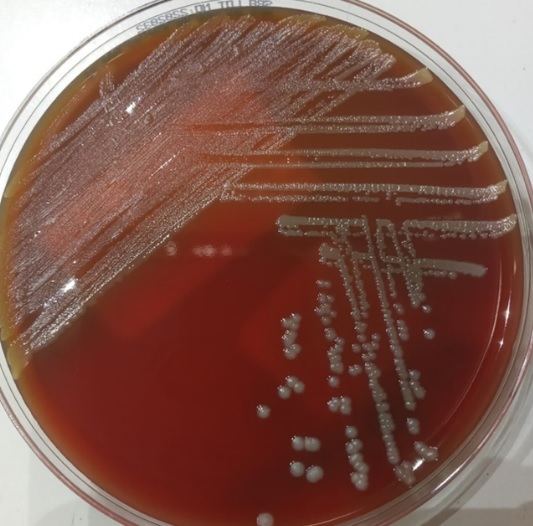
Image source: Wikipedia/Wikimedia
| Ecology, Host, and Life Cycle | |
|---|---|
| Oxygen requirements | Not Available |
| Optimal temperature | Not Available |
| Temperature range | Not Available |
| Habitat | Not Available |
| Biotic relationship | Not Available |
| Host(s) | Not Available |
| Cell arrangement | Not Available |
| Sporulation | Not Available |
| Energy source | Not Available |
| Pathogenicity | Not Available |
Gene Summary
Adenine Count
1071224 bp
Thymine Count
1068726 bp
Guanine Count
2090094 bp
Cytosine Count
2098737 bp
Genome Length
6328781 bp
Protein-coding Genes
5413 genes
Non-Coding Genes
108 genes
# of Chromosomes/Plasmids
1
Genes
| Name | Locus Tag | UniProt ID | Strand Orientation | Gene Start/End | Protein Molecular Weight |
|---|---|---|---|---|---|
| tetratricopeptide repeat protein | DPH57_RS07570 | Not Available | Negative | 1767606 - 1768733 | 38057.5 |
| exea family protein | DPH57_RS07575 | Not Available | Negative | 1768730 - 1769623 | 32885.2 |
| pilus (msha type) biogenesis protein mshl | DPH57_RS07580 | Not Available | Negative | 1769623 - 1771392 | 61966.5 |
| msha biogenesis protein mshk | DPH57_RS07585 | Not Available | Negative | 1771389 - 1771775 | 13210.2 |
| type ii secretion system protein gspm | DPH57_RS07590 | Not Available | Negative | 1771772 - 1772539 | 27427.3 |
| msha biogenesis protein msha | DPH57_RS07595 | Not Available | Negative | 1772536 - 1773243 | 24779.8 |
| agglutinin biogenesis protein mshi | DPH57_RS07600 | Not Available | Negative | 1773240 - 1774187 | 33931.8 |
| duf6701 domain-containing protein | DPH57_RS07605 | Not Available | Negative | 1774323 - 1777433 | 108813.0 |
| pilx n-terminal domain-containing pilus assembly protein | DPH57_RS07610 | Not Available | Negative | 1777430 - 1777867 | 15284.6 |
| prepilin-type n-terminal cleavage/methylation domain-containing protein | DPH57_RS07615 | Not Available | Negative | 1777864 - 1778679 | 28380.3 |
Pathways
0 pathways
No pathways found
No metabolic pathways have been associated with this bacterium yet.
Health Effects
No health effects information available for this bacterium.