Kingdom
Pseudomonadati
Phylum
Pseudomonadota
Class
Gammaproteobacteria
Order
Pseudomonadales
Family
Pseudomonadaceae
Genus
Pseudomonas
Description
Taxonomy
| Kingdom | Pseudomonadati |
|---|---|
| Phylum | Pseudomonadota |
| Class | Gammaproteobacteria |
| Order | Pseudomonadales |
| Family | Pseudomonadaceae |
| Genus | Pseudomonas |
| Species | Pseudomonas chlororaphis |
| Strain | strain B25 |
Profile
| Physiology | |
|---|---|
| Gram staining properties | Negative |
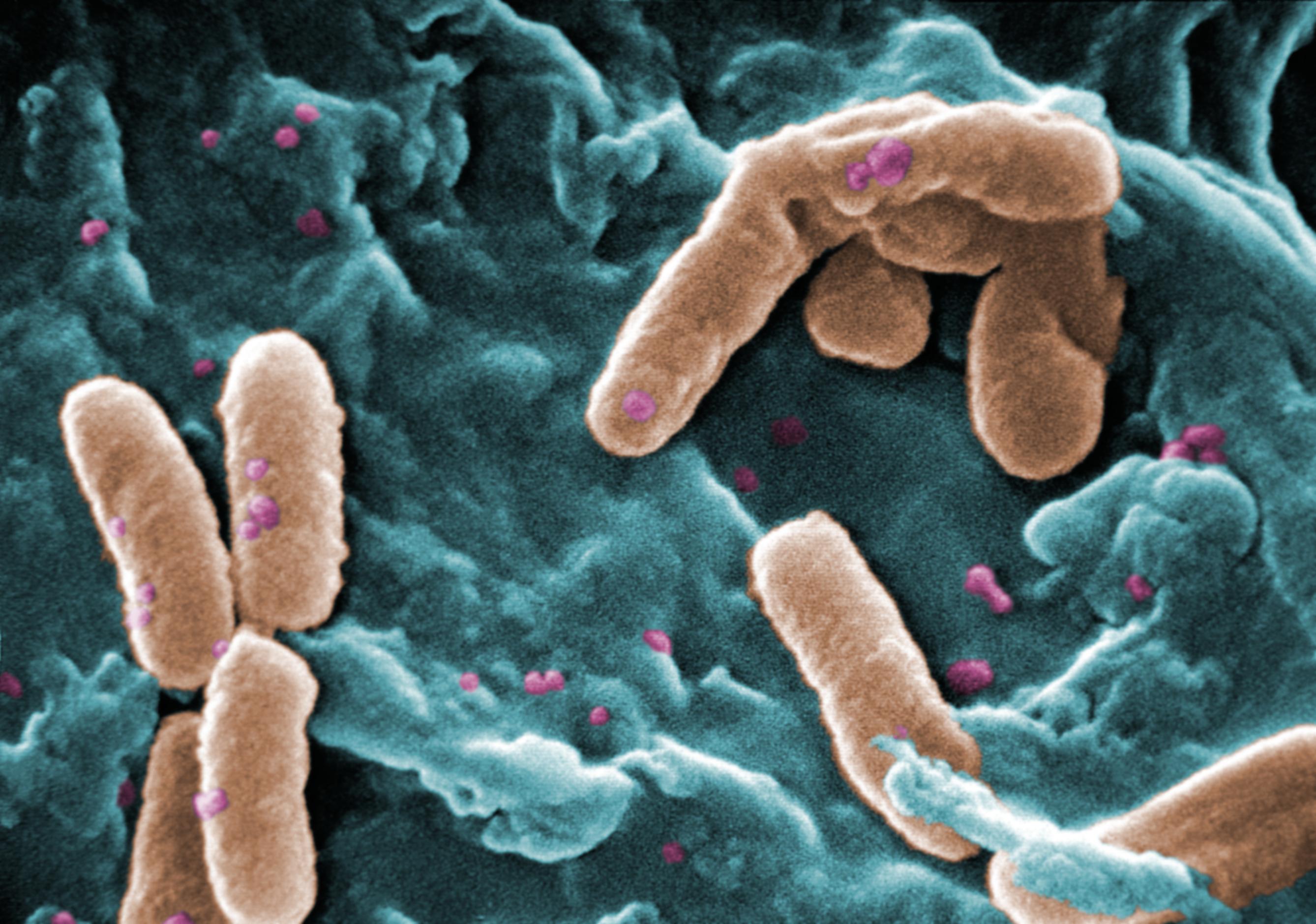
| Shape | Rod |
| Mobility | Not Available |
| Flagellar presence | Not Available |
| Number of membranes | Not Available |

Image source: Wikipedia/Wikimedia
| Ecology, Host, and Life Cycle | |
|---|---|
| Oxygen requirements | Not Available |
| Optimal temperature | Not Available |
| Temperature range | Not Available |
| Habitat | nodules of Chamaecytisus albus; rhizosphere; root nodules |
| Biotic relationship | Not Available |
| Host(s) | Viridiplantae, Brassica napus var. napus, Persea americana |
| Cell arrangement | Not Available |
| Sporulation | Not Available |
| Energy source | Not Available |
| Pathogenicity | Animal |
Gene Summary
Adenine Count
1335624 bp
Thymine Count
1334168 bp
Guanine Count
2173770 bp
Cytosine Count
2173031 bp
Genome Length
7016593 bp
Protein-coding Genes
6219 genes
Non-Coding Genes
229 genes
# of Chromosomes/Plasmids
1
Genes
| Name | Locus Tag | UniProt ID | Strand Orientation | Gene Start/End | Protein Molecular Weight |
|---|---|---|---|---|---|
| Trna-gly | Not Available | Not Available | Positive | 4130649 - 4130724 | Not Available |
| cdp-diacylglycerol--glycerol-3-phosphate 3-phosphatidyltransferase | C4K04_RS18860 | Not Available | Negative | 4130787 - 4131347 | 20658.9 |
| excinuclease abc subunit uvrc | C4K04_RS18865 | Not Available | Negative | 4131796 - 4133619 | 67179.4 |
| uvry/sira/gaca family response regulator transcription factor | C4K04_RS18870 | Not Available | Negative | 4133622 - 4134263 | 23395.8 |
| helix-turn-helix domain-containing protein | C4K04_RS18875 | Not Available | Negative | 4134409 - 4134774 | 13506.0 |
| dna-binding protein | C4K04_RS18880 | Not Available | Positive | 4134856 - 4135086 | 8199.85 |
| gnat family n-acetyltransferase | C4K04_RS18885 | Not Available | Negative | 4135143 - 4135589 | 16711.2 |
| carbon-nitrogen hydrolase family protein | C4K04_RS18890 | Not Available | Negative | 4135586 - 4136344 | 25784.1 |
| hypothetical protein | C4K04_RS33260 | Not Available | Positive | 4136503 - 4136637 | 4935.77 |
| 3-deoxy-7-phosphoheptulonate synthase | C4K04_RS18895 | Not Available | Positive | 4136986 - 4138065 | 38720.4 |
Pathways
0 pathways
No pathways found
No metabolic pathways have been associated with this bacterium yet.
Health Effects
No health effects information available for this bacterium.