
Kingdom
Pseudomonadati
Phylum
Pseudomonadota
Class
Gammaproteobacteria
Order
Vibrionales
Family
Vibrionaceae
Genus
Vibrio
Description
Taxonomy
| Kingdom | Pseudomonadati |
|---|---|
| Phylum | Pseudomonadota |
| Class | Gammaproteobacteria |
| Order | Vibrionales |
| Family | Vibrionaceae |
| Genus | Vibrio |
| Species | Vibrio anguillarum |
| Strain | strain CNEVA NB11008 |
Profile
| Physiology | |
|---|---|
| Gram staining properties | Negative |
| Shape | CurvedShaped |
| Mobility | Yes |
| Flagellar presence | Not Available |
| Number of membranes | Not Available |
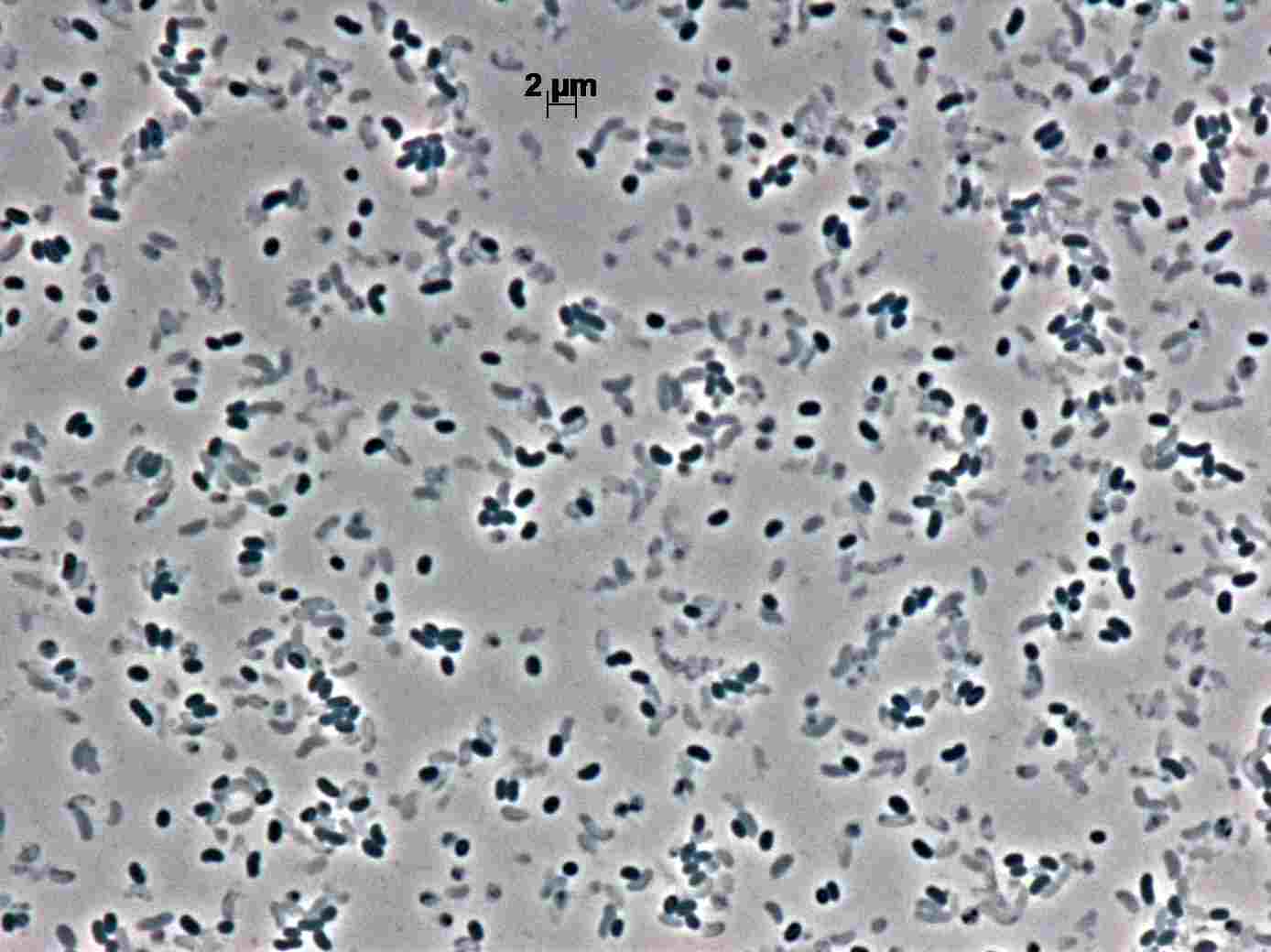
Image source: Wikipedia/Wikimedia
| Ecology, Host, and Life Cycle | |
|---|---|
| Oxygen requirements | Facultative |
| Optimal temperature | Not Available |
| Temperature range | Mesophilic |
| Habitat | HostAssociated |
| Biotic relationship | Free living |
| Host(s) | Homo sapiens |
| Cell arrangement | Singles |
| Sporulation | Nonsporulating |
| Energy source | Heterotroph |
| Pathogenicity | Animal |
Gene Summary
Adenine Count
862276 bp
Thymine Count
865977 bp
Guanine Count
701077 bp
Cytosine Count
703197 bp
Genome Length
3132527 bp
Protein-coding Genes
2726 genes
Non-Coding Genes
134 genes
# of Chromosomes/Plasmids
1
Genes
| Name | Locus Tag | UniProt ID | Strand Orientation | Gene Start/End | Protein Molecular Weight |
|---|---|---|---|---|---|
| lysr family transcriptional regulator | CEQ50_RS00210 | Not Available | Positive | 46663 - 47607 | 35580.4 |
| mdr family oxidoreductase | CEQ50_RS00215 | Not Available | Negative | 47654 - 48634 | 34856.3 |
| threonine ammonia-lyase, biosynthetic | CEQ50_RS00220 | Not Available | Negative | 48782 - 50320 | 56348.6 |
| dihydroxy-acid dehydratase | CEQ50_RS00225 | Not Available | Negative | 50324 - 52165 | 65404.5 |
| branched-chain-amino-acid transaminase | CEQ50_RS00230 | Not Available | Negative | 52182 - 53120 | 34311.1 |
| acetolactate synthase 2 small subunit | CEQ50_RS00235 | Not Available | Negative | 53133 - 53417 | 10756.1 |
| acetolactate synthase 2 catalytic subunit | CEQ50_RS00240 | Not Available | Negative | 53417 - 55063 | 59148.7 |
| yifb family mg chelatase-like aaa atpase | CEQ50_RS00245 | Not Available | Positive | 55541 - 56476 | 33276.4 |
| hypothetical protein | CEQ50_RS00250 | Not Available | Positive | 56604 - 58943 | 89067.6 |
| integrase | CEQ50_RS00255 | Not Available | Positive | 58937 - 61348 | 91608.6 |
Pathways
0 pathways
No pathways found
No metabolic pathways have been associated with this bacterium yet.
Health Effects
| Health Condition | Relation | Reference |
|---|---|---|
| Vibriosis | Causes | PMC8416912 |
| Vibriosis | Causes | PMC11577842 |
| Vibriosis | Causes | PMC11790442 |
| Hemorrhagic septicemia | Causes | PMC11790442 |


