
Kingdom
Pseudomonadati
Phylum
Pseudomonadota
Class
Gammaproteobacteria
Order
Vibrionales
Family
Vibrionaceae
Genus
Vibrio
Description
Taxonomy
| Kingdom | Pseudomonadati |
|---|---|
| Phylum | Pseudomonadota |
| Class | Gammaproteobacteria |
| Order | Vibrionales |
| Family | Vibrionaceae |
| Genus | Vibrio |
| Species | Vibrio anguillarum |
| Strain | strain 87-9-116 |
Profile
| Physiology | |
|---|---|
| Gram staining properties | Negative |
| Shape | CurvedShaped |
| Mobility | Yes |
| Flagellar presence | Not Available |
| Number of membranes | Not Available |
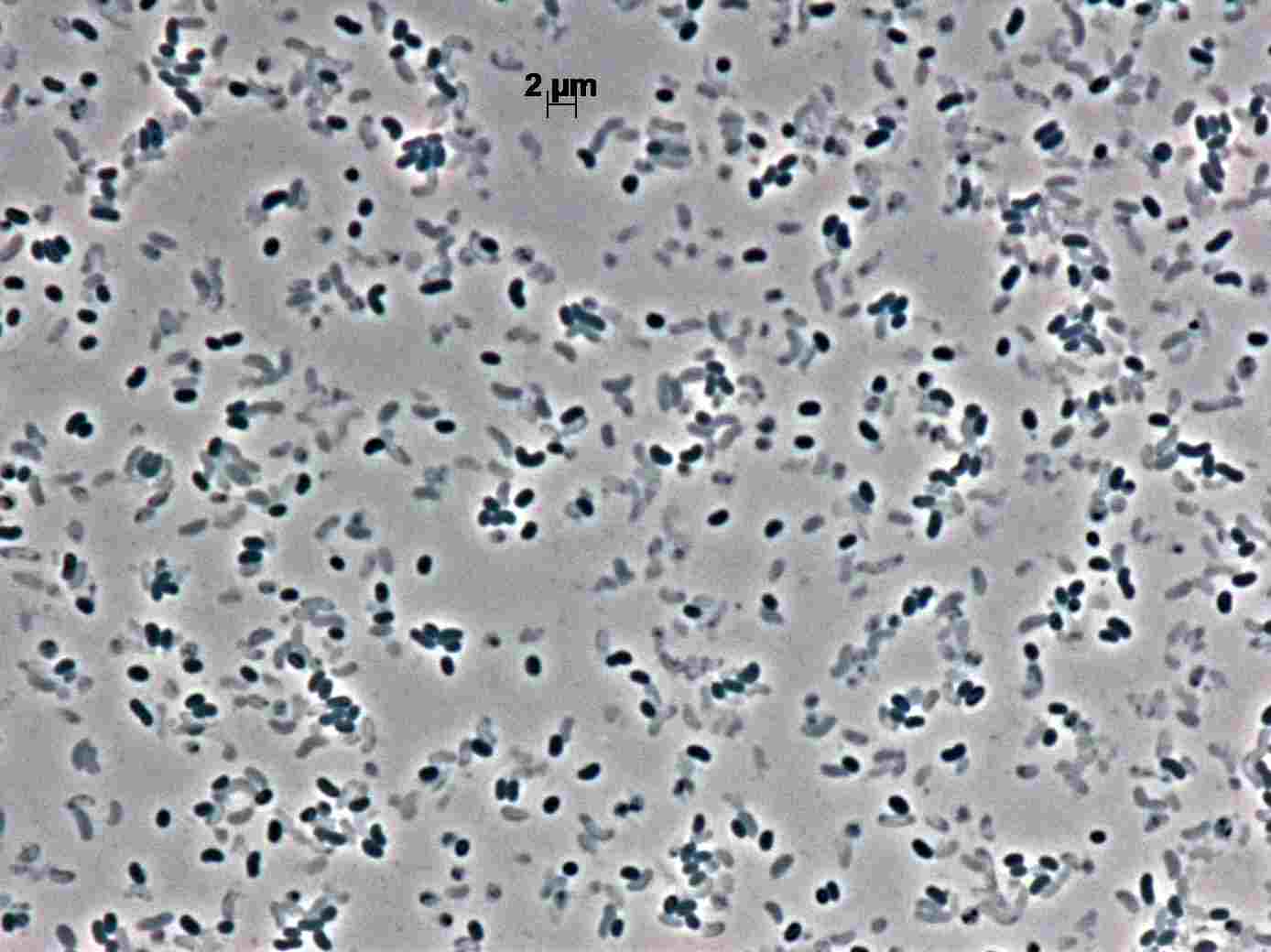
Image source: Wikipedia/Wikimedia
| Ecology, Host, and Life Cycle | |
|---|---|
| Oxygen requirements | Facultative |
| Optimal temperature | Not Available |
| Temperature range | Mesophilic |
| Habitat | HostAssociated |
| Biotic relationship | Free living |
| Host(s) | Homo sapiens |
| Cell arrangement | Singles |
| Sporulation | Nonsporulating |
| Energy source | Heterotroph |
| Pathogenicity | Animal |
Gene Summary
Adenine Count
863804 bp
Thymine Count
866885 bp
Guanine Count
700363 bp
Cytosine Count
699415 bp
Genome Length
3130467 bp
Protein-coding Genes
2728 genes
Non-Coding Genes
188 genes
# of Chromosomes/Plasmids
2
Genes
| Name | Locus Tag | UniProt ID | Strand Orientation | Gene Start/End | Protein Molecular Weight |
|---|---|---|---|---|---|
| Trna-leu | Not Available | Not Available | Positive | 1860240 - 1860326 | Not Available |
| Trna-gly | Not Available | Not Available | Positive | 1860412 - 1860487 | Not Available |
| Trna-cys | Not Available | Not Available | Positive | 1860490 - 1860563 | Not Available |
| cdp-diacylglycerol--glycerol-3-phosphate 3-phosphatidyltransferase | CEA93_RS08540 | Not Available | Negative | 1860832 - 1861389 | 21116.3 |
| excinuclease abc subunit uvrc | CEA93_RS08545 | Not Available | Negative | 1861436 - 1863268 | 69047.2 |
| uvry/sira/gaca family response regulator transcription factor | CEA93_RS08550 | Not Available | Negative | 1863268 - 1863912 | 23704.8 |
| dna polymerase ii | CEA93_RS08555 | Not Available | Positive | 1864394 - 1866757 | 90494.8 |
| nucleotidyltransferase | CEA93_RS08560 | Not Available | Negative | 1866782 - 1867549 | 29582.6 |
| elongation factor p-like protein yeip | CEA93_RS08565 | Not Available | Positive | 1867684 - 1868250 | 20686.6 |
| hi1450 family dsdna-mimic protein | CEA93_RS08570 | Not Available | Positive | 1868253 - 1868573 | 12098.0 |
Pathways
0 pathways
No pathways found
No metabolic pathways have been associated with this bacterium yet.
Health Effects
| Health Condition | Relation | Reference |
|---|---|---|
| Vibriosis | Causes | PMC8416912 |
| Vibriosis | Causes | PMC11577842 |
| Vibriosis | Causes | PMC11790442 |
| Hemorrhagic septicemia | Causes | PMC11790442 |


