Kingdom
Pseudomonadati
Phylum
Pseudomonadota
Class
Gammaproteobacteria
Order
Pseudomonadales
Family
Pseudomonadaceae
Genus
Pseudomonas
Description
Taxonomy
| Kingdom | Pseudomonadati |
|---|---|
| Phylum | Pseudomonadota |
| Class | Gammaproteobacteria |
| Order | Pseudomonadales |
| Family | Pseudomonadaceae |
| Genus | Pseudomonas |
| Species | Pseudomonas chlororaphis |
| Strain | strain PCL1606 |
Profile
| Physiology | |
|---|---|
| Gram staining properties | Negative |
| Shape | Rod |
| Mobility | Not Available |
| Flagellar presence | Not Available |
| Number of membranes | Not Available |

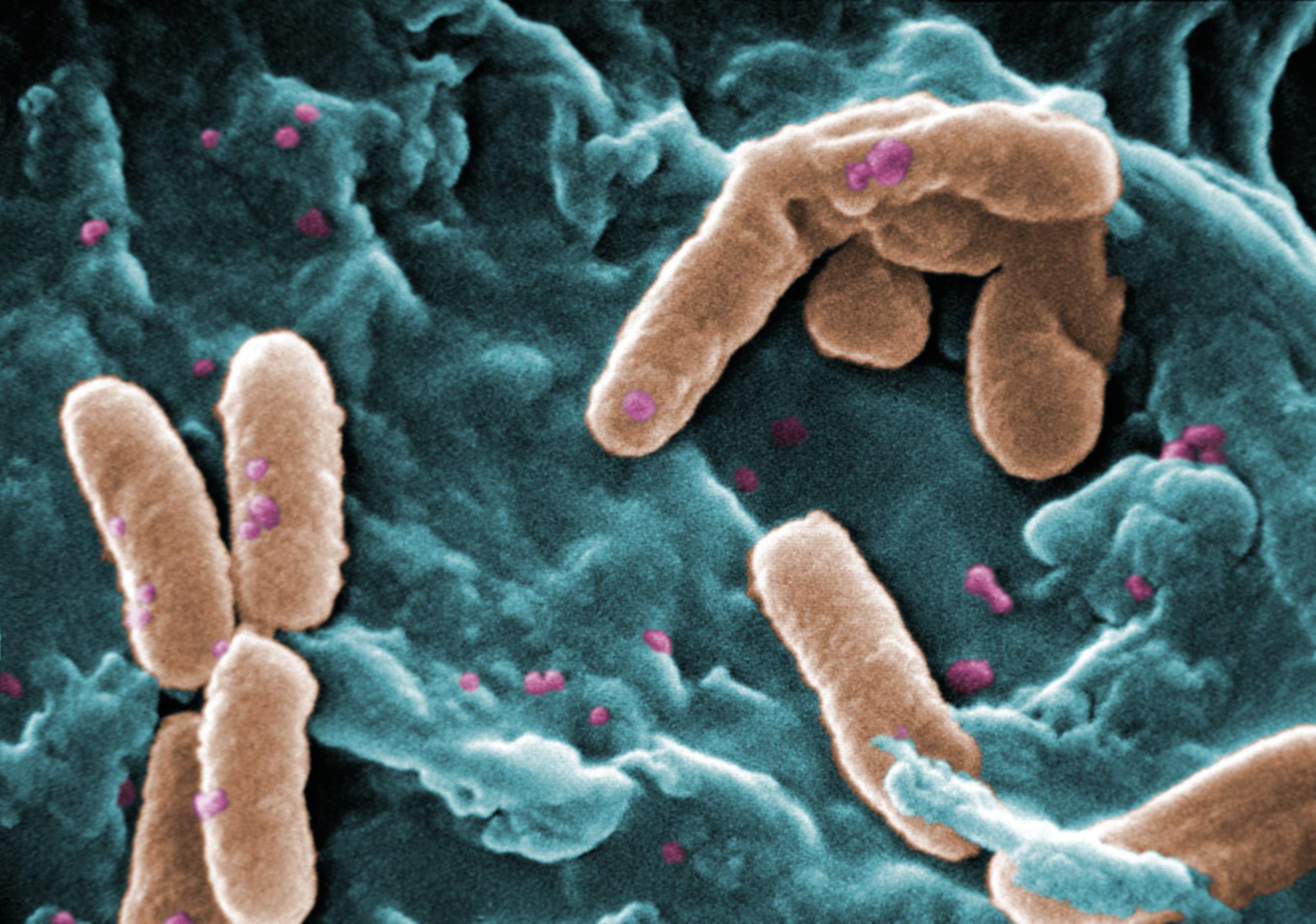
Image source: Wikipedia/Wikimedia
| Ecology, Host, and Life Cycle | |
|---|---|
| Oxygen requirements | Not Available |
| Optimal temperature | Not Available |
| Temperature range | Not Available |
| Habitat | nodules of Chamaecytisus albus; rhizosphere; root nodules |
| Biotic relationship | Not Available |
| Host(s) | Viridiplantae, Brassica napus var. napus, Persea americana |
| Cell arrangement | Not Available |
| Sporulation | Not Available |
| Energy source | Not Available |
| Pathogenicity | Animal |
Genome Summary
Pseudomonas chlororaphis strain PCL1606 chromosome, complete
Gene Summary
Adenine Count
Not Available
Thymine Count
Not Available
Guanine Count
Not Available
Cytosine Count
Not Available
Genome Length
Not Available
Protein-coding Genes
5827 genes
Non-Coding Genes
253 genes
# of Chromosomes/Plasmids
2
Genes
| Name | Locus Tag | UniProt ID | Strand Orientation | Gene Start/End | Protein Molecular Weight |
|---|---|---|---|---|---|
| putative bifunctional diguanylate cyclase/phosphodiesterase | PCL1606_RS00280 | Not Available | Positive | 58826 - 61690 | 107134.0 |
| transcriptional regulator hexr | PCL1606_RS00285 | Not Available | Positive | 61937 - 62803 | 31179.9 |
| pa3496 family putative envelope integrity protein | PCL1606_RS00290 | Not Available | Positive | 63041 - 63253 | 8436.74 |
| lysr family transcriptional regulator | PCL1606_RS00295 | Not Available | Negative | 63195 - 64157 | 36206.2 |
| acetyl-coa carboxylase biotin carboxylase subunit | PCL1606_RS00300 | Not Available | Positive | 64348 - 65763 | 51868.2 |
| sodium-extruding oxaloacetate decarboxylase subunit alpha | PCL1606_RS00305 | Not Available | Positive | 65775 - 67583 | 65590.9 |
| type ii toxin-antitoxin system hipa family toxin | PCL1606_RS00310 | Not Available | Positive | 67898 - 69172 | 47028.4 |
| cache domain-containing protein | PCL1606_RS00315 | Not Available | Positive | 69169 - 69429 | 9654.93 |
| amino acid abc transporter permease | PCL1606_RS00320 | Not Available | Negative | 69514 - 70350 | 30519.2 |
| abc transporter substrate-binding protein | PCL1606_RS00325 | Not Available | Negative | 70347 - 71168 | 29897.5 |
Pathways
0 pathways
No pathways found
No metabolic pathways have been associated with this bacterium yet.
Health Effects
No health effects information available for this bacterium.