Kingdom
Pseudomonadati
Phylum
Pseudomonadota
Class
Gammaproteobacteria
Order
Pseudomonadales
Family
Pseudomonadaceae
Genus
Pseudomonas
Description
Taxonomy
| Kingdom | Pseudomonadati |
|---|---|
| Phylum | Pseudomonadota |
| Class | Gammaproteobacteria |
| Order | Pseudomonadales |
| Family | Pseudomonadaceae |
| Genus | Pseudomonas |
| Species | Pseudomonas chlororaphis |
| Strain | strain PCL1606 |
Profile
| Physiology | |
|---|---|
| Gram staining properties | Negative |
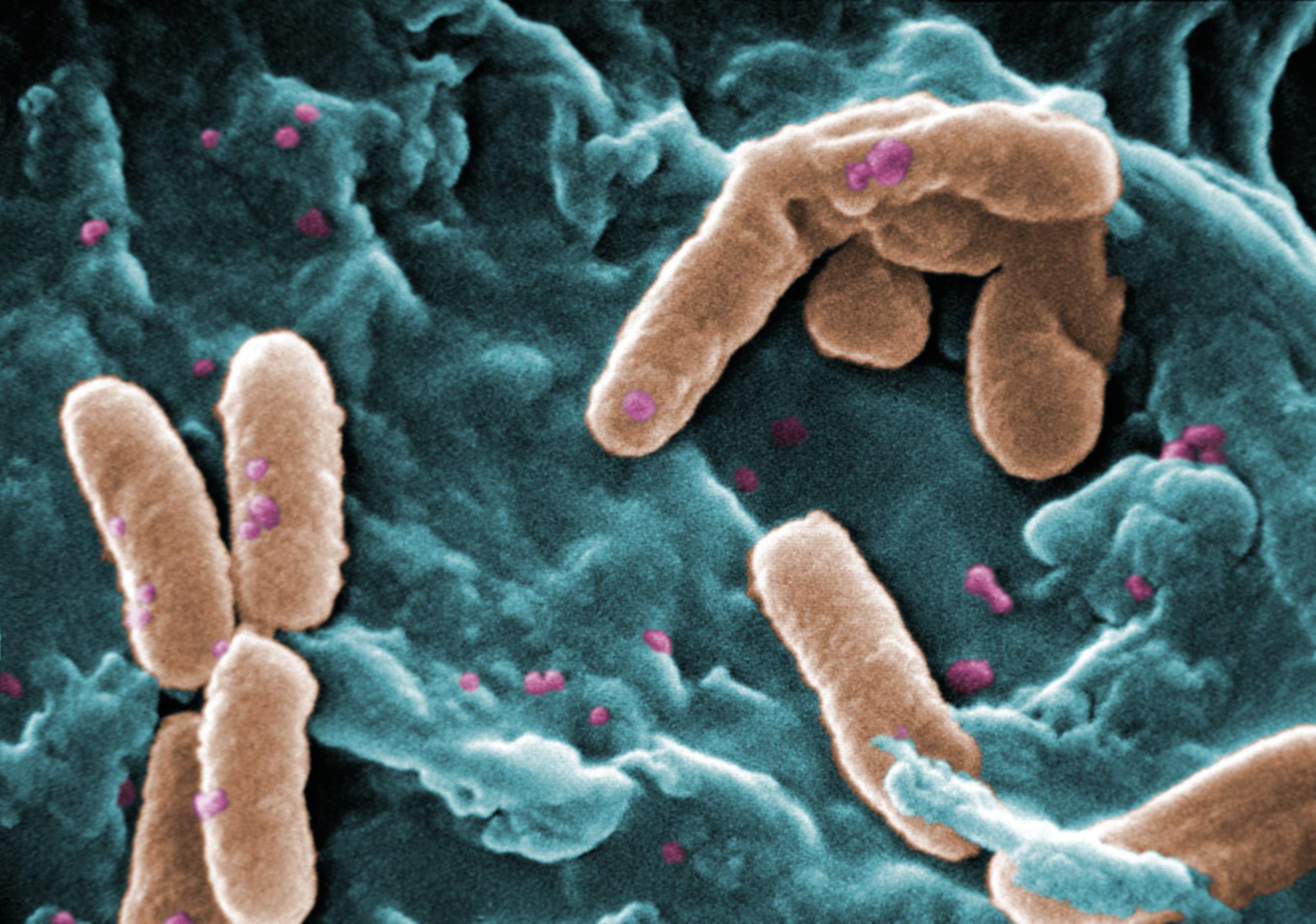
| Shape | Rod |
| Mobility | Not Available |
| Flagellar presence | Not Available |
| Number of membranes | Not Available |

Image source: Wikipedia/Wikimedia
| Ecology, Host, and Life Cycle | |
|---|---|
| Oxygen requirements | Not Available |
| Optimal temperature | Not Available |
| Temperature range | Not Available |
| Habitat | nodules of Chamaecytisus albus; rhizosphere; root nodules |
| Biotic relationship | Not Available |
| Host(s) | Viridiplantae, Brassica napus var. napus, Persea americana |
| Cell arrangement | Not Available |
| Sporulation | Not Available |
| Energy source | Not Available |
| Pathogenicity | Animal |
Gene Summary
Adenine Count
Not Available
Thymine Count
Not Available
Guanine Count
Not Available
Cytosine Count
Not Available
Genome Length
Not Available
Protein-coding Genes
5350 genes
Non-Coding Genes
730 genes
# of Chromosomes/Plasmids
2
Genes
| Name | Locus Tag | UniProt ID | Strand Orientation | Gene Start/End | Protein Molecular Weight |
|---|---|---|---|---|---|
| Tail protein | PCL1606_RS02915 | Not Available | Negative | 632362 - 632886 | 20270.4 |
| Baseplate j/gp47 family protein | PCL1606_RS02920 | Not Available | Negative | 632883 - 634055 | 42764.7 |
| Hypothetical protein | PCL1606_RS02925 | Not Available | Negative | 634052 - 634369 | 11718.3 |
| Tail tape measure protein | PCL1606_RS02930 | Not Available | Negative | 634369 - 636567 | 77416.8 |
| Tail assembly chaperone | PCL1606_RS31600 | Not Available | Negative | 636573 - 636719 | 5376.4 |
| Tail assembly chaperone | PCL1606_RS02935 | Not Available | Negative | 636740 - 637027 | 10183.3 |
| Lysis protein | PCL1606_RS02940 | Not Available | Negative | 637065 - 637574 | 19150.5 |
| Lysozyme | PCL1606_RS02945 | Not Available | Negative | 637571 - 638104 | 19033.0 |
| Hypothetical protein | PCL1606_RS02950 | Not Available | Negative | 638101 - 638355 | 9367.54 |
| Dksa/trar family c4-type zinc finger protein | PCL1606_RS30060 | Not Available | Negative | 638451 - 638663 | 7878.53 |
Pathways
0 pathways
No pathways found
No metabolic pathways have been associated with this bacterium yet.
Health Effects
No health effects information available for this bacterium.