
Kingdom
Bacillati
Phylum
Cyanobacteriota
Class
Cyanophyceae
Order
Leptolyngbyales
Family
Leptolyngbyaceae
Genus
Leptolyngbya
Description
Taxonomy
| Kingdom | Bacillati |
|---|---|
| Phylum | Cyanobacteriota |
| Class | Cyanophyceae |
| Order | Leptolyngbyales |
| Family | Leptolyngbyaceae |
| Genus | Leptolyngbya |
| Species | Leptolyngbya sp. NIES-3755 |
| Strain | No strain |
Profile
| Physiology | |
|---|---|
| Gram staining properties | Not Available |
| Shape | Filamentous |
| Mobility | Not Available |
| Flagellar presence | Not Available |
| Number of membranes | Not Available |
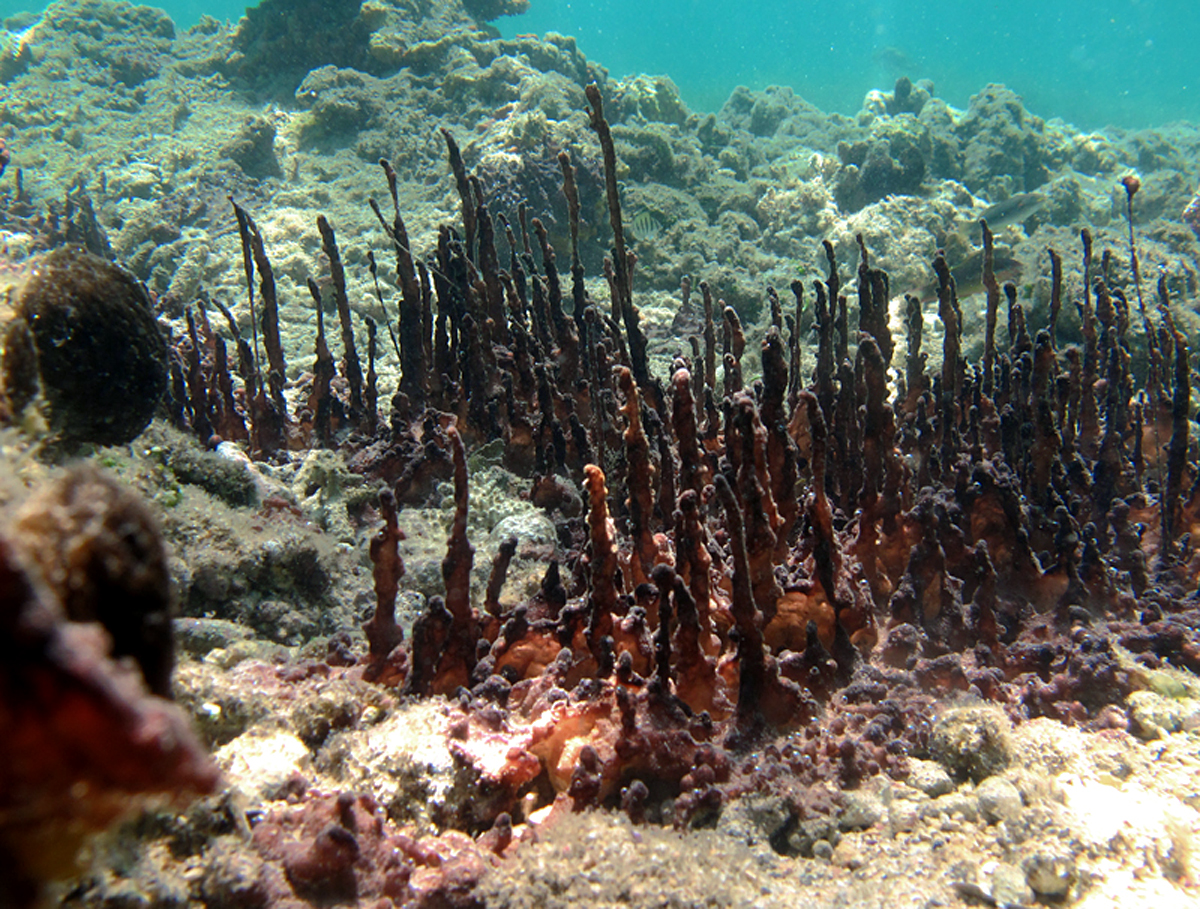
Image source: Wikipedia/Wikimedia
| Ecology, Host, and Life Cycle | |
|---|---|
| Oxygen requirements | Not Available |
| Optimal temperature | Not Available |
| Temperature range | Not Available |
| Habitat | Not Available |
| Biotic relationship | Not Available |
| Host(s) | Not Available |
| Cell arrangement | Not Available |
| Sporulation | Not Available |
| Energy source | Not Available |
| Pathogenicity | Not Available |
Gene Summary
Adenine Count
1665792 bp
Thymine Count
1666090 bp
Guanine Count
1459543 bp
Cytosine Count
1453387 bp
Genome Length
6244812 bp
Protein-coding Genes
6051 genes
Non-Coding Genes
89 genes
# of Chromosomes/Plasmids
2
Genes
| Name | Locus Tag | UniProt ID | Strand Orientation | Gene Start/End | Protein Molecular Weight |
|---|---|---|---|---|---|
| prc-barrel domain-containing protein | LEP3755_RS19285 | Not Available | Positive | 3987653 - 3988771 | 42079.1 |
| hypothetical protein | LEP3755_RS33405 | Not Available | Positive | 3988777 - 3989178 | 15158.1 |
| dna-methyltransferase | LEP3755_RS19295 | Not Available | Positive | 3989620 - 3990540 | 35898.0 |
| f420-0:gamma-glutamyl ligase | LEP3755_RS19300 | Not Available | Positive | 3990605 - 3991819 | 44700.7 |
| gnat family n-acetyltransferase | LEP3755_RS19305 | Not Available | Positive | 3991896 - 3993140 | 47045.7 |
| holliday junction resolvase ruvx | LEP3755_RS19310 | Not Available | Positive | 3993140 - 3993601 | 16941.5 |
| hypothetical protein | LEP3755_RS19315 | Not Available | Positive | 3993606 - 3993989 | 14314.7 |
| hypothetical protein | LEP3755_RS19320 | Not Available | Positive | 3993998 - 3994333 | 12995.8 |
| gnat family n-acetyltransferase | LEP3755_RS19325 | Not Available | Negative | 3994427 - 3994987 | 21216.9 |
| sh3 domain-containing protein | LEP3755_RS19330 | Not Available | Negative | 3995001 - 3995444 | 15395.6 |
Pathways
0 pathways
No pathways found
No metabolic pathways have been associated with this bacterium yet.
Health Effects
No health effects information available for this bacterium.