
Kingdom
Bacillati
Phylum
Cyanobacteriota
Class
Cyanophyceae
Order
Leptolyngbyales
Family
Leptolyngbyaceae
Genus
Leptolyngbya
Description
Taxonomy
| Kingdom | Bacillati |
|---|---|
| Phylum | Cyanobacteriota |
| Class | Cyanophyceae |
| Order | Leptolyngbyales |
| Family | Leptolyngbyaceae |
| Genus | Leptolyngbya |
| Species | Leptolyngbya sp. NIES-3755 |
| Strain | No strain |
Profile
| Physiology | |
|---|---|
| Gram staining properties | Not Available |
| Shape | Filamentous |
| Mobility | Not Available |
| Flagellar presence | Not Available |
| Number of membranes | Not Available |
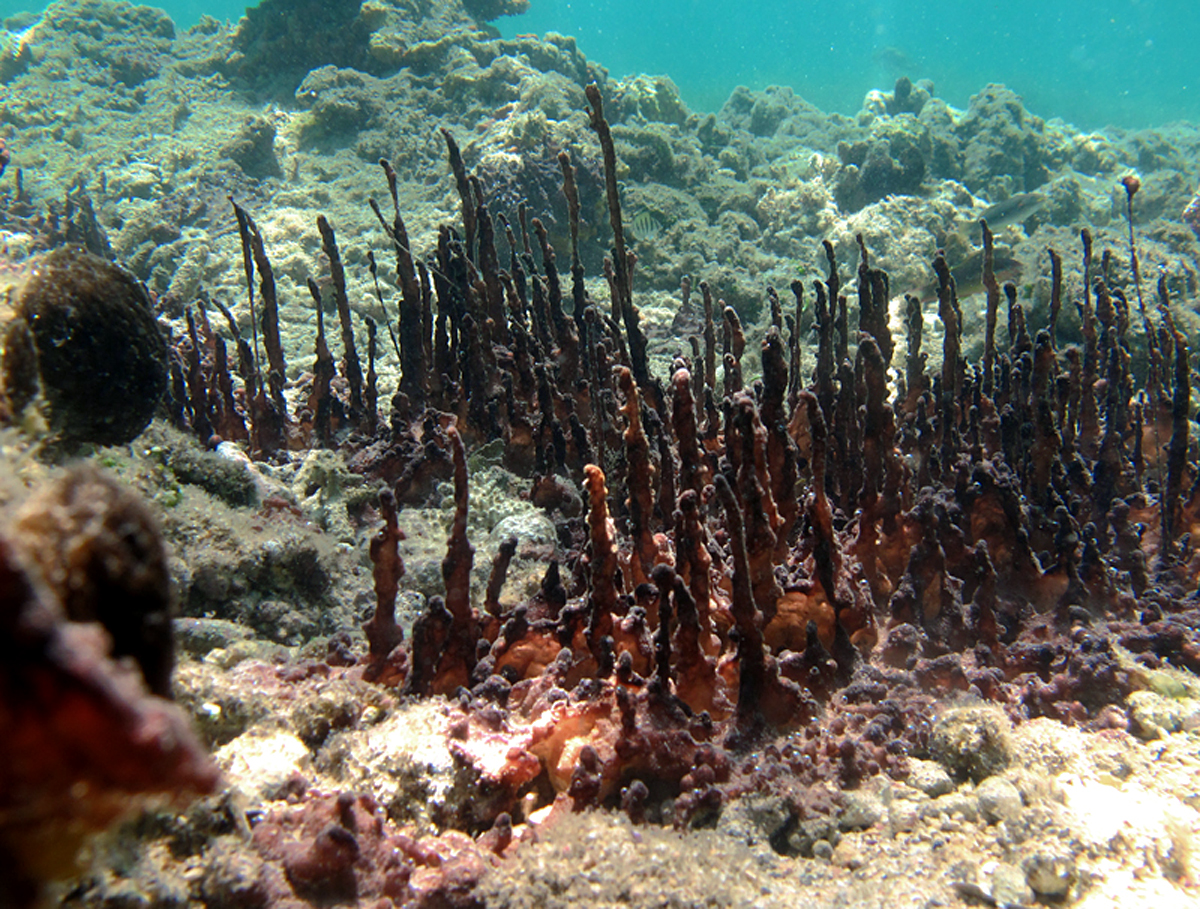
Image source: Wikipedia/Wikimedia
| Ecology, Host, and Life Cycle | |
|---|---|
| Oxygen requirements | Not Available |
| Optimal temperature | Not Available |
| Temperature range | Not Available |
| Habitat | Not Available |
| Biotic relationship | Not Available |
| Host(s) | Not Available |
| Cell arrangement | Not Available |
| Sporulation | Not Available |
| Energy source | Not Available |
| Pathogenicity | Not Available |
Gene Summary
Adenine Count
1665792 bp
Thymine Count
1666090 bp
Guanine Count
1459543 bp
Cytosine Count
1453387 bp
Genome Length
6244812 bp
Protein-coding Genes
6051 genes
Non-Coding Genes
89 genes
# of Chromosomes/Plasmids
2
Genes
| Name | Locus Tag | UniProt ID | Strand Orientation | Gene Start/End | Protein Molecular Weight |
|---|---|---|---|---|---|
| srpbcc domain-containing protein | LEP3755_RS13885 | Not Available | Negative | 2904143 - 2904559 | 15935.6 |
| arsr/smtb family transcription factor | LEP3755_RS13890 | Not Available | Negative | 2904552 - 2904881 | 12625.0 |
| bmp family protein | LEP3755_RS13895 | Not Available | Positive | 2905063 - 2906124 | 37421.6 |
| abc transporter atp-binding protein | LEP3755_RS13900 | Not Available | Positive | 2906245 - 2907711 | 53286.0 |
| abc transporter permease | LEP3755_RS13905 | Not Available | Positive | 2907698 - 2908744 | 36735.5 |
| abc transporter permease | LEP3755_RS13910 | Not Available | Positive | 2908756 - 2909727 | 34242.7 |
| aromatic ring-hydroxylating oxygenase subunit alpha | LEP3755_RS13915 | Not Available | Positive | 2909747 - 2910721 | 36302.3 |
| atp-binding sensor histidine kinase | LEP3755_RS13920 | Not Available | Positive | 2910841 - 2916210 | 201336.0 |
| hypothetical protein | LEP3755_RS13925 | Not Available | Negative | 2916241 - 2916423 | 7057.7 |
| duf1206 domain-containing protein | LEP3755_RS13930 | Not Available | Negative | 2916431 - 2917276 | 30065.0 |
Pathways
0 pathways
No pathways found
No metabolic pathways have been associated with this bacterium yet.
Health Effects
No health effects information available for this bacterium.