
Kingdom
Bacillati
Phylum
Cyanobacteriota
Class
Cyanophyceae
Order
Leptolyngbyales
Family
Leptolyngbyaceae
Genus
Leptolyngbya
Description
Taxonomy
| Kingdom | Bacillati |
|---|---|
| Phylum | Cyanobacteriota |
| Class | Cyanophyceae |
| Order | Leptolyngbyales |
| Family | Leptolyngbyaceae |
| Genus | Leptolyngbya |
| Species | Leptolyngbya sp. NIES-3755 |
| Strain | No strain |
Profile
| Physiology | |
|---|---|
| Gram staining properties | Not Available |
| Shape | Filamentous |
| Mobility | Not Available |
| Flagellar presence | Not Available |
| Number of membranes | Not Available |
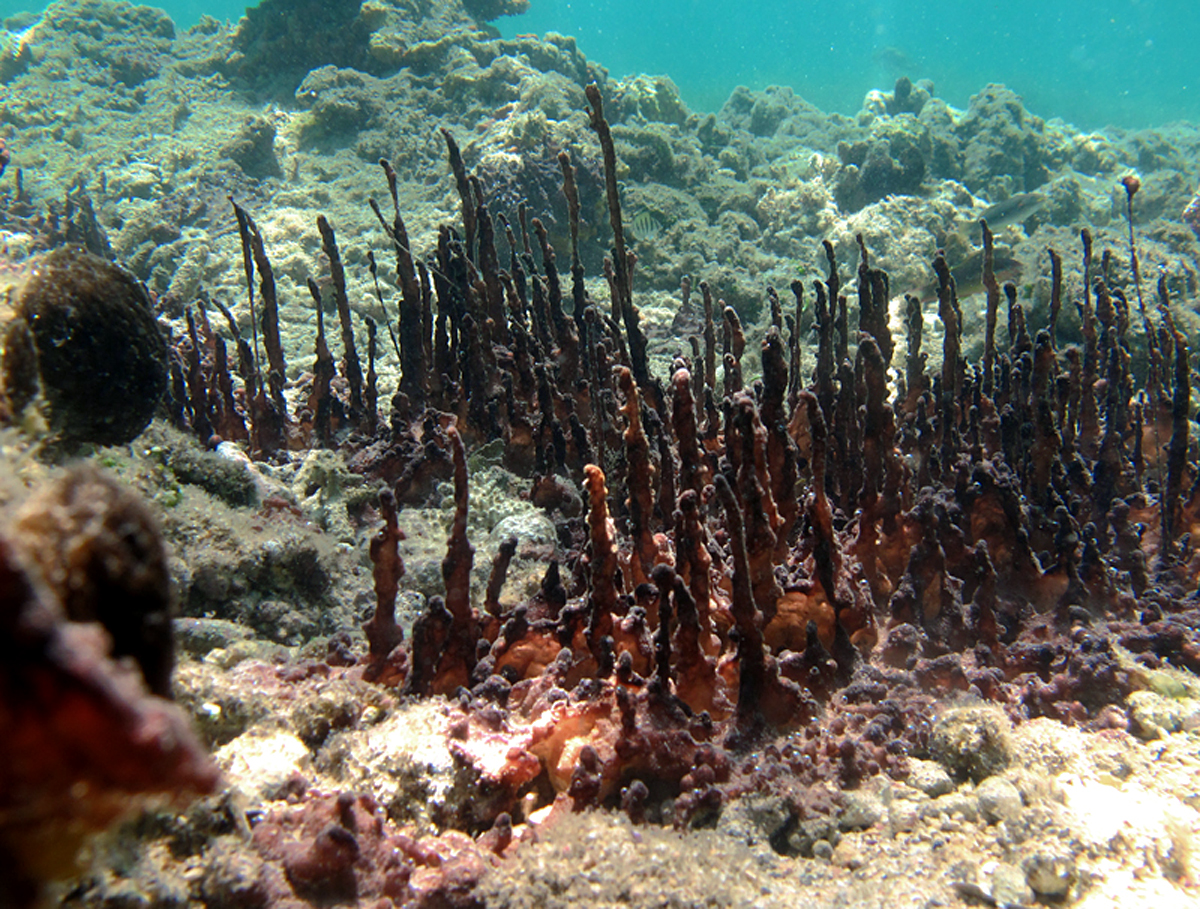
Image source: Wikipedia/Wikimedia
| Ecology, Host, and Life Cycle | |
|---|---|
| Oxygen requirements | Not Available |
| Optimal temperature | Not Available |
| Temperature range | Not Available |
| Habitat | Not Available |
| Biotic relationship | Not Available |
| Host(s) | Not Available |
| Cell arrangement | Not Available |
| Sporulation | Not Available |
| Energy source | Not Available |
| Pathogenicity | Not Available |
Gene Summary
Adenine Count
1665792 bp
Thymine Count
1666090 bp
Guanine Count
1459543 bp
Cytosine Count
1453387 bp
Genome Length
6244812 bp
Protein-coding Genes
6051 genes
Non-Coding Genes
89 genes
# of Chromosomes/Plasmids
2
Genes
| Name | Locus Tag | UniProt ID | Strand Orientation | Gene Start/End | Protein Molecular Weight |
|---|---|---|---|---|---|
| photosystem ii reaction center protein psbm | LEP3755_RS13130 | Not Available | Negative | 2753475 - 2753588 | 4184.21 |
| 2fe-2s iron-sulfur cluster-binding protein | LEP3755_RS13135 | Not Available | Negative | 2753636 - 2754013 | 13485.2 |
| photosystem ii chlorophyll-binding protein cp47 | LEP3755_RS13140 | Not Available | Positive | 2754365 - 2755897 | 56563.4 |
| photosystem ii reaction center protein t | LEP3755_RS13145 | Not Available | Positive | 2755962 - 2756057 | 3404.41 |
| iron uptake porin | LEP3755_RS13150 | Not Available | Positive | 2756155 - 2757267 | 41959.2 |
| gnat family n-acetyltransferase | LEP3755_RS13155 | Not Available | Positive | 2757342 - 2757920 | 22595.2 |
| hypothetical protein | LEP3755_RS13160 | Not Available | Positive | 2758065 - 2758715 | 24555.4 |
| duf433 domain-containing protein | LEP3755_RS13165 | Not Available | Positive | 2758748 - 2758978 | 8491.49 |
| duf5615 family pin-like protein | LEP3755_RS13170 | Not Available | Positive | 2758975 - 2759346 | 13771.6 |
| alpha/beta hydrolase | LEP3755_RS13175 | Not Available | Positive | 2759524 - 2760501 | 35431.7 |
Pathways
0 pathways
No pathways found
No metabolic pathways have been associated with this bacterium yet.
Health Effects
No health effects information available for this bacterium.