Kingdom
Pseudomonadati
Phylum
Bacteroidota
Class
Flavobacteriia
Order
Flavobacteriales
Family
Flavobacteriaceae
Genus
Capnocytophaga
Description
Taxonomy
| Kingdom | Pseudomonadati |
|---|---|
| Phylum | Bacteroidota |
| Class | Flavobacteriia |
| Order | Flavobacteriales |
| Family | Flavobacteriaceae |
| Genus | Capnocytophaga |
| Species | Capnocytophaga canis |
| Strain | strain 17-158 61 |
Profile
| Physiology | |
|---|---|
| Gram staining properties | Negative |
| Shape | Not Available |
| Mobility | Not Available |
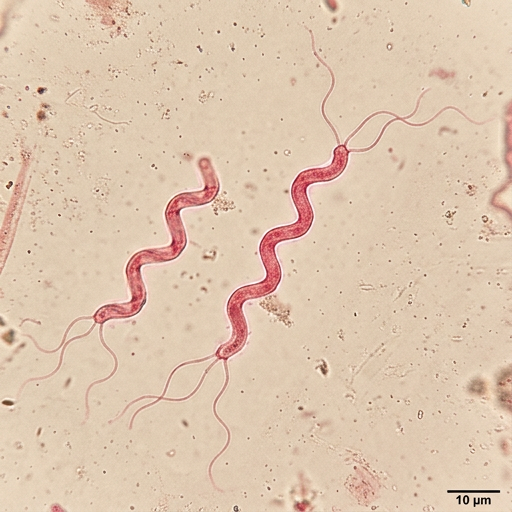
| Flagellar presence | Yes |
| Number of membranes | Not Available |
| Ecology, Host, and Life Cycle | |
|---|---|
| Oxygen requirements | microaerophile |
| Optimal temperature | Not Available |
| Temperature range | Not Available |
| Habitat | Not Available |
| Biotic relationship | Not Available |
| Host(s) | Homo sapiens, Canis lupus familiaris, Felis catus |
| Cell arrangement | Not Available |
| Sporulation | Not Available |
| Energy source | Not Available |
| Pathogenicity | Not Available |
Gene Summary
Adenine Count
879238 bp
Thymine Count
873323 bp
Guanine Count
482464 bp
Cytosine Count
481258 bp
Genome Length
2716283 bp
Protein-coding Genes
2272 genes
Non-Coding Genes
48 genes
# of Chromosomes/Plasmids
1
Genes
| Name | Locus Tag | UniProt ID | Strand Orientation | Gene Start/End | Protein Molecular Weight |
|---|---|---|---|---|---|
| replicative dna helicase | CKY20_08355 | Not Available | Positive | 1981727 - 1983280 | 57820.0 |
| aspartate--ammonia ligase | CKY20_08360 | Not Available | Negative | 1983468 - 1984502 | 39446.8 |
| esterase | CKY20_08365 | Not Available | Negative | 1984524 - 1985309 | 30247.5 |
| hypothetical protein | CKY20_08370 | Not Available | Negative | 1985534 - 2000662 | 537241.0 |
| hypothetical protein | CKY20_08375 | Not Available | Negative | 2000859 - 2002265 | 52329.6 |
| hypothetical protein | CKY20_08380 | Not Available | Negative | 2002275 - 2005418 | 113980.0 |
| nitric oxide synthase | CKY20_08385 | Not Available | Negative | 2005784 - 2007979 | 83320.8 |
| sigma-54-dependent fis family transcriptional regulator | CKY20_08390 | Not Available | Negative | 2008238 - 2009494 | 47360.8 |
| penicillin-binding protein 1c | CKY20_08395 | Not Available | Positive | 2010076 - 2012430 | 89841.7 |
| hypothetical protein | CKY20_08400 | Not Available | Negative | 2012640 - 2013131 | 18261.7 |
Pathways
0 pathways
No pathways found
No metabolic pathways have been associated with this bacterium yet.