Kingdom
Pseudomonadati
Phylum
Bacteroidota
Class
Flavobacteriia
Order
Flavobacteriales
Family
Flavobacteriaceae
Genus
Capnocytophaga
Description
Taxonomy
| Kingdom | Pseudomonadati |
|---|---|
| Phylum | Bacteroidota |
| Class | Flavobacteriia |
| Order | Flavobacteriales |
| Family | Flavobacteriaceae |
| Genus | Capnocytophaga |
| Species | Capnocytophaga canis |
| Strain | strain 17-158 61 |
Profile
| Physiology | |
|---|---|
| Gram staining properties | Negative |
| Shape | Not Available |
| Mobility | Not Available |
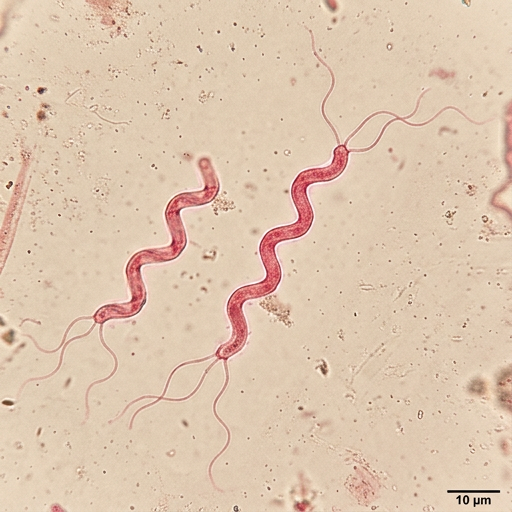
| Flagellar presence | Yes |
| Number of membranes | Not Available |
| Ecology, Host, and Life Cycle | |
|---|---|
| Oxygen requirements | microaerophile |
| Optimal temperature | Not Available |
| Temperature range | Not Available |
| Habitat | Not Available |
| Biotic relationship | Not Available |
| Host(s) | Homo sapiens, Canis lupus familiaris, Felis catus |
| Cell arrangement | Not Available |
| Sporulation | Not Available |
| Energy source | Not Available |
| Pathogenicity | Not Available |
Gene Summary
Adenine Count
879238 bp
Thymine Count
873323 bp
Guanine Count
482464 bp
Cytosine Count
481258 bp
Genome Length
2716283 bp
Protein-coding Genes
2272 genes
Non-Coding Genes
48 genes
# of Chromosomes/Plasmids
1
Genes
| Name | Locus Tag | UniProt ID | Strand Orientation | Gene Start/End | Protein Molecular Weight |
|---|---|---|---|---|---|
| 1-acyl-sn-glycerol-3-phosphate acyltransferase | CKY20_00695 | Not Available | Positive | 152624 - 153352 | 27511.0 |
| trna 2-thiouridine(34) synthase mnma | CKY20_00700 | Not Available | Positive | 153470 - 154663 | 45045.5 |
| 1-acyl-sn-glycerol-3-phosphate acyltransferase | CKY20_00705 | Not Available | Positive | 154683 - 155444 | 29185.6 |
| duf3276 domain-containing protein | CKY20_00710 | Not Available | Positive | 155651 - 156022 | 14901.3 |
| fusc family protein | CKY20_00715 | Not Available | Negative | 156076 - 158256 | 83879.6 |
| threonylcarbamoyl-amp synthase | CKY20_00720 | Not Available | Positive | 158439 - 158999 | 21039.4 |
| cmp deaminase | CKY20_00725 | Not Available | Positive | 159004 - 159444 | 16490.8 |
| na+ dependent nucleoside transporter | CKY20_00730 | Not Available | Negative | 159441 - 160826 | 49183.6 |
| hypothetical protein | CKY20_00735 | Not Available | Negative | 160997 - 161605 | 23592.3 |
| alpha-amlyase | CKY20_00740 | Not Available | Negative | 161896 - 163746 | 71951.0 |
Pathways
0 pathways
No pathways found
No metabolic pathways have been associated with this bacterium yet.