Kingdom
Pseudomonadati
Phylum
Bacteroidota
Class
Flavobacteriia
Order
Flavobacteriales
Family
Flavobacteriaceae
Genus
Capnocytophaga
Description
Taxonomy
| Kingdom | Pseudomonadati |
|---|---|
| Phylum | Bacteroidota |
| Class | Flavobacteriia |
| Order | Flavobacteriales |
| Family | Flavobacteriaceae |
| Genus | Capnocytophaga |
| Species | Capnocytophaga canis |
| Strain | strain 17-158 61 |
Profile
| Physiology | |
|---|---|
| Gram staining properties | Negative |
| Shape | Not Available |
| Mobility | Not Available |
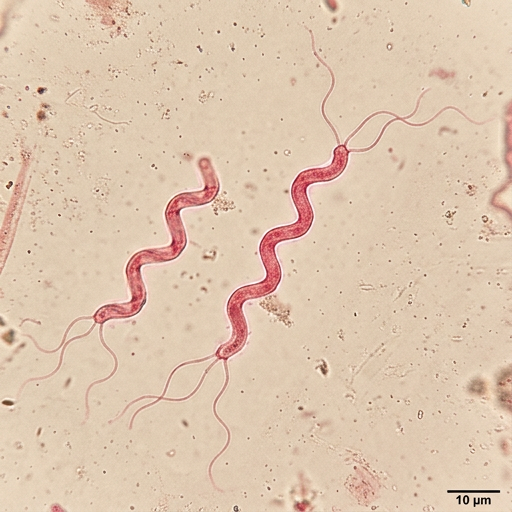
| Flagellar presence | Yes |
| Number of membranes | Not Available |
| Ecology, Host, and Life Cycle | |
|---|---|
| Oxygen requirements | microaerophile |
| Optimal temperature | Not Available |
| Temperature range | Not Available |
| Habitat | Not Available |
| Biotic relationship | Not Available |
| Host(s) | Homo sapiens, Canis lupus familiaris, Felis catus |
| Cell arrangement | Not Available |
| Sporulation | Not Available |
| Energy source | Not Available |
| Pathogenicity | Not Available |
Gene Summary
Adenine Count
879238 bp
Thymine Count
873323 bp
Guanine Count
482464 bp
Cytosine Count
481258 bp
Genome Length
2716283 bp
Protein-coding Genes
2272 genes
Non-Coding Genes
48 genes
# of Chromosomes/Plasmids
1
Genes
| Name | Locus Tag | UniProt ID | Strand Orientation | Gene Start/End | Protein Molecular Weight |
|---|---|---|---|---|---|
| marc family protein | CKY20_06695 | Not Available | Negative | 1587398 - 1587997 | 21550.4 |
| abc transporter atp-binding protein | CKY20_06700 | Not Available | Negative | 1588954 - 1589634 | 24997.4 |
| hypothetical protein | CKY20_06705 | Not Available | Negative | 1589824 - 1590660 | 29906.0 |
| cof-type had-iib family hydrolase | CKY20_06710 | Not Available | Negative | 1590755 - 1591576 | 31533.7 |
| 4-hydroxy-tetrahydrodipicolinate reductase | CKY20_06715 | Not Available | Negative | 1591735 - 1592433 | 25224.3 |
| hypothetical protein | CKY20_06720 | Not Available | Negative | 1592518 - 1595241 | 101971.0 |
| hypothetical protein | CKY20_06725 | Not Available | Positive | 1595517 - 1595900 | 15032.8 |
| aminotransferase class iv | CKY20_06730 | Not Available | Positive | 1595917 - 1596771 | 32572.7 |
| hypothetical protein | CKY20_06735 | Not Available | Negative | 1596864 - 1597079 | 7625.62 |
| transketolase | CKY20_06740 | Not Available | Negative | 1597138 - 1598091 | 34457.8 |
Pathways
0 pathways
No pathways found
No metabolic pathways have been associated with this bacterium yet.