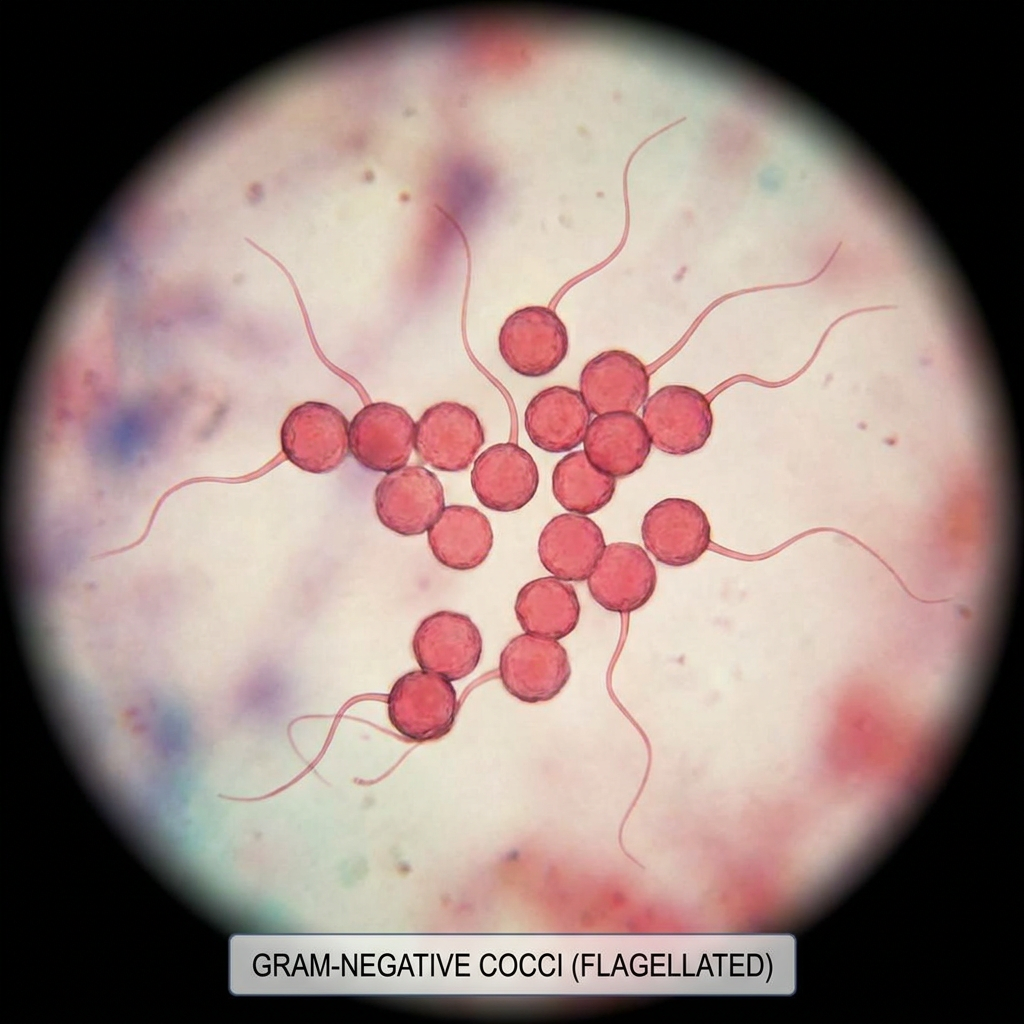
Nitrosococcus halophilus Nc 4

Cocci

Kingdom

Pseudomonadati

Phylum

Pseudomonadota

Class

Gammaproteobacteria

Order

Chromatiales

Family

Chromatiaceae

Genus

Nitrosococcus

Description

Nitrosococcus halophilus Nc 4 is a Gram-negative bacterium characterized by its cocci shape and the presence of flagella, which facilitate motility. This organism is notable for its ability to thrive in saline environments, where it plays a crucial role in the nitrogen cycle by oxidizing ammonia to nitrite, a process essential for maintaining nitrogen balance in these ecosystems. The genome of N. halophilus Nc 4 consists of two replicons, indicating a complex genetic architecture that may support its adaptability to varying environmental conditions. The specific accessions for this bacterium are NC_013958.1 and NC_013960.1, which provide researchers with resources for further genomic analysis and characterization. The presence of flagella suggests that N. halophilus Nc 4 can navigate its environment, which could be advantageous in fluctuating saline conditions where nutrient availability may vary. This motility may also facilitate the colonization of specific niches within saline habitats, enhancing its ecological role. In summary, Nitrosococcus halophilus Nc 4 exemplifies the adaptability of microorganisms in extreme environments, contributing to biogeochemical processes. Its unique traits, such as its cocci shape and flagella, along with its genomic structure, underscore its importance in nitrogen cycling, particularly in saline ecosystems. Understanding such organisms can provide insights into microbial ecology and the functioning of nutrient cycles in extreme habitats.

Taxonomy

KingdomPseudomonadati
PhylumPseudomonadota
ClassGammaproteobacteria
OrderChromatiales
FamilyChromatiaceae
GenusNitrosococcus
SpeciesNitrosococcus halophilus
StrainNc 4

Profile

Physiology
Gram staining propertiesNegative
ShapeCocci
MobilityNot Available
Flagellar presenceYes
Number of membranesNot Available
Image of Nitrosococcus halophilus Nc 4
Image source: Wikipedia/Wikimedia
Ecology, Host, and Life Cycle
Oxygen requirementsNot Available
Optimal temperatureNot Available
Temperature rangeNot Available
HabitatNot Available
Biotic relationshipNot Available
Host(s)Not Available
Cell arrangementNot Available
SporulationNot Available
Energy sourceNot Available
PathogenicityNot Available

Genome Summary

Nitrosococcus halophilus Nc 4 plasmid pNHAL01, complete sequence.

Gene Summary

Adenine Count

15721 bp

Thymine Count

15246 bp

Guanine Count

16996 bp

Cytosine Count

17870 bp

Genome Length

65833 bp

Protein-coding Genes

66 genes

Non-Coding Genes

0 genes

# of Chromosomes/Plasmids

2

Genes

NameLocus TagUniProt IDStrand OrientationGene Start/EndProtein Molecular Weight
cobw family gtp-binding proteinNHAL_RS14320Not AvailableNegative3027406 - 302833234024.2
rtcb family proteinNHAL_RS14325Not AvailableNegative3028335 - 302979553543.6
duf72 domain-containing proteinNHAL_RS14330Not AvailableNegative3029848 - 303057629037.3
hsp70 family proteinNHAL_RS14335Not AvailableNegative3030594 - 3033383102639.0
hsp70 family proteinNHAL_RS14340Not AvailableNegative3033395 - 303523966996.8
duf2760 domain-containing proteinNHAL_RS14345Not AvailableNegative3035236 - 303579320575.7
nad(p)/fad-dependent oxidoreductaseNHAL_RS14350Not AvailablePositive3035910 - 303706442326.7
transaldolase family proteinNHAL_RS14355Not AvailablePositive3037418 - 303852741021.8
ribose-phosphate diphosphokinaseNHAL_RS14360Not AvailablePositive3038593 - 303958836443.7
hypothetical proteinNHAL_RS14365Not AvailablePositive3039766 - 304040725330.2

Displaying genes 2971 – 2980 of 3968 in total

Metabolites

1696 records
Metabolite IDMetabolite nameStructureCAS number
BASm00002532-oxopent-4-enoateC5H5O3Chemical structure of 2-oxopent-4-enoateNot available
Average113.093Da
Monoisotopic113.024417601Da
BASm00002603alpha,7alpha-dihydroxy-12-oxo-5beta-cholanateC24H37O5Chemical structure of 3alpha,7alpha-dihydroxy-12-oxo-5beta-cholanateNot available
Average405.556Da
Monoisotopic405.264647871Da
BASm0000401(S)-2-succinylamino-6-oxoheptanedioateC11H12NO8Chemical structure of (S)-2-succinylamino-6-oxoheptanedioateNot available
Average286.218Da
Monoisotopic286.0579371Da
BASm00005166-deoxyerythronolide BC21H38O6Chemical structure of 6-deoxyerythronolide BNot available
Average386.5228Da
Monoisotopic386.2668389Da
BASm0000553biphenyl-2,3-diolC12H10O2Chemical structure of biphenyl-2,3-diolNot available
Average186.2066Da
Monoisotopic186.0680796Da
BASm0000592(S)-1-phenylethanolC8H10OChemical structure of (S)-1-phenylethanolNot available
Average122.1644Da
Monoisotopic122.0731649Da
BASm0000989GlycerolC3H8O3Chemical structure of Glycerol56-81-5
Average92.0938Da
Monoisotopic92.04734412Da
BASm0001225dodecanoateC12H23O2Chemical structure of dodecanoateNot available
Average199.3098Da
Monoisotopic199.169805Da
BASm00012442-succinylbenzoateC11H8O5Chemical structure of 2-succinylbenzoate27415-09-04
Average220.181Da
Monoisotopic220.038270517Da
BASm0001462ubiquinone-0C9H10O4Chemical structure of ubiquinone-0605-94-7
Average182.1733Da
Monoisotopic182.057908808Da

Displaying 1–10 of 1696 metabolites

Health Effects

No health effects information available for this bacterium.