Kingdom
Pseudomonadati
Phylum
Pseudomonadota
Class
Gammaproteobacteria
Order
Pseudomonadales
Family
Pseudomonadaceae
Genus
Pseudomonas
Description
Taxonomy
| Kingdom | Pseudomonadati |
|---|---|
| Phylum | Pseudomonadota |
| Class | Gammaproteobacteria |
| Order | Pseudomonadales |
| Family | Pseudomonadaceae |
| Genus | Pseudomonas |
| Species | Pseudomonas chlororaphis |
| Strain | strain PCL1601 cnt25 |
Profile
| Physiology | |
|---|---|
| Gram staining properties | Negative |
| Shape | Rod |
| Mobility | Not Available |
| Flagellar presence | Not Available |
| Number of membranes | Not Available |

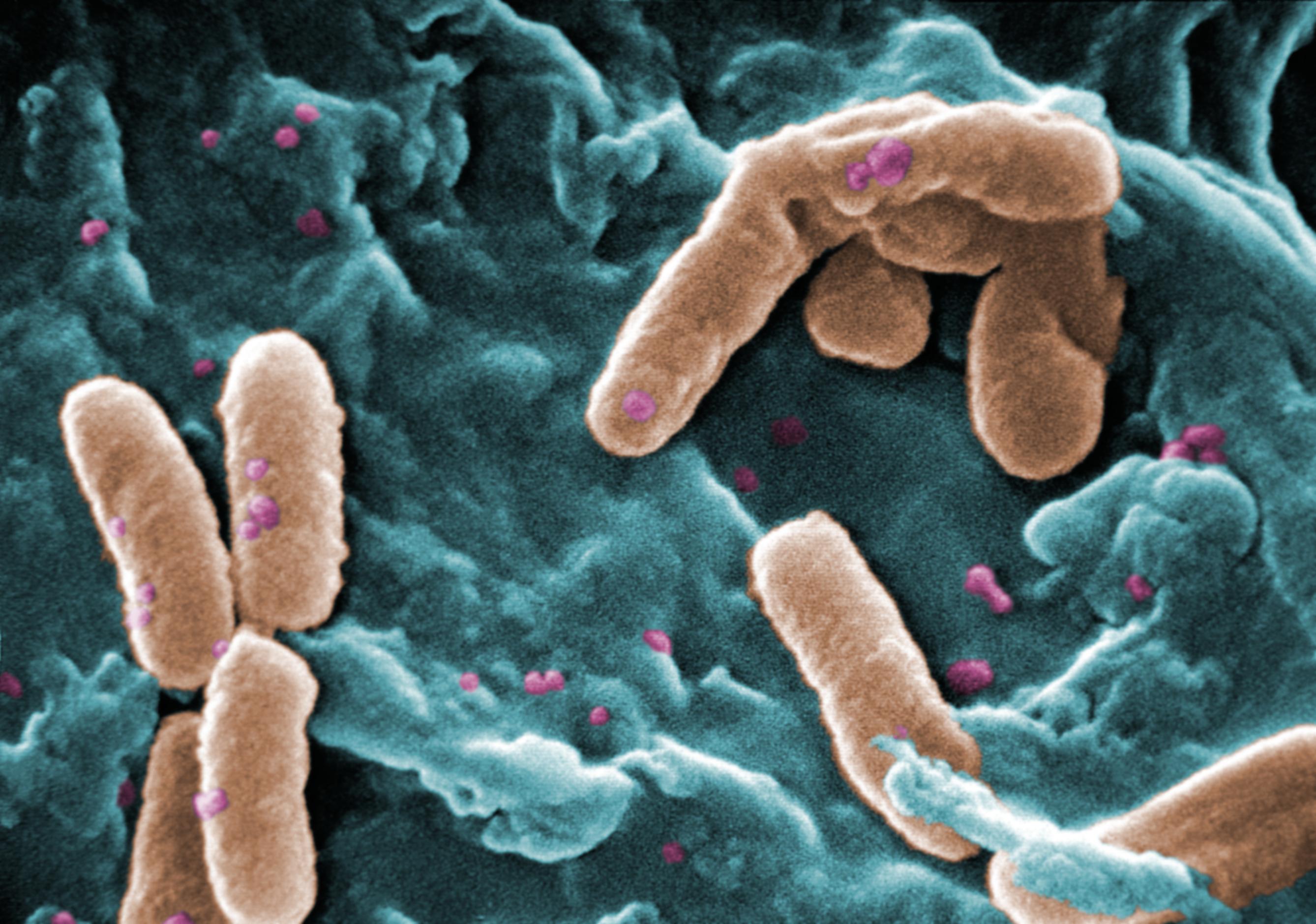
Image source: Wikipedia/Wikimedia
| Ecology, Host, and Life Cycle | |
|---|---|
| Oxygen requirements | Not Available |
| Optimal temperature | Not Available |
| Temperature range | Not Available |
| Habitat | nodules of Chamaecytisus albus; rhizosphere; root nodules |
| Biotic relationship | Not Available |
| Host(s) | Viridiplantae, Brassica napus var. napus, Persea americana |
| Cell arrangement | Not Available |
| Sporulation | Not Available |
| Energy source | Not Available |
| Pathogenicity | Animal |
Gene Summary
Adenine Count
1227924 bp
Thymine Count
1230209 bp
Guanine Count
2152125 bp
Cytosine Count
2145186 bp
Genome Length
6755444 bp
Protein-coding Genes
5756 genes
Non-Coding Genes
245 genes
# of Chromosomes/Plasmids
1
Genes
| Name | Locus Tag | UniProt ID | Strand Orientation | Gene Start/End | Protein Molecular Weight |
|---|---|---|---|---|---|
| flagella basal body p-ring formation protein flga | BTN82_21815 | Not Available | Positive | 4902736 - 4903497 | 28020.2 |
| flagellar biosynthesis anti-sigma factor flgm | BTN82_21820 | Not Available | Positive | 4903648 - 4903968 | 11389.2 |
| flagellar biosynthesis protein flgn | BTN82_21825 | Not Available | Positive | 4904018 - 4904485 | 16654.0 |
| pilus assembly protein pilz | BTN82_21830 | Not Available | Positive | 4904581 - 4905327 | 28286.9 |
| mfs transporter | BTN82_21835 | Not Available | Negative | 4905385 - 4906755 | 49209.4 |
| glutamine synthetase | BTN82_21840 | Not Available | Negative | 4906825 - 4908168 | 48618.9 |
| histidine kinase | BTN82_21845 | Not Available | Negative | 4908316 - 4909008 | 25070.8 |
| hypothetical protein | BTN82_21850 | Not Available | Negative | 4909005 - 4910609 | 59290.6 |
| Trna-arg | Not Available | Not Available | Positive | 4911026 - 4911102 | Not Available |
| hypothetical protein | BTN82_21860 | Not Available | Positive | 4911399 - 4911635 | 8544.14 |
Pathways
0 pathways
No pathways found
No metabolic pathways have been associated with this bacterium yet.
Health Effects
No health effects information available for this bacterium.