Kingdom
Bacillati
Phylum
Cyanobacteriota
Class
Cyanophyceae
Order
Nostocales
Family
Nostocaceae
Genus
Nostoc
Description
Taxonomy
| Kingdom | Bacillati |
|---|---|
| Phylum | Cyanobacteriota |
| Class | Cyanophyceae |
| Order | Nostocales |
| Family | Nostocaceae |
| Genus | Nostoc |
| Species | Nostoc calcicola |
| Strain | FACHB-389 |
Profile
| Physiology | |
|---|---|
| Gram staining properties | Negative |
| Shape | Filamentous |
| Mobility | Not Available |
| Flagellar presence | Yes |
| Number of membranes | Not Available |

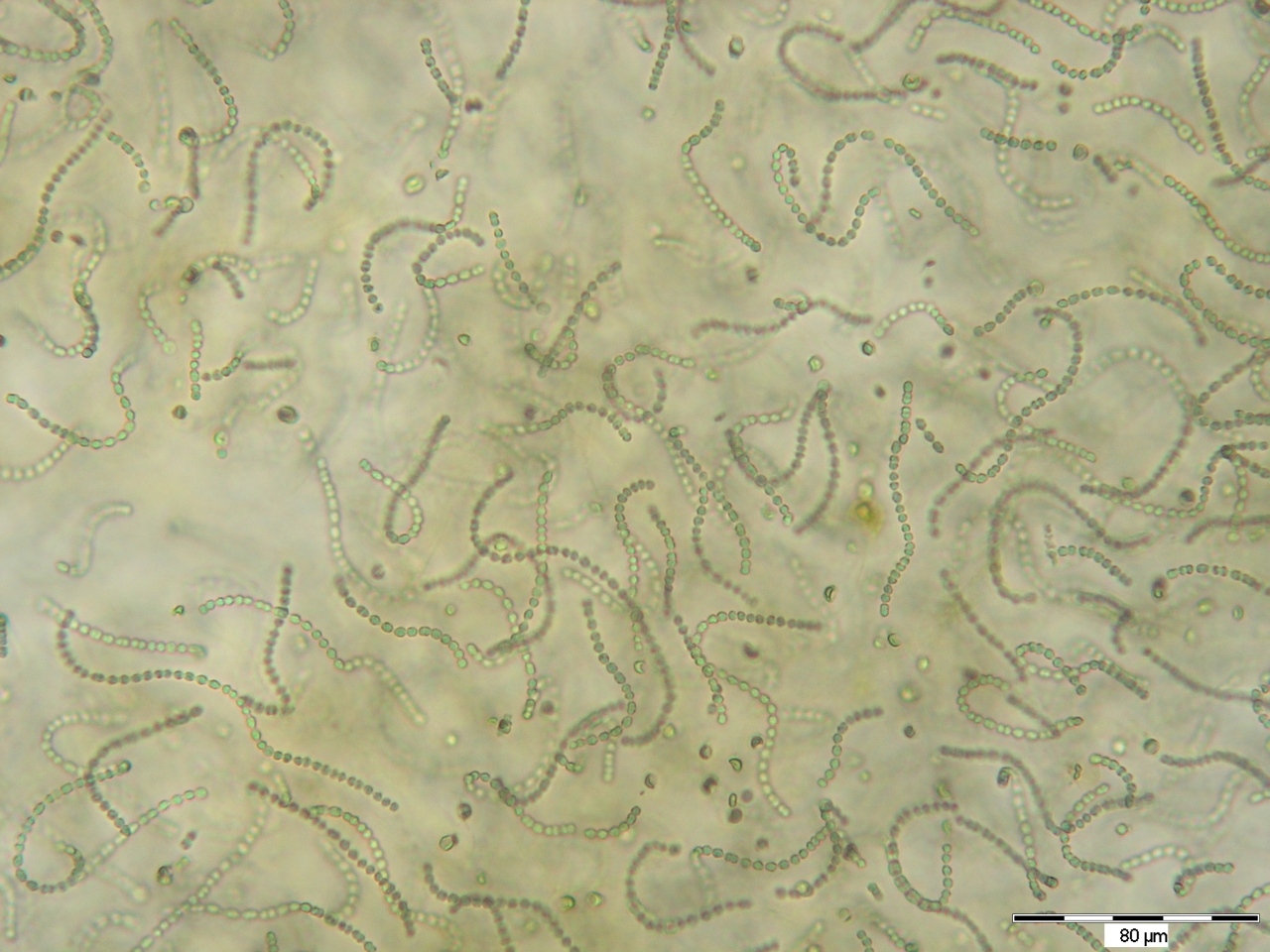
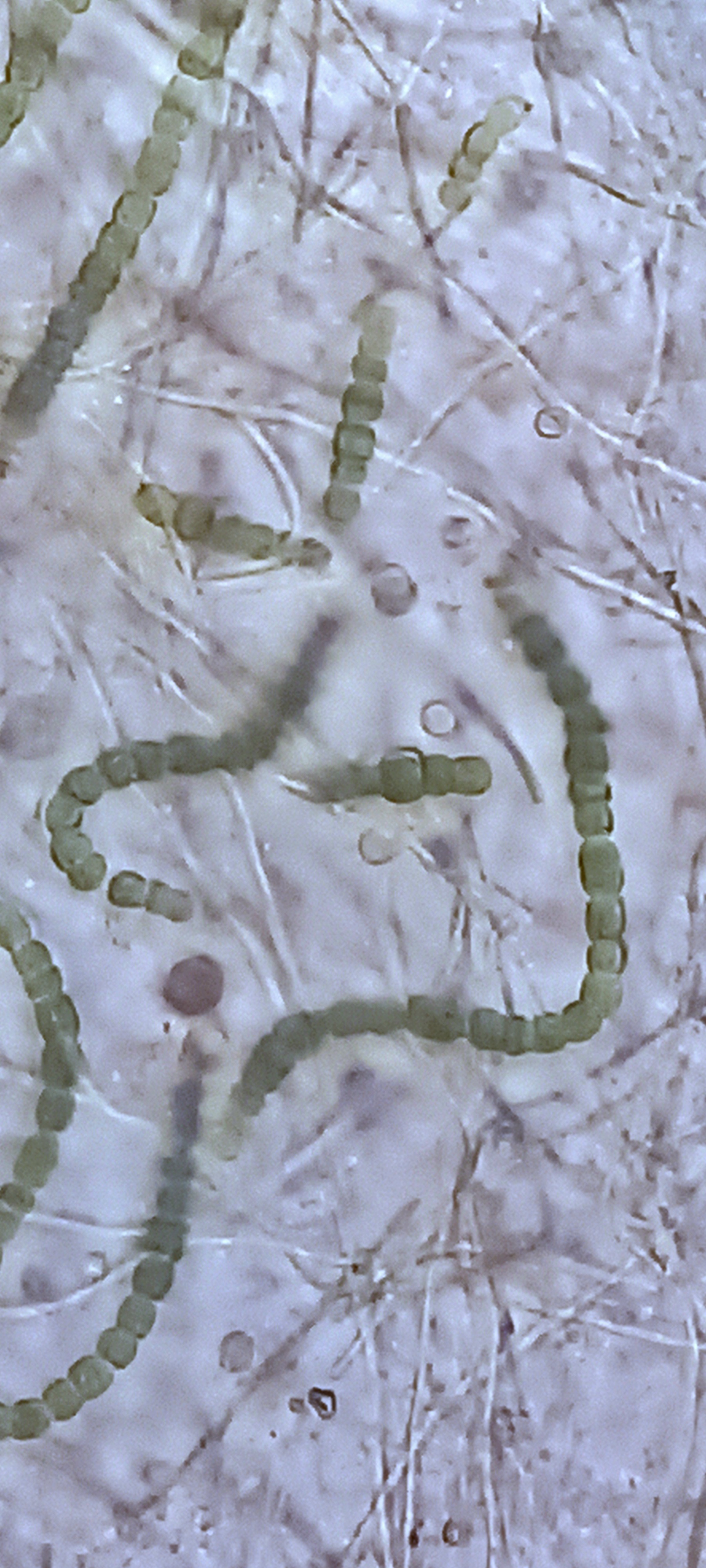
Image source: Wikipedia/Wikimedia
| Ecology, Host, and Life Cycle | |
|---|---|
| Oxygen requirements | Not Available |
| Optimal temperature | Not Available |
| Temperature range | Not Available |
| Habitat | Not Available |
| Biotic relationship | Not Available |
| Host(s) | Not Available |
| Cell arrangement | Not Available |
| Sporulation | Not Available |
| Energy source | Not Available |
| Pathogenicity | Not Available |
Genome Summary
Nostoc calcicola FACHB-389 FACHB-389_Scaffold_320, whole genome
Gene Summary
Adenine Count
Not Available
Thymine Count
Not Available
Guanine Count
Not Available
Cytosine Count
Not Available
Genome Length
Not Available
Protein-coding Genes
Not Available
Non-Coding Genes
Not Available
# of Chromosomes/Plasmids
1
Genes
| Name | Locus Tag | UniProt ID | Strand Orientation | Gene Start/End | Protein Molecular Weight |
|---|---|---|---|---|---|
| peptidylprolyl isomerase | FACHB389_27830 | Not Available | Negative | 6845310 - 6846122 | 28482.5 |
| photosystem i assembly protein | FACHB389_27835 | Not Available | Negative | 6846313 - 6846882 | 21064.8 |
| photosystem ii d2 protein (photosystem q(a) protein) | FACHB389_27840 | Not Available | Positive | 6847450 - 6847912 | 16948.6 |
| chemotaxis protein | FACHB389_27845 | Not Available | Positive | 6847978 - 6850803 | 102787.0 |
| hybrid sensor histidine kinase/response regulator | FACHB389_27850 | Not Available | Positive | 6850902 - 6853895 | 111793.0 |
| hypothetical protein | FACHB389_27855 | Not Available | Positive | 6854231 - 6854689 | 16271.3 |
| signal transduction protein | FACHB389_27860 | Not Available | Positive | 6854759 - 6857980 | 119832.0 |
| hypothetical protein | FACHB389_27865 | Not Available | Positive | 6857982 - 6858758 | 28087.3 |
| hypothetical protein | FACHB389_27870 | Not Available | Negative | 6859359 - 6859643 | 10659.3 |
| hypothetical protein | FACHB389_27875 | Not Available | Positive | 6860018 - 6860314 | 11608.8 |
Pathways
0 pathways
No pathways found
No metabolic pathways have been associated with this bacterium yet.
Health Effects
No health effects information available for this bacterium.