Kingdom
Bacillati
Phylum
Cyanobacteriota
Class
Cyanophyceae
Order
Nostocales
Family
Nostocaceae
Genus
Nostoc
Description
Taxonomy
| Kingdom | Bacillati |
|---|---|
| Phylum | Cyanobacteriota |
| Class | Cyanophyceae |
| Order | Nostocales |
| Family | Nostocaceae |
| Genus | Nostoc |
| Species | Nostoc calcicola |
| Strain | FACHB-389 |
Profile
| Physiology | |
|---|---|
| Gram staining properties | Negative |
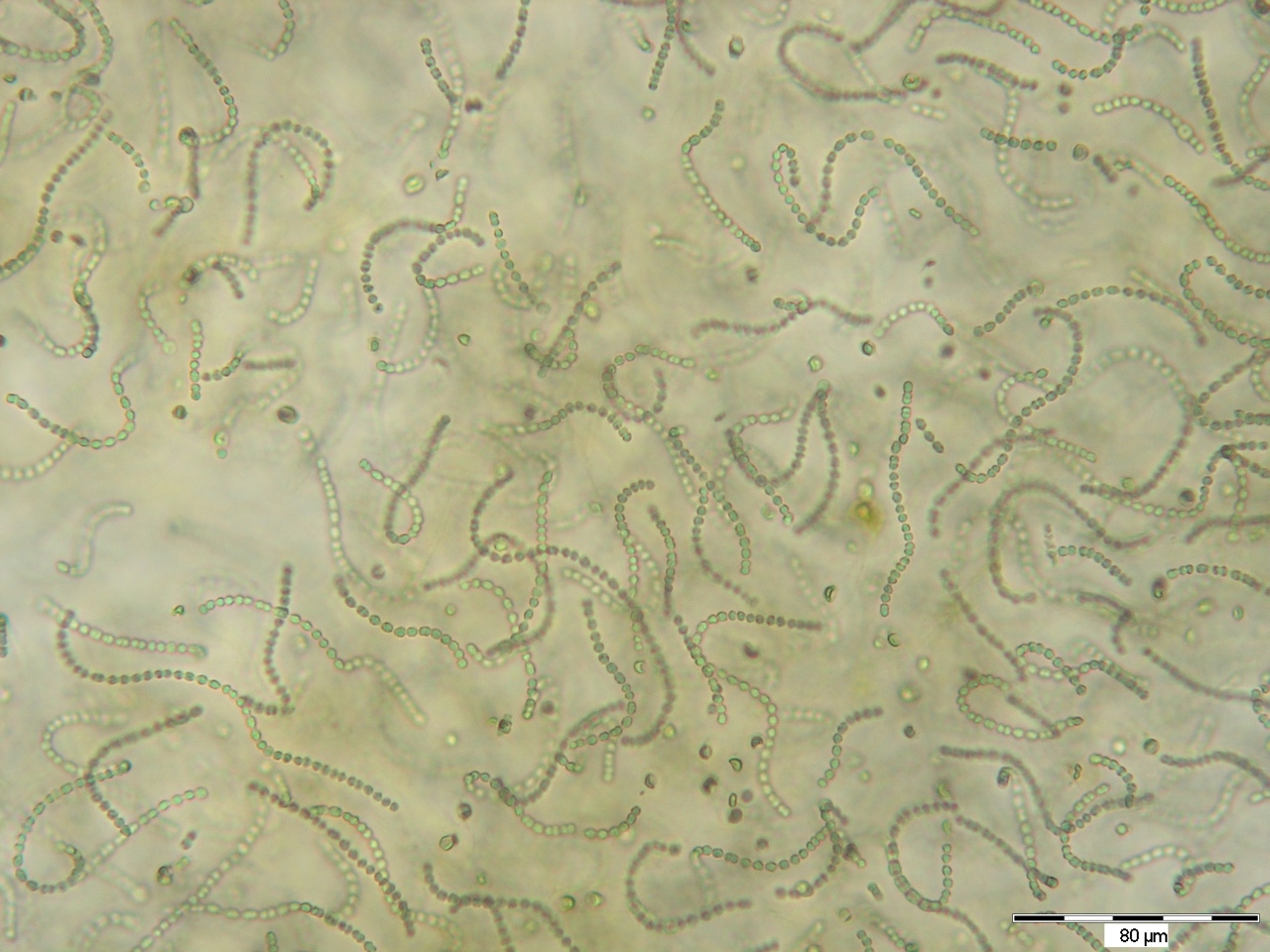
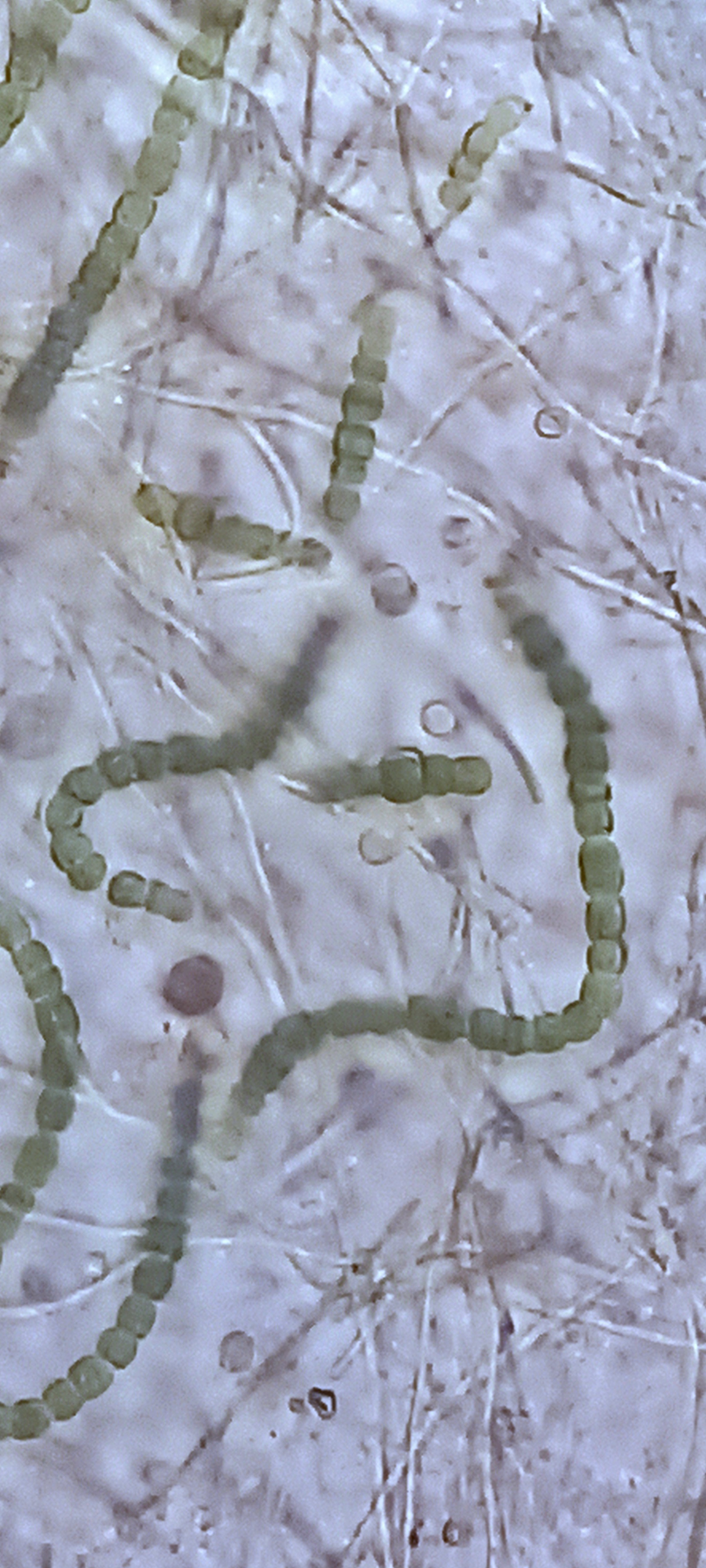
| Shape | Filamentous |
| Mobility | Not Available |
| Flagellar presence | Yes |
| Number of membranes | Not Available |

Image source: Wikipedia/Wikimedia
| Ecology, Host, and Life Cycle | |
|---|---|
| Oxygen requirements | Not Available |
| Optimal temperature | Not Available |
| Temperature range | Not Available |
| Habitat | Not Available |
| Biotic relationship | Not Available |
| Host(s) | Not Available |
| Cell arrangement | Not Available |
| Sporulation | Not Available |
| Energy source | Not Available |
| Pathogenicity | Not Available |
Genome Summary
Nostoc calcicola FACHB-389 FACHB-389_Scaffold_320, whole genome
Gene Summary
Adenine Count
Not Available
Thymine Count
Not Available
Guanine Count
Not Available
Cytosine Count
Not Available
Genome Length
Not Available
Protein-coding Genes
Not Available
Non-Coding Genes
Not Available
# of Chromosomes/Plasmids
1
Genes
| Name | Locus Tag | UniProt ID | Strand Orientation | Gene Start/End | Protein Molecular Weight |
|---|---|---|---|---|---|
| dde transposase family protein | FACHB389_01025 | Not Available | Positive | 272922 - 273107 | 7028.3 |
| peptidase s41 | FACHB389_01030 | Not Available | Negative | 273245 - 274531 | 47241.6 |
| 4-hydroxy-3-methylbut-2-en-1-yl diphosphate synthase | FACHB389_01035 | Not Available | Negative | 274860 - 276086 | 45205.9 |
| hypothetical protein | FACHB389_01040 | Not Available | Positive | 276370 - 276588 | 8048.62 |
| isochorismatase | FACHB389_01050 | Not Available | Positive | 276941 - 277978 | 38348.4 |
| peptidase | FACHB389_01055 | Not Available | Negative | 278075 - 278968 | 31489.8 |
| serine protease | FACHB389_01060 | Not Available | Positive | 279230 - 280435 | 42381.2 |
| hypothetical protein | FACHB389_01065 | Not Available | Negative | 280553 - 280891 | 12816.3 |
| smc-scp complex subunit scpb | FACHB389_01070 | Not Available | Negative | 281102 - 281644 | 20169.2 |
| 2-c-methyl-d-erythritol 4-phosphate cytidylyltransferase | FACHB389_01075 | Not Available | Negative | 281881 - 282564 | 24647.9 |
Pathways
0 pathways
No pathways found
No metabolic pathways have been associated with this bacterium yet.
Health Effects
No health effects information available for this bacterium.