Kingdom
Bacillati
Phylum
Cyanobacteriota
Class
Cyanophyceae
Order
Nostocales
Family
Nostocaceae
Genus
Nostoc
Description
Taxonomy
| Kingdom | Bacillati |
|---|---|
| Phylum | Cyanobacteriota |
| Class | Cyanophyceae |
| Order | Nostocales |
| Family | Nostocaceae |
| Genus | Nostoc |
| Species | Nostoc calcicola |
| Strain | FACHB-389 |
Profile
| Physiology | |
|---|---|
| Gram staining properties | Negative |
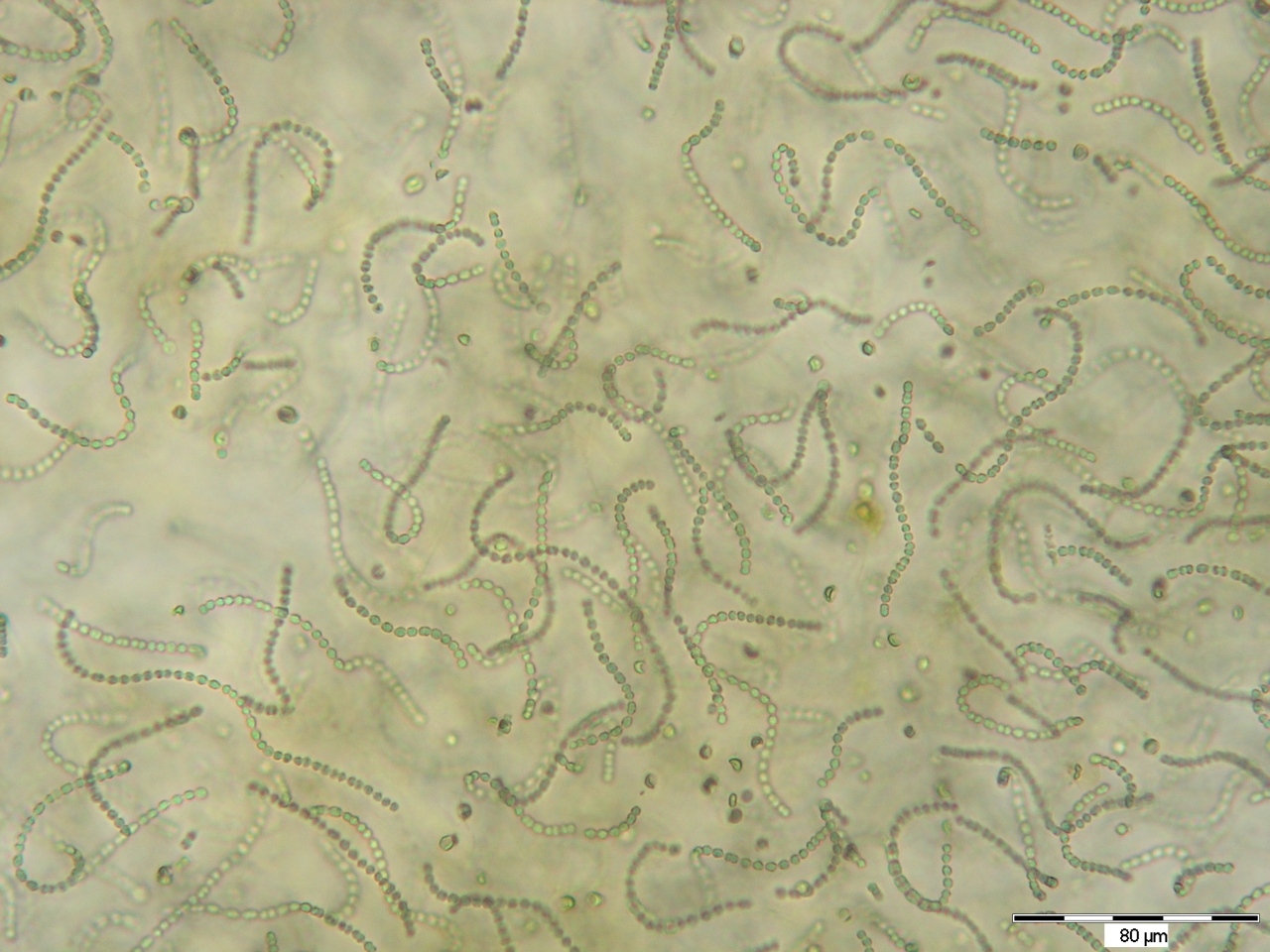
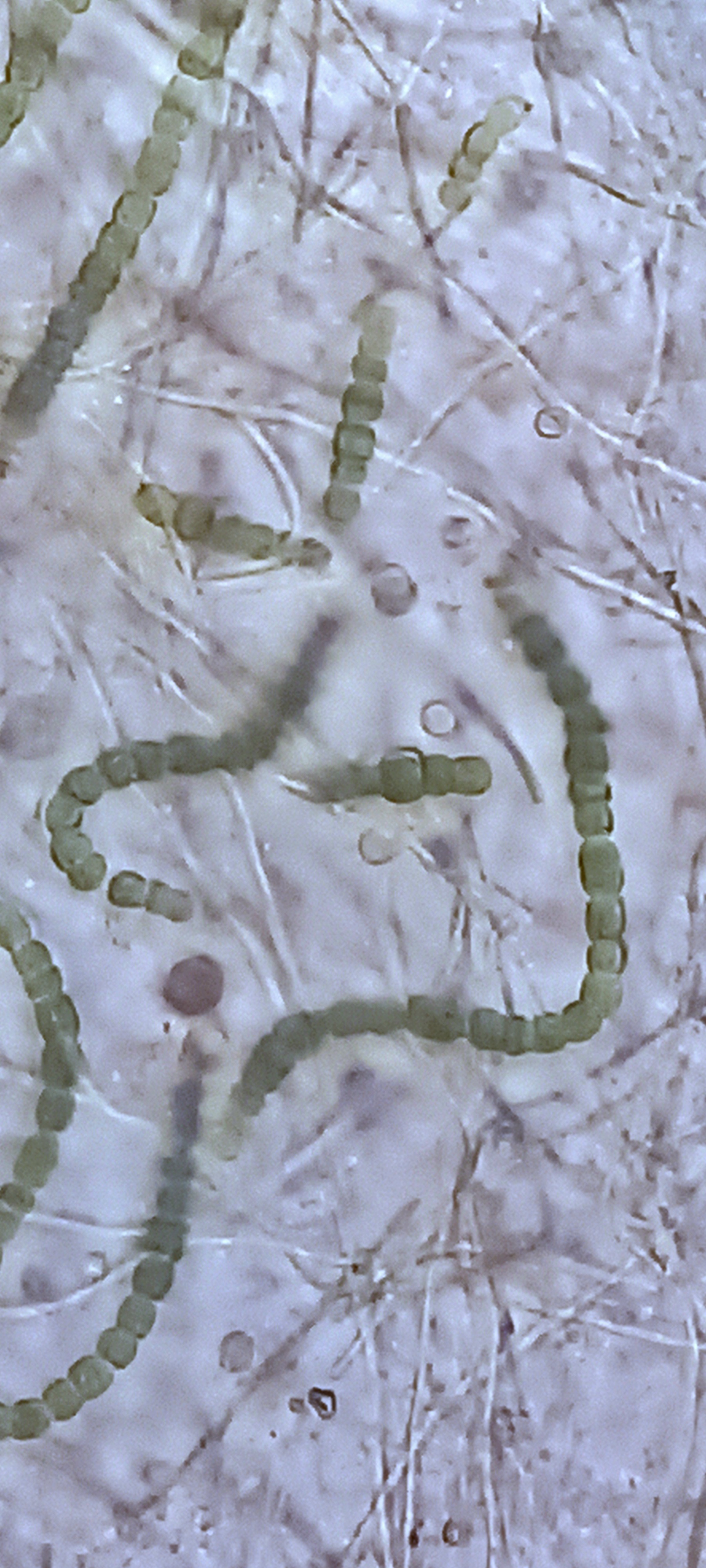
| Shape | Filamentous |
| Mobility | Not Available |
| Flagellar presence | Yes |
| Number of membranes | Not Available |

Image source: Wikipedia/Wikimedia
| Ecology, Host, and Life Cycle | |
|---|---|
| Oxygen requirements | Not Available |
| Optimal temperature | Not Available |
| Temperature range | Not Available |
| Habitat | Not Available |
| Biotic relationship | Not Available |
| Host(s) | Not Available |
| Cell arrangement | Not Available |
| Sporulation | Not Available |
| Energy source | Not Available |
| Pathogenicity | Not Available |
Genome Summary
Nostoc calcicola FACHB-389 FACHB-389_Scaffold_320, whole genome
Gene Summary
Adenine Count
Not Available
Thymine Count
Not Available
Guanine Count
Not Available
Cytosine Count
Not Available
Genome Length
Not Available
Protein-coding Genes
Not Available
Non-Coding Genes
Not Available
# of Chromosomes/Plasmids
1
Genes
| Name | Locus Tag | UniProt ID | Strand Orientation | Gene Start/End | Protein Molecular Weight |
|---|---|---|---|---|---|
| n-acetyl-gamma-glutamyl-phosphate reductase | FACHB389_06055 | Not Available | Positive | 1457707 - 1458765 | 38168.2 |
| phosphopyruvate hydratase | FACHB389_06060 | Not Available | Negative | 1458874 - 1460163 | 45895.7 |
| hypothetical protein | FACHB389_06065 | Not Available | Negative | 1460191 - 1460469 | 10927.4 |
| serine/threonine protein kinase | FACHB389_06070 | Not Available | Positive | 1460509 - 1461906 | 53231.9 |
| hypothetical protein | FACHB389_06075 | Not Available | Positive | 1462431 - 1462949 | 18902.7 |
| serine protease | FACHB389_06080 | Not Available | Positive | 1463022 - 1465748 | 100542.0 |
| lactoylglutathione lyase | FACHB389_06085 | Not Available | Positive | 1466154 - 1466588 | 16137.3 |
| atp-dependent chaperone clpb | FACHB389_06090 | Not Available | Positive | 1466880 - 1469522 | 99436.3 |
| adenylate cyclase | FACHB389_06095 | Not Available | Negative | 1469763 - 1470485 | 26592.8 |
| hypothetical protein | FACHB389_06100 | Not Available | Positive | 1470639 - 1470917 | 11917.2 |
Pathways
0 pathways
No pathways found
No metabolic pathways have been associated with this bacterium yet.
Health Effects
No health effects information available for this bacterium.