Kingdom
Pseudomonadati
Phylum
Pseudomonadota
Class
Gammaproteobacteria
Order
Pseudomonadales
Family
Pseudomonadaceae
Genus
Pseudomonas
Description
Taxonomy
| Kingdom | Pseudomonadati |
|---|---|
| Phylum | Pseudomonadota |
| Class | Gammaproteobacteria |
| Order | Pseudomonadales |
| Family | Pseudomonadaceae |
| Genus | Pseudomonas |
| Species | Pseudomonas fluorescens |
| Strain | strain 48D1 |
Profile
| Physiology | |
|---|---|
| Gram staining properties | Negative |
| Shape | Rod |
| Mobility | Yes |
| Flagellar presence | Yes |
| Number of membranes | 2 |

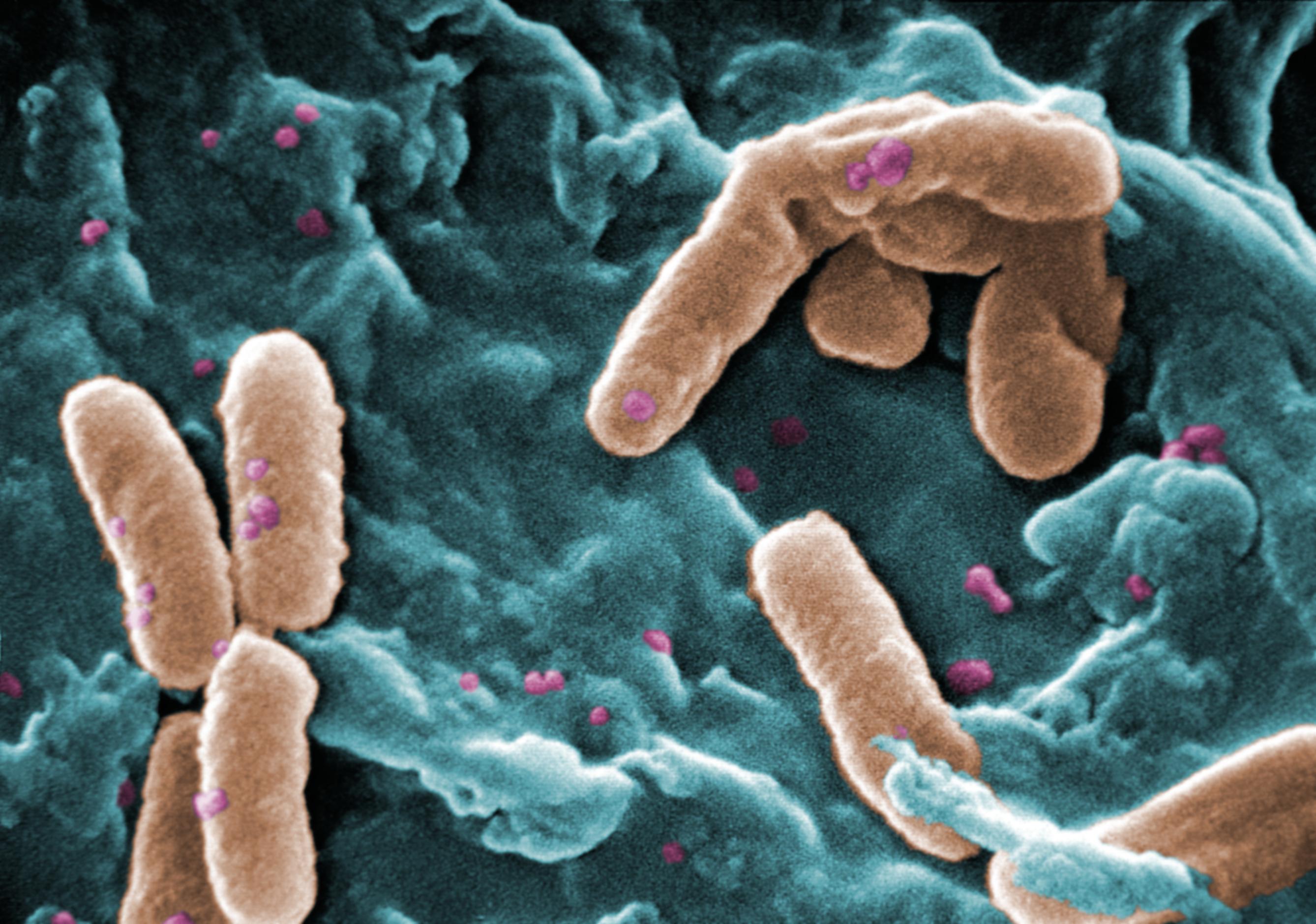
Image source: Wikipedia/Wikimedia
| Ecology, Host, and Life Cycle | |
|---|---|
| Oxygen requirements | Aerobe |
| Optimal temperature | 25 |
| Temperature range | Mesophilic |
| Habitat | Multiple |
| Biotic relationship | Free living |
| Host(s) | Homo sapiens, Metazoa, Viridiplantae |
| Cell arrangement | Singles |
| Sporulation | Not Available |
| Energy source | Heterotroph |
| Pathogenicity | Animal |
Gene Summary
Adenine Count
1243222 bp
Thymine Count
1265377 bp
Guanine Count
1910954 bp
Cytosine Count
1874182 bp
Genome Length
6294190 bp
Protein-coding Genes
5318 genes
Non-Coding Genes
177 genes
# of Chromosomes/Plasmids
1
Genes
| Name | Locus Tag | UniProt ID | Strand Orientation | Gene Start/End | Protein Molecular Weight |
|---|---|---|---|---|---|
| ggdef domain-containing protein | BK669_20390 | Not Available | Negative | 4580648 - 4581775 | 41569.2 |
| lysr family transcriptional regulator | BK669_20395 | Not Available | Negative | 4581893 - 4582792 | 32597.9 |
| hypothetical protein | BK669_20400 | Not Available | Negative | 4582899 - 4584041 | 41242.1 |
| alkene reductase | BK669_20405 | Not Available | Negative | 4584092 - 4585204 | 40184.1 |
| disulfide bond formation protein dsba | BK669_20410 | Not Available | Negative | 4585244 - 4585882 | 23297.6 |
| cytochrome c | BK669_20415 | Not Available | Positive | 4586175 - 4587449 | 45485.4 |
| (2fe-2s)-binding protein | BK669_20420 | Not Available | Positive | 4587446 - 4587910 | 16263.9 |
| aldehyde dehydrogenase | BK669_20425 | Not Available | Positive | 4587907 - 4590162 | 81559.2 |
| lysr family transcriptional regulator | BK669_20430 | Not Available | Negative | 4590232 - 4591149 | 33129.1 |
| carboxynorspermidine decarboxylase | BK669_20435 | Not Available | Positive | 4591379 - 4592476 | 41003.0 |
Pathways
1342 pathways