Kingdom
Pseudomonadati
Phylum
Pseudomonadota
Class
Gammaproteobacteria
Order
Pseudomonadales
Family
Pseudomonadaceae
Genus
Pseudomonas
Description
Taxonomy
| Kingdom | Pseudomonadati |
|---|---|
| Phylum | Pseudomonadota |
| Class | Gammaproteobacteria |
| Order | Pseudomonadales |
| Family | Pseudomonadaceae |
| Genus | Pseudomonas |
| Species | Pseudomonas fluorescens |
| Strain | strain 48D1 |
Profile
| Physiology | |
|---|---|
| Gram staining properties | Negative |
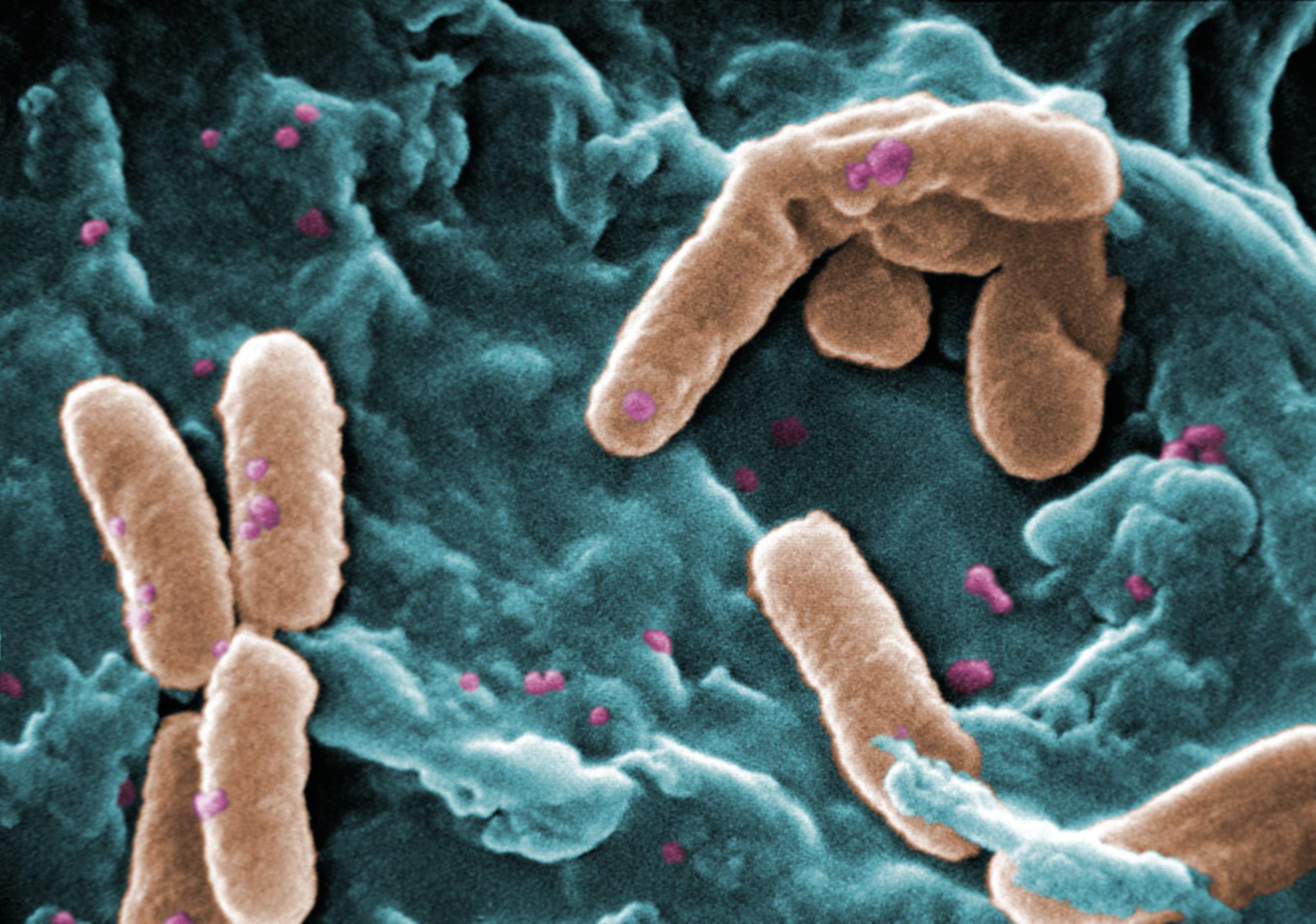
| Shape | Rod |
| Mobility | Yes |
| Flagellar presence | Yes |
| Number of membranes | 2 |

Image source: Wikipedia/Wikimedia
| Ecology, Host, and Life Cycle | |
|---|---|
| Oxygen requirements | Aerobe |
| Optimal temperature | 25 |
| Temperature range | Mesophilic |
| Habitat | Multiple |
| Biotic relationship | Free living |
| Host(s) | Homo sapiens, Metazoa, Viridiplantae |
| Cell arrangement | Singles |
| Sporulation | Not Available |
| Energy source | Heterotroph |
| Pathogenicity | Animal |
Gene Summary
Adenine Count
1243222 bp
Thymine Count
1265377 bp
Guanine Count
1910954 bp
Cytosine Count
1874182 bp
Genome Length
6294190 bp
Protein-coding Genes
5318 genes
Non-Coding Genes
177 genes
# of Chromosomes/Plasmids
1
Genes
| Name | Locus Tag | UniProt ID | Strand Orientation | Gene Start/End | Protein Molecular Weight |
|---|---|---|---|---|---|
| hypothetical protein | BK669_00425 | Not Available | Positive | 94847 - 95032 | 7235.74 |
| Hypothetical protein | BK669_00430 | Not Available | Negative | 95088 - 95345 | 9715.79 |
| Portal protein | BK669_00435 | Not Available | Negative | 95421 - 96290 | 32727.9 |
| Trna-arg; | Not Available | Not Available | Positive | 95525 - 95601 | Not Available |
| Putative terminase atpase subunit | BK669_00440 | Not Available | Negative | 96202 - 98244 | 77033.8 |
| Trna-gln; | Not Available | Not Available | Positive | 98099 - 98173 | Not Available |
| Gpo family capsid scaffolding protein | BK669_00445 | Not Available | Positive | 98407 - 99333 | 33562.5 |
| Major capsid protein | BK669_00450 | Not Available | Positive | 99335 - 100354 | 37329.1 |
| Putative terminase endonuclease subunit | BK669_00455 | Not Available | Positive | 100351 - 101046 | 26080.4 |
| Putative head completion/stabilization protein | BK669_00460 | Not Available | Positive | 101172 - 101633 | 16968.3 |
Pathways
0 pathways
No pathways found
No metabolic pathways have been associated with this bacterium yet.