Kingdom
Pseudomonadati
Phylum
Pseudomonadota
Class
Gammaproteobacteria
Order
Pseudomonadales
Family
Pseudomonadaceae
Genus
Pseudomonas
Description
Taxonomy
| Kingdom | Pseudomonadati |
|---|---|
| Phylum | Pseudomonadota |
| Class | Gammaproteobacteria |
| Order | Pseudomonadales |
| Family | Pseudomonadaceae |
| Genus | Pseudomonas |
| Species | Pseudomonas fluorescens |
| Strain | strain 48D1 |
Profile
| Physiology | |
|---|---|
| Gram staining properties | Negative |
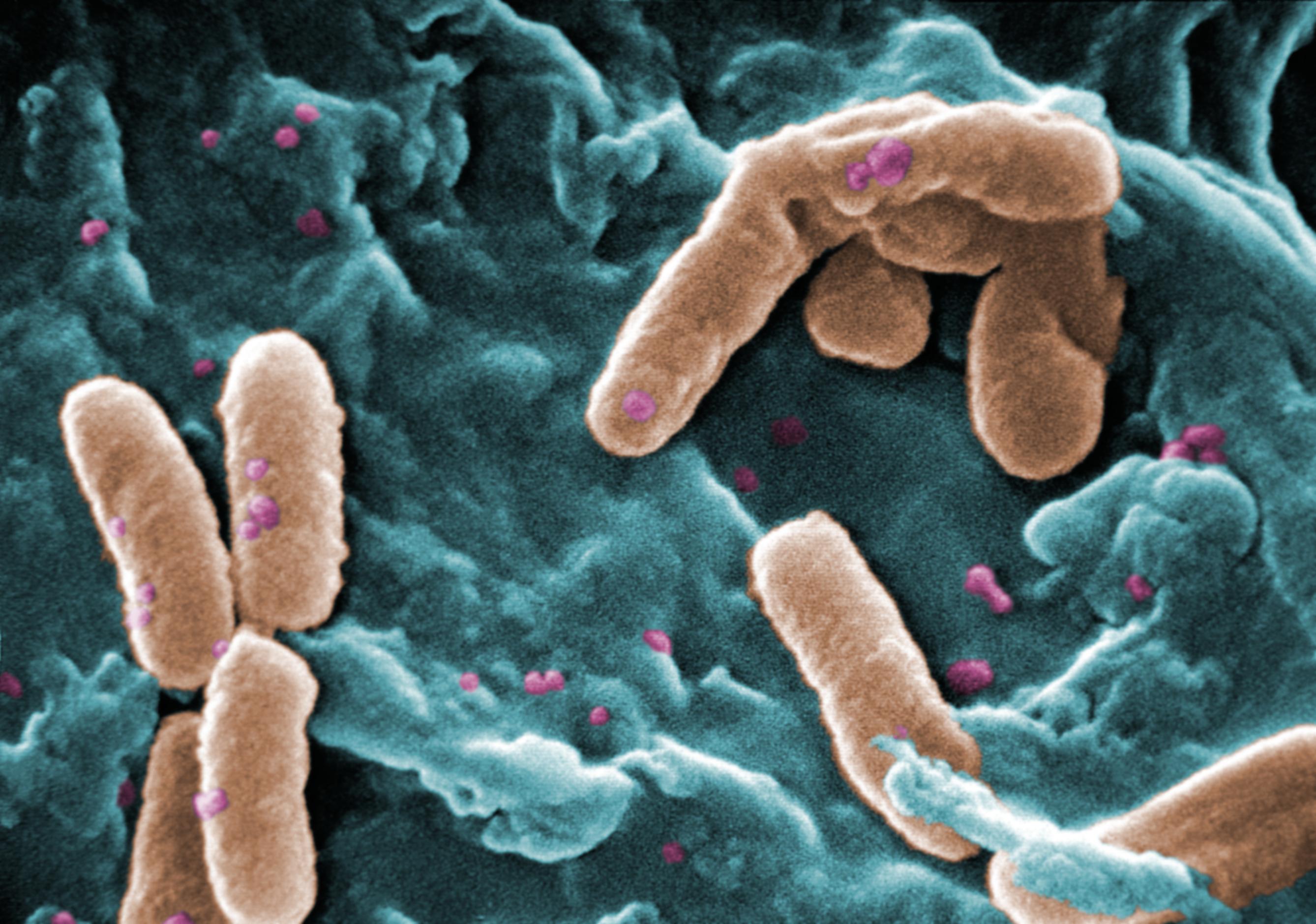
| Shape | Rod |
| Mobility | Yes |
| Flagellar presence | Yes |
| Number of membranes | 2 |

Image source: Wikipedia/Wikimedia
| Ecology, Host, and Life Cycle | |
|---|---|
| Oxygen requirements | Aerobe |
| Optimal temperature | 25 |
| Temperature range | Mesophilic |
| Habitat | Multiple |
| Biotic relationship | Free living |
| Host(s) | Homo sapiens, Metazoa, Viridiplantae |
| Cell arrangement | Singles |
| Sporulation | Not Available |
| Energy source | Heterotroph |
| Pathogenicity | Animal |
Gene Summary
Adenine Count
1243222 bp
Thymine Count
1265377 bp
Guanine Count
1910954 bp
Cytosine Count
1874182 bp
Genome Length
6294190 bp
Protein-coding Genes
5318 genes
Non-Coding Genes
177 genes
# of Chromosomes/Plasmids
1
Genes
| Name | Locus Tag | UniProt ID | Strand Orientation | Gene Start/End | Protein Molecular Weight |
|---|---|---|---|---|---|
| thiamine-phosphate diphosphorylase | BK669_06110 | Not Available | Negative | 1387982 - 1388605 | 22143.7 |
| bifunctional hydroxymethylpyrimidine kinase/phosphomethylpyrimidine kinase | BK669_06115 | Not Available | Negative | 1388624 - 1389421 | 28417.1 |
| hybrid sensor histidine kinase/response regulator | BK669_06120 | Not Available | Positive | 1389726 - 1392080 | 86595.0 |
| dna alkylation response protein | BK669_06125 | Not Available | Positive | 1392177 - 1393826 | 60033.8 |
| amp nucleosidase | BK669_06130 | Not Available | Positive | 1394047 - 1395510 | 54560.4 |
| pseudouridine synthase | BK669_06135 | Not Available | Positive | 1395583 - 1396218 | 23852.8 |
| hypothetical protein | BK669_06140 | Not Available | Negative | 1396213 - 1396422 | 7513.63 |
| asnc family transcriptional regulator | BK669_06145 | Not Available | Negative | 1397374 - 1397853 | 18023.8 |
| glycine zipper family protein | BK669_06150 | Not Available | Positive | 1398311 - 1399348 | 39189.7 |
| divalent metal cation transporter fief | BK669_06155 | Not Available | Negative | 1399404 - 1400312 | 32299.2 |
Pathways
1342 pathways