Kingdom
Pseudomonadati
Phylum
Pseudomonadota
Class
Gammaproteobacteria
Order
Pseudomonadales
Family
Pseudomonadaceae
Genus
Pseudomonas
Description
Taxonomy
| Kingdom | Pseudomonadati |
|---|---|
| Phylum | Pseudomonadota |
| Class | Gammaproteobacteria |
| Order | Pseudomonadales |
| Family | Pseudomonadaceae |
| Genus | Pseudomonas |
| Species | Pseudomonas fluorescens |
| Strain | strain 36F3 |
Profile
| Physiology | |
|---|---|
| Gram staining properties | Negative |
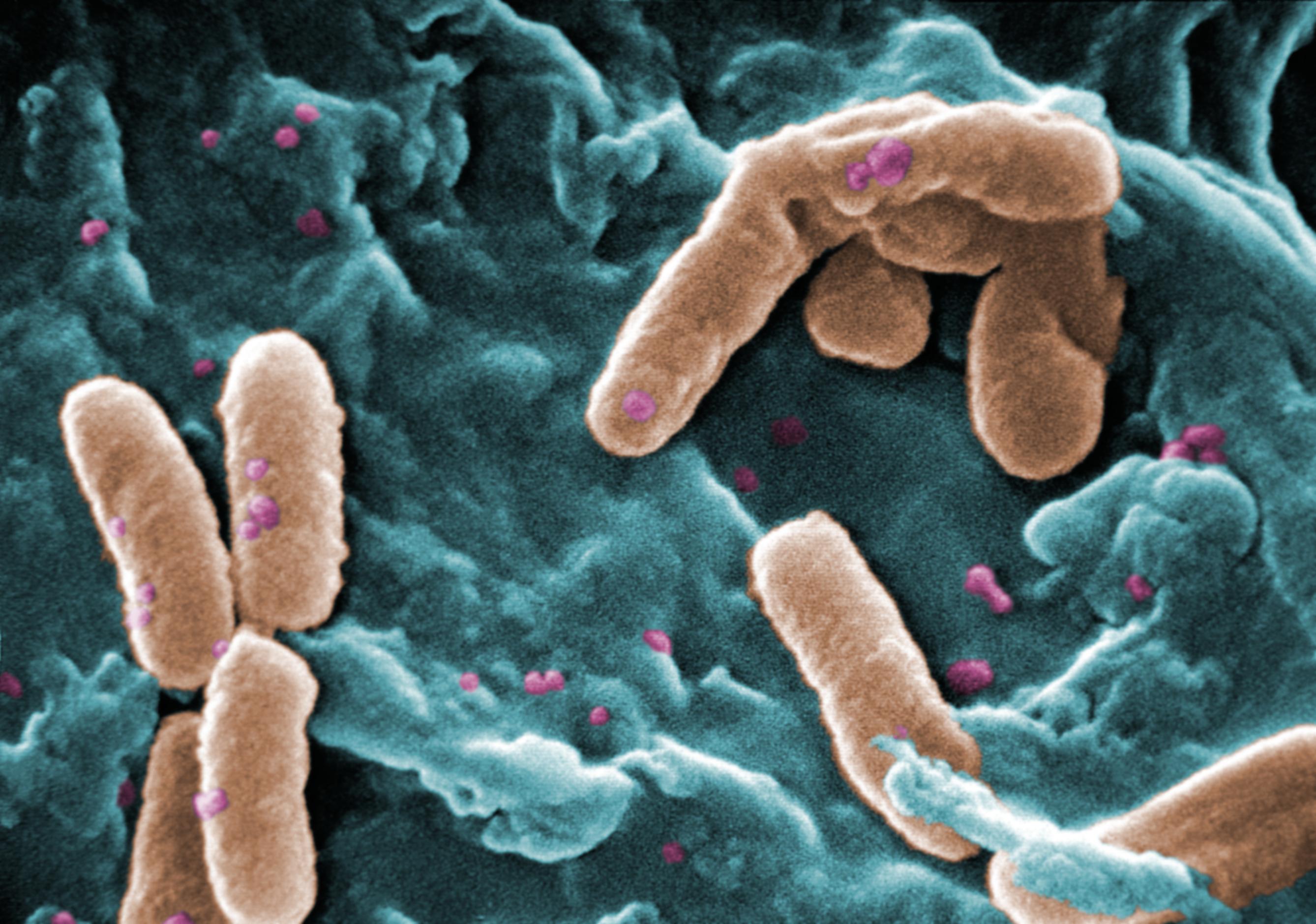
| Shape | Rod |
| Mobility | Yes |
| Flagellar presence | Yes |
| Number of membranes | 2 |

Image source: Wikipedia/Wikimedia
| Ecology, Host, and Life Cycle | |
|---|---|
| Oxygen requirements | Aerobe |
| Optimal temperature | 25 |
| Temperature range | Mesophilic |
| Habitat | Multiple |
| Biotic relationship | Free living |
| Host(s) | Homo sapiens, Metazoa, Viridiplantae |
| Cell arrangement | Singles |
| Sporulation | Not Available |
| Energy source | Heterotroph |
| Pathogenicity | Animal |
Gene Summary
Adenine Count
1305722 bp
Thymine Count
1289790 bp
Guanine Count
1940469 bp
Cytosine Count
1984108 bp
Genome Length
6521700 bp
Protein-coding Genes
5443 genes
Non-Coding Genes
257 genes
# of Chromosomes/Plasmids
1
Genes
| Name | Locus Tag | UniProt ID | Strand Orientation | Gene Start/End | Protein Molecular Weight |
|---|---|---|---|---|---|
| spermidine synthase | BK668_05660 | Not Available | Positive | 1266542 - 1267417 | 32810.3 |
| hypothetical protein | BK668_05665 | Not Available | Positive | 1267674 - 1267907 | 8636.17 |
| superfamily ii dna/rna helicase, snf2 family protein | BK668_05670 | Not Available | Positive | 1268120 - 1268467 | 13097.3 |
| hypothetical protein | BK668_05675 | Not Available | Positive | 1268942 - 1270351 | 52574.0 |
| hypothetical protein | BK668_05680 | Not Available | Positive | 1270364 - 1271314 | 35586.4 |
| transglutaminase | BK668_05685 | Not Available | Positive | 1271311 - 1272114 | 30144.4 |
| cytochrome c | BK668_05690 | Not Available | Negative | 1272235 - 1273002 | 28179.8 |
| hypothetical protein | BK668_05695 | Not Available | Negative | 1273386 - 1273571 | 6500.64 |
| acetyl-coa acetyltransferase | BK668_05700 | Not Available | Positive | 1273641 - 1274846 | 42091.7 |
| 3-hydroxyacyl-coa dehydrogenase | BK668_05705 | Not Available | Positive | 1274871 - 1277015 | 76357.7 |
Pathways
1342 pathways