Kingdom
Pseudomonadati
Phylum
Pseudomonadota
Class
Gammaproteobacteria
Order
Pseudomonadales
Family
Pseudomonadaceae
Genus
Pseudomonas
Description
Taxonomy
| Kingdom | Pseudomonadati |
|---|---|
| Phylum | Pseudomonadota |
| Class | Gammaproteobacteria |
| Order | Pseudomonadales |
| Family | Pseudomonadaceae |
| Genus | Pseudomonas |
| Species | Pseudomonas chlororaphis |
| Strain | strain 14D6 |
Profile
| Physiology | |
|---|---|
| Gram staining properties | Negative |
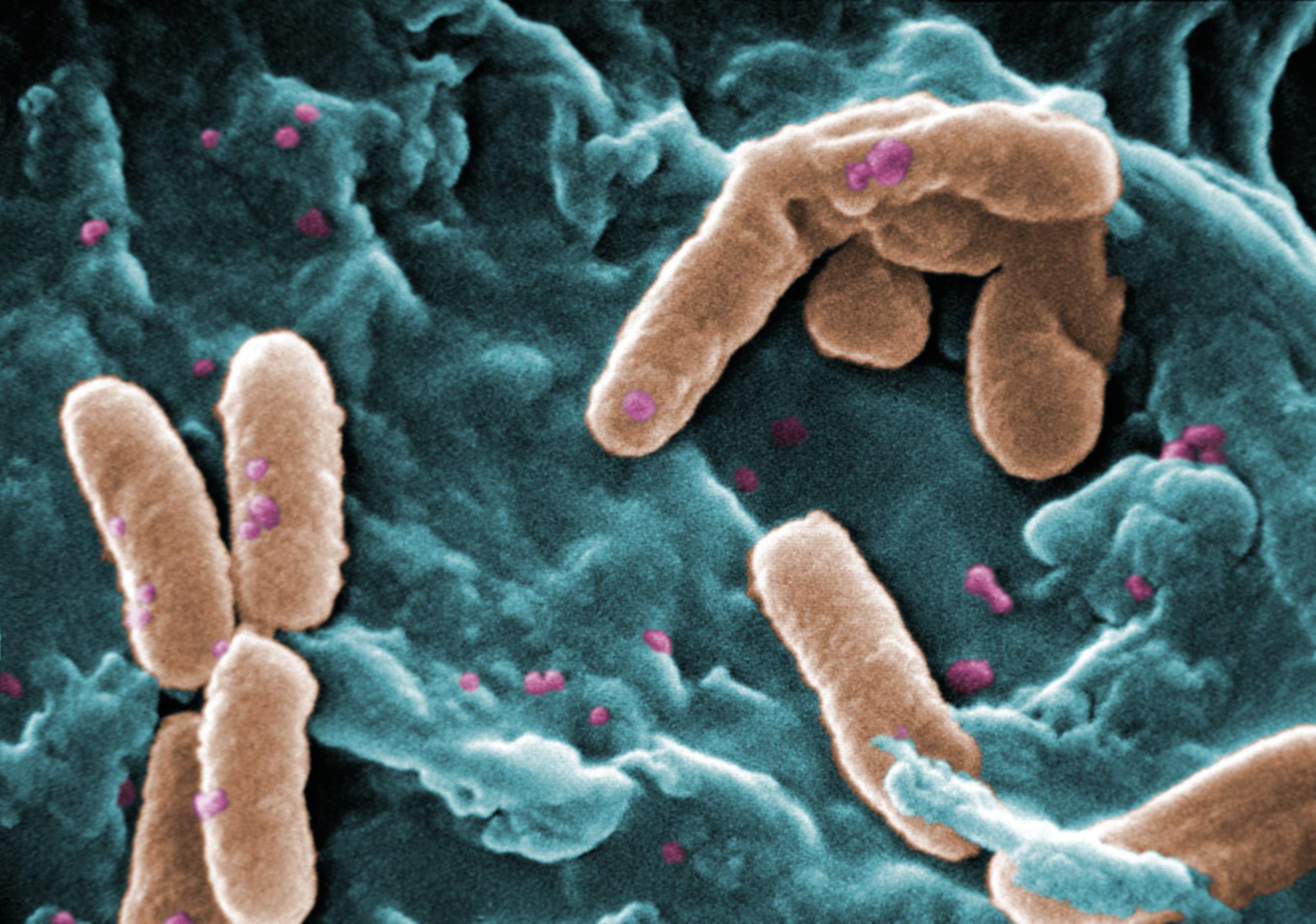
| Shape | Rod |
| Mobility | Not Available |
| Flagellar presence | Not Available |
| Number of membranes | Not Available |

Image source: Wikipedia/Wikimedia
| Ecology, Host, and Life Cycle | |
|---|---|
| Oxygen requirements | Not Available |
| Optimal temperature | Not Available |
| Temperature range | Not Available |
| Habitat | nodules of Chamaecytisus albus; rhizosphere; root nodules |
| Biotic relationship | Not Available |
| Host(s) | Viridiplantae, Brassica napus var. napus, Persea americana |
| Cell arrangement | Not Available |
| Sporulation | Not Available |
| Energy source | Not Available |
| Pathogenicity | Animal |
Gene Summary
Adenine Count
1318958 bp
Thymine Count
1318338 bp
Guanine Count
2191548 bp
Cytosine Count
2183398 bp
Genome Length
7012595 bp
Protein-coding Genes
6136 genes
Non-Coding Genes
99 genes
# of Chromosomes/Plasmids
1
Genes
| Name | Locus Tag | UniProt ID | Strand Orientation | Gene Start/End | Protein Molecular Weight |
|---|---|---|---|---|---|
| lysr family transcriptional regulator | BK634_30010 | Not Available | Positive | 6711654 - 6712538 | 32236.2 |
| nadph:quinone reductase | BK634_30015 | Not Available | Positive | 6712595 - 6713170 | 21975.7 |
| merr family transcriptional regulator | BK634_30020 | Not Available | Positive | 6713232 - 6713603 | 14225.0 |
| amino acid permease | BK634_30025 | Not Available | Negative | 6713628 - 6715037 | 51029.4 |
| kynureninase | BK634_30030 | Not Available | Negative | 6715119 - 6716369 | 45865.8 |
| asnc family transcriptional regulator | BK634_30035 | Not Available | Positive | 6716546 - 6717019 | 18033.8 |
| arac family transcriptional regulator | BK634_30040 | Not Available | Negative | 6717023 - 6718036 | 38245.4 |
| anthranilate 1,2-dioxygenase large subunit | BK634_30045 | Not Available | Positive | 6718477 - 6719862 | 52336.4 |
| anthranilate 1,2-dioxygenase small subunit | BK634_30050 | Not Available | Positive | 6719865 - 6720356 | 19372.8 |
| anthranilate dioxygenase reductase | BK634_30055 | Not Available | Positive | 6720375 - 6721397 | 37938.1 |
Pathways
0 pathways
No pathways found
No metabolic pathways have been associated with this bacterium yet.
Health Effects
No health effects information available for this bacterium.