Kingdom
Pseudomonadati
Phylum
Pseudomonadota
Class
Gammaproteobacteria
Order
Legionellales
Family
Legionellaceae
Genus
Legionella
Description
Taxonomy
| Kingdom | Pseudomonadati |
|---|---|
| Phylum | Pseudomonadota |
| Class | Gammaproteobacteria |
| Order | Legionellales |
| Family | Legionellaceae |
| Genus | Legionella |
| Species | Legionella sp. 39-23 |
| Strain | No strain |
Profile
| Physiology | |
|---|---|
| Gram staining properties | Not Available |
| Shape | Rod |
| Mobility | Not Available |
| Flagellar presence | Yes |
| Number of membranes | Not Available |

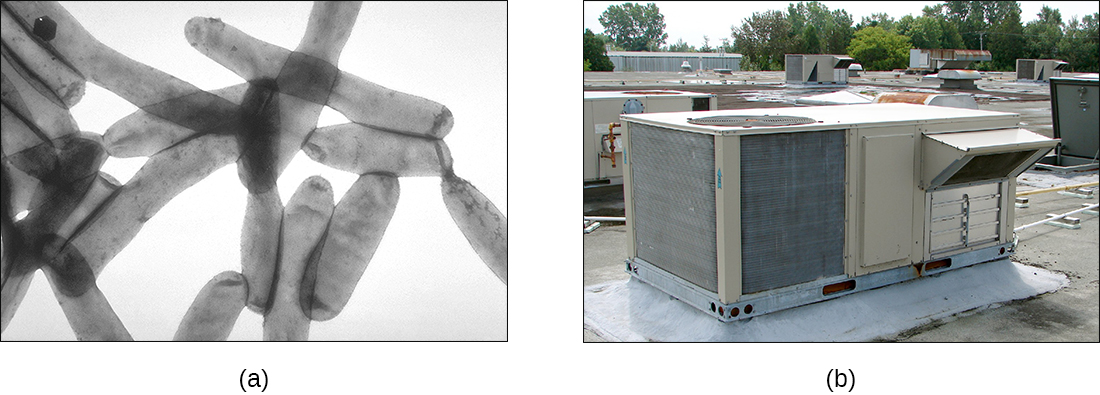
Image source: Wikipedia/Wikimedia
| Ecology, Host, and Life Cycle | |
|---|---|
| Oxygen requirements | Not Available |
| Optimal temperature | Not Available |
| Temperature range | Not Available |
| Habitat | Not Available |
| Biotic relationship | Not Available |
| Host(s) | Not Available |
| Cell arrangement | Not Available |
| Sporulation | Not Available |
| Energy source | Not Available |
| Pathogenicity | Not Available |
Gene Summary
Adenine Count
1282110 bp
Thymine Count
1274642 bp
Guanine Count
800676 bp
Cytosine Count
809883 bp
Genome Length
4167318 bp
Protein-coding Genes
3582 genes
Non-Coding Genes
39 genes
# of Chromosomes/Plasmids
1
Genes
| Name | Locus Tag | UniProt ID | Strand Orientation | Gene Start/End | Protein Molecular Weight |
|---|---|---|---|---|---|
| succinate dehydrogenase flavoprotein subunit | BGO44_13175 | Not Available | Negative | 4020002 - 4021771 | 64783.1 |
| succinate dehydrogenase, hydrophobic membrane anchor protein | BGO44_13180 | Not Available | Negative | 4021773 - 4022120 | 13122.4 |
| succinate dehydrogenase, cytochrome b556 subunit | BGO44_13185 | Not Available | Negative | 4022114 - 4022488 | 13937.8 |
| hypothetical protein | BGO44_13190 | Not Available | Positive | 4022750 - 4023745 | 36922.4 |
| virulence factor | BGO44_13195 | Not Available | Negative | 4023790 - 4024446 | 25232.9 |
| ferrous iron transport protein b | BGO44_13200 | Not Available | Negative | 4024784 - 4027036 | 82412.7 |
| ferrous iron transport protein a | BGO44_13205 | Not Available | Negative | 4027033 - 4027263 | 8538.71 |
| cell division protein zape | BGO44_13210 | Not Available | Negative | 4027467 - 4028564 | 42618.9 |
| hypothetical protein | BGO44_13215 | Not Available | Negative | 4028561 - 4029220 | 24386.1 |
| hemolysin d | BGO44_13220 | Not Available | Positive | 4029333 - 4030427 | 40336.5 |
Pathways
0 pathways
No pathways found
No metabolic pathways have been associated with this bacterium yet.
Health Effects
No health effects information available for this bacterium.