Kingdom
Bacillati
Phylum
Bacillota
Class
Bacilli
Order
Lactobacillales
Family
Lactobacillaceae
Genus
Lactobacillus
Description
Taxonomy
| Kingdom | Bacillati |
|---|---|
| Phylum | Bacillota |
| Class | Bacilli |
| Order | Lactobacillales |
| Family | Lactobacillaceae |
| Genus | Lactobacillus |
| Species | Lactobacillus crispatus |
| Strain | strain UMNLC11 crispatus9E6S24191 |
Profile
| Physiology | |
|---|---|
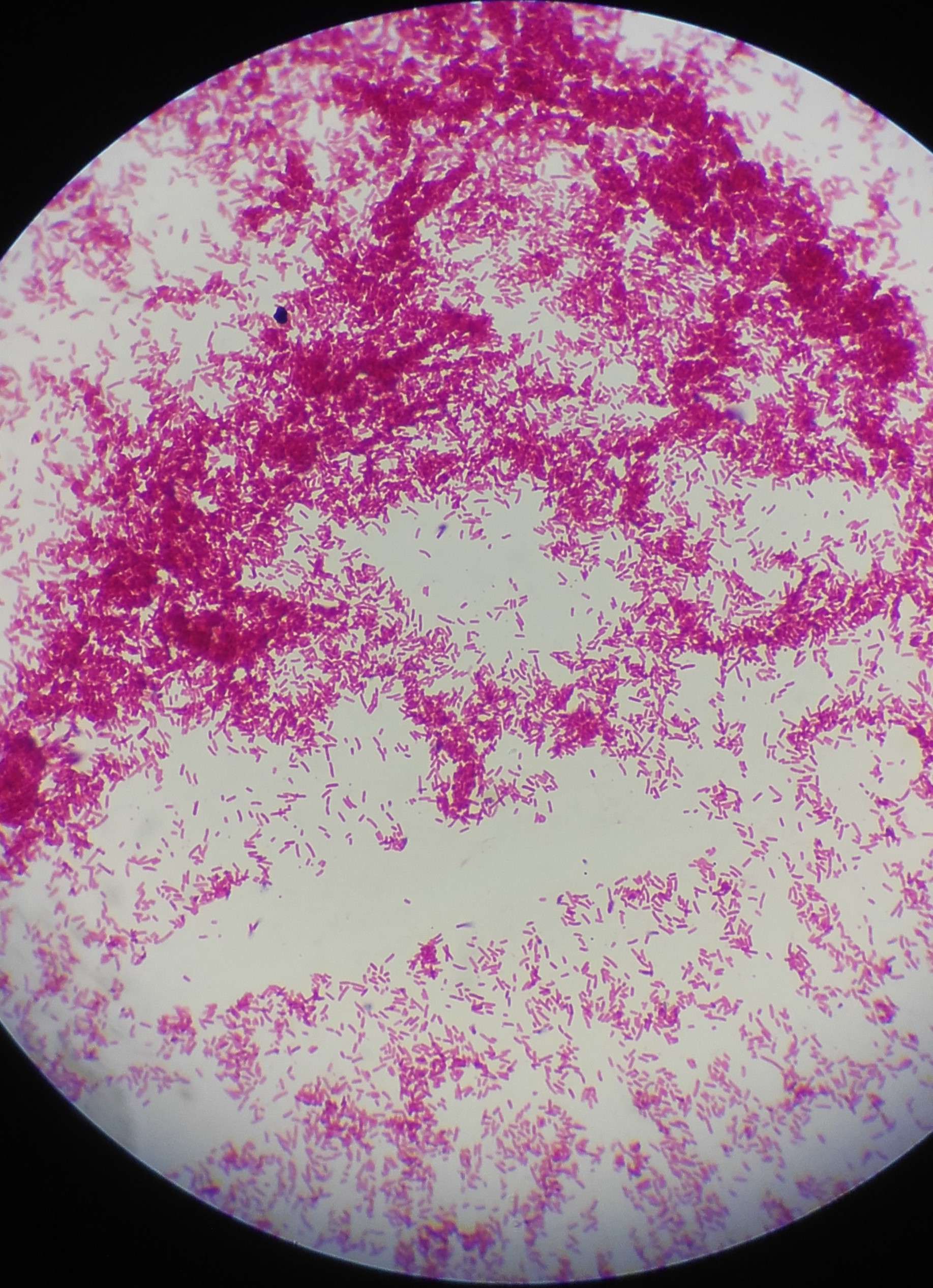
| Gram staining properties | Positive |
| Shape | Rod |
| Mobility | No |
| Flagellar presence | Yes |
| Number of membranes | 1 |

Image source: Wikipedia/Wikimedia
| Ecology, Host, and Life Cycle | |
|---|---|
| Oxygen requirements | Facultative anaerobe |
| Optimal temperature | 37 |
| Temperature range | Mesophilic |
| Habitat | HostAssociated |
| Biotic relationship | Free living |
| Host(s) | Homo sapiens, Gallus gallus, Metazoa |
| Cell arrangement | Chains |
| Sporulation | Nonsporulating |
| Energy source | Not Available |
| Pathogenicity | Not Available |
Gene Summary
Adenine Count
645814 bp
Thymine Count
639818 bp
Guanine Count
381113 bp
Cytosine Count
372888 bp
Genome Length
2039742 bp
Protein-coding Genes
1863 genes
Non-Coding Genes
66 genes
# of Chromosomes/Plasmids
1
Genes
| Name | Locus Tag | UniProt ID | Strand Orientation | Gene Start/End | Protein Molecular Weight |
|---|---|---|---|---|---|
| hypothetical protein | AYP87_03375 | Not Available | Negative | 1900606 - 1901313 | 26418.2 |
| l-lactate dehydrogenase | AYP87_03380 | Not Available | Negative | 1901485 - 1902456 | 35150.2 |
| aminoacyl-trna hydrolase | AYP87_03385 | Not Available | Positive | 1902593 - 1903150 | 20871.1 |
| transcription-repair coupling factor | AYP87_03390 | Not Available | Positive | 1903152 - 1906646 | 131521.0 |
| hypothetical protein | AYP87_03395 | Not Available | Positive | 1906662 - 1906904 | 9127.25 |
| septation inhibitor protein | AYP87_03400 | Not Available | Positive | 1906972 - 1907349 | 14800.8 |
| rna-binding protein | AYP87_03405 | Not Available | Positive | 1907349 - 1907711 | 13928.4 |
| trna lysidine(34) synthetase tils | AYP87_03410 | Not Available | Positive | 1907750 - 1909003 | 48635.9 |
| cell division protein ftsh | AYP87_03415 | Not Available | Positive | 1909098 - 1911266 | 79242.4 |
| hsp33 family molecular chaperone | AYP87_03420 | Not Available | Positive | 1911319 - 1912209 | 32120.6 |
Pathways
765 pathways
Health Effects
No health effects information available for this bacterium.