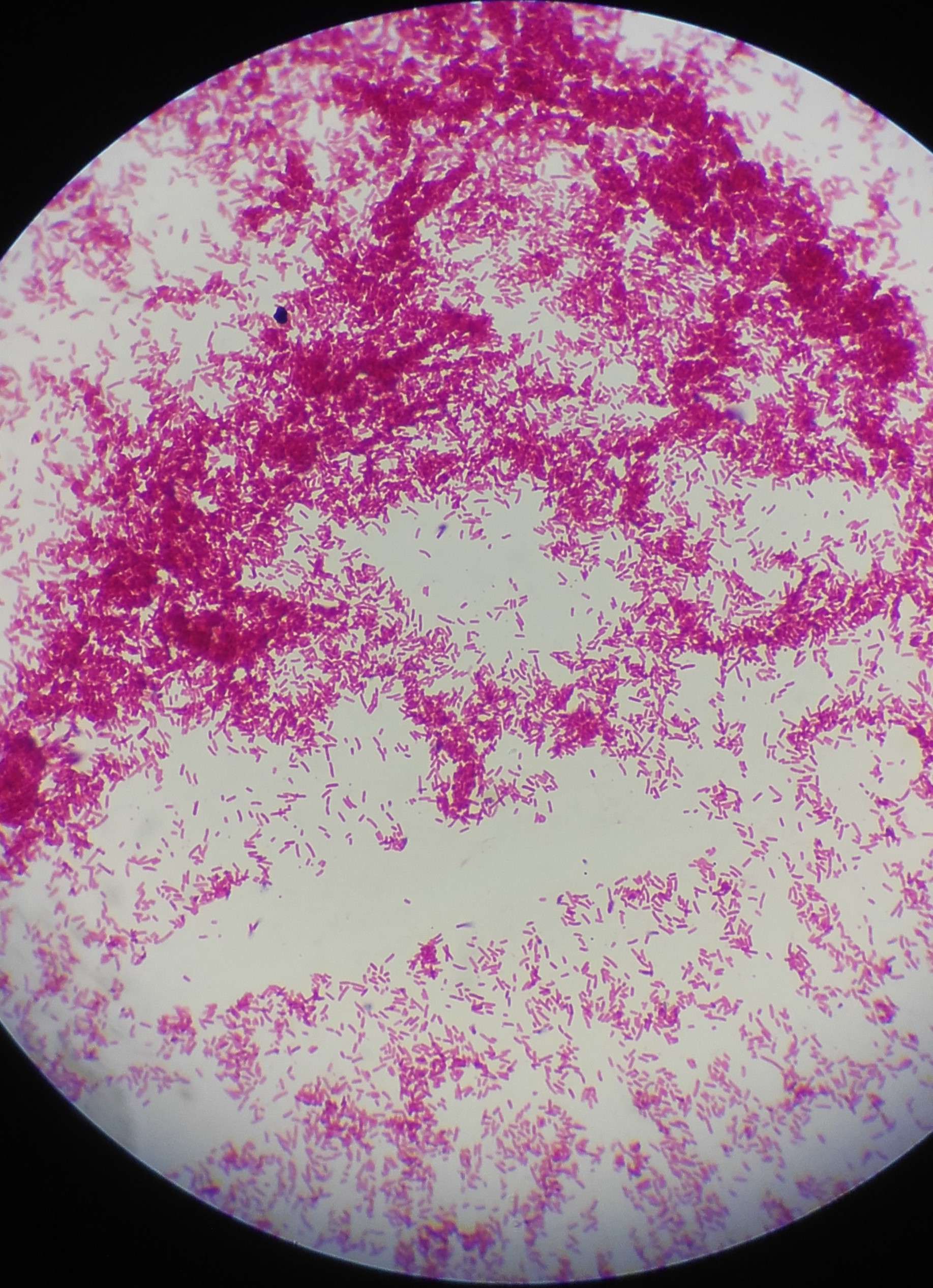
Kingdom
Bacillati
Phylum
Bacillota
Class
Bacilli
Order
Lactobacillales
Family
Lactobacillaceae
Genus
Lactobacillus
Description
Taxonomy
| Kingdom | Bacillati |
|---|---|
| Phylum | Bacillota |
| Class | Bacilli |
| Order | Lactobacillales |
| Family | Lactobacillaceae |
| Genus | Lactobacillus |
| Species | Lactobacillus crispatus |
| Strain | strain UMNLC11 crispatus9E6S24191 |
Profile
| Physiology | |
|---|---|
| Gram staining properties | Positive |
| Shape | Rod |
| Mobility | No |
| Flagellar presence | Yes |
| Number of membranes | 1 |

Image source: Wikipedia/Wikimedia
| Ecology, Host, and Life Cycle | |
|---|---|
| Oxygen requirements | Facultative anaerobe |
| Optimal temperature | 37 |
| Temperature range | Mesophilic |
| Habitat | HostAssociated |
| Biotic relationship | Free living |
| Host(s) | Homo sapiens, Gallus gallus, Metazoa |
| Cell arrangement | Chains |
| Sporulation | Nonsporulating |
| Energy source | Not Available |
| Pathogenicity | Not Available |
Gene Summary
Adenine Count
645814 bp
Thymine Count
639818 bp
Guanine Count
381113 bp
Cytosine Count
372888 bp
Genome Length
2039742 bp
Protein-coding Genes
1863 genes
Non-Coding Genes
66 genes
# of Chromosomes/Plasmids
1
Genes
| Name | Locus Tag | UniProt ID | Strand Orientation | Gene Start/End | Protein Molecular Weight |
|---|---|---|---|---|---|
| bacteriocin transporter | AYP87_10250 | Not Available | Positive | 1875527 - 1875817 | 10511.4 |
| hypothetical protein | AYP87_10255 | Not Available | Positive | 1875872 - 1877830 | 74934.6 |
| transcriptional regulator | AYP87_03280 | Not Available | Negative | 1882628 - 1882954 | 12119.1 |
| hypothetical protein | AYP87_03285 | Not Available | Positive | 1882954 - 1883256 | 12139.9 |
| hxlr family transcriptional regulator | AYP87_03290 | Not Available | Negative | 1883696 - 1884031 | 12987.0 |
| alcohol dehydrogenase | AYP87_03295 | Not Available | Positive | 1884181 - 1885203 | 38174.0 |
| cysteine methyltransferase | AYP87_03300 | Not Available | Negative | 1885650 - 1886159 | 18942.7 |
| hypothetical protein | AYP87_03305 | Not Available | Negative | 1886229 - 1886744 | 20716.0 |
| fmn-dependent dehydrogenase | AYP87_03315 | Not Available | Positive | 1888104 - 1889105 | 36152.6 |
| hypothetical protein | AYP87_03320 | Not Available | Positive | 1889419 - 1889763 | 13080.1 |
Pathways
765 pathways
Health Effects
No health effects information available for this bacterium.