Kingdom
Bacillati
Phylum
Bacillota
Class
Bacilli
Order
Lactobacillales
Family
Lactobacillaceae
Genus
Lactobacillus
Description
Taxonomy
| Kingdom | Bacillati |
|---|---|
| Phylum | Bacillota |
| Class | Bacilli |
| Order | Lactobacillales |
| Family | Lactobacillaceae |
| Genus | Lactobacillus |
| Species | Lactobacillus crispatus |
| Strain | strain UMNLC11 crispatus9E6S24191 |
Profile
| Physiology | |
|---|---|
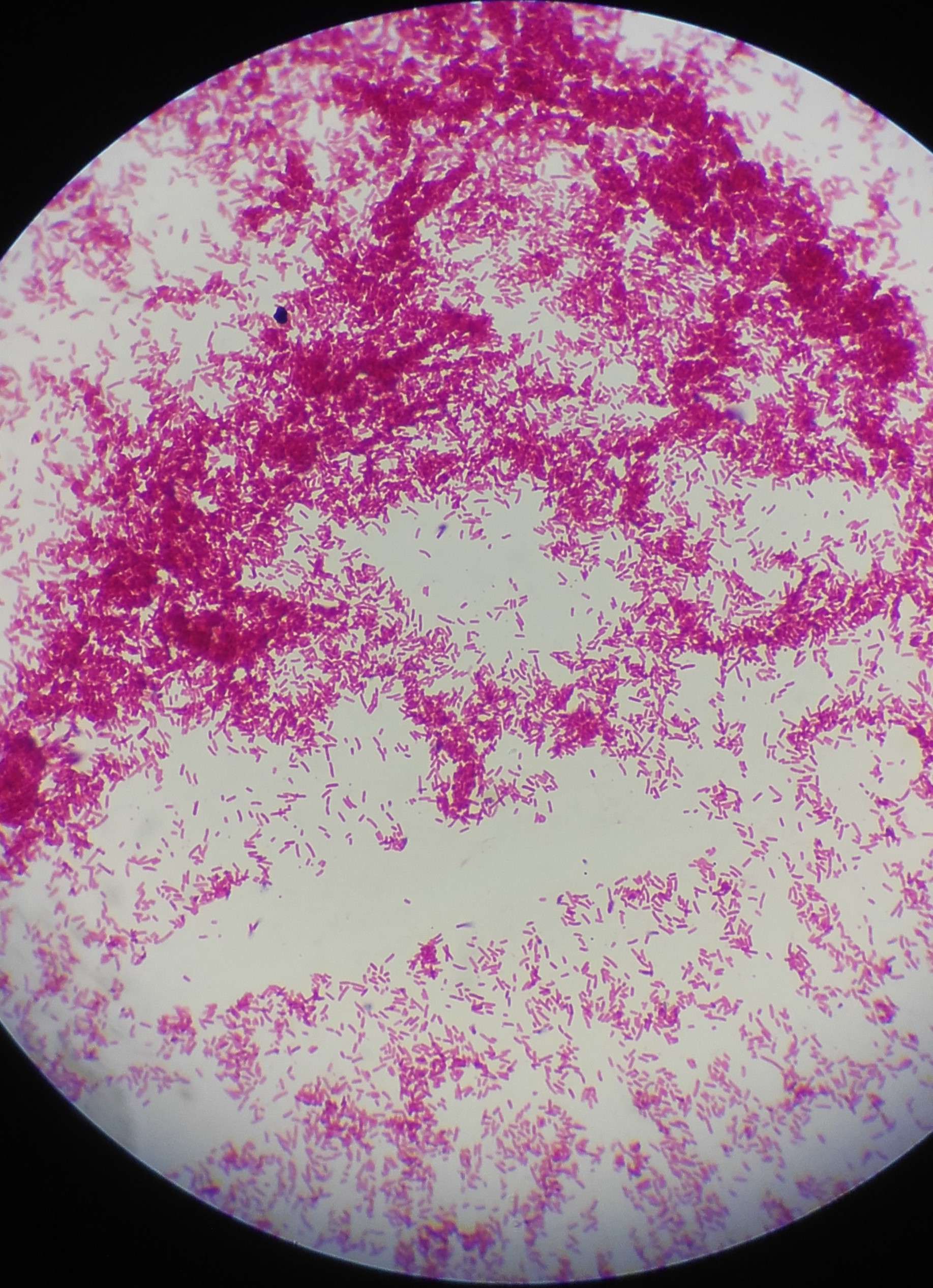
| Gram staining properties | Positive |
| Shape | Rod |
| Mobility | No |
| Flagellar presence | Yes |
| Number of membranes | 1 |

Image source: Wikipedia/Wikimedia
| Ecology, Host, and Life Cycle | |
|---|---|
| Oxygen requirements | Facultative anaerobe |
| Optimal temperature | 37 |
| Temperature range | Mesophilic |
| Habitat | HostAssociated |
| Biotic relationship | Free living |
| Host(s) | Homo sapiens, Gallus gallus, Metazoa |
| Cell arrangement | Chains |
| Sporulation | Nonsporulating |
| Energy source | Not Available |
| Pathogenicity | Not Available |
Gene Summary
Adenine Count
645814 bp
Thymine Count
639818 bp
Guanine Count
381113 bp
Cytosine Count
372888 bp
Genome Length
2039742 bp
Protein-coding Genes
1863 genes
Non-Coding Genes
66 genes
# of Chromosomes/Plasmids
1
Genes
| Name | Locus Tag | UniProt ID | Strand Orientation | Gene Start/End | Protein Molecular Weight |
|---|---|---|---|---|---|
| transcriptional regulator | AYP87_09890 | Not Available | Negative | 1687615 - 1688067 | 17032.0 |
| atp-dependent dna helicase recq | AYP87_09895 | Not Available | Negative | 1688148 - 1689917 | 66455.7 |
| aluminum resistance protein | AYP87_09900 | Not Available | Negative | 1690037 - 1691296 | 46717.5 |
| ornithine decarboxylase | AYP87_09905 | Not Available | Negative | 1691307 - 1693394 | 77897.3 |
| amino acid permease | AYP87_09910 | Not Available | Positive | 1693627 - 1695099 | 55654.0 |
| hypothetical protein | AYP87_09915 | Not Available | Negative | 1695147 - 1695653 | 19549.3 |
| dipeptidase pepv | AYP87_09920 | Not Available | Positive | 1695840 - 1697246 | 51815.1 |
| hypothetical protein | AYP87_09930 | Not Available | Negative | 1698118 - 1698348 | 8604.52 |
| camphor resistance protein crcb | AYP87_09935 | Not Available | Negative | 1698359 - 1698736 | 13676.9 |
| chromosome condensation protein crcb | AYP87_09940 | Not Available | Negative | 1698733 - 1699131 | 14966.5 |
Pathways
765 pathways
Health Effects
No health effects information available for this bacterium.