Kingdom
Bacillati
Phylum
Bacillota
Class
Bacilli
Order
Lactobacillales
Family
Lactobacillaceae
Genus
Lactobacillus
Description
Taxonomy
| Kingdom | Bacillati |
|---|---|
| Phylum | Bacillota |
| Class | Bacilli |
| Order | Lactobacillales |
| Family | Lactobacillaceae |
| Genus | Lactobacillus |
| Species | Lactobacillus crispatus |
| Strain | strain UMNLC11 crispatus9E6S24191 |
Profile
| Physiology | |
|---|---|
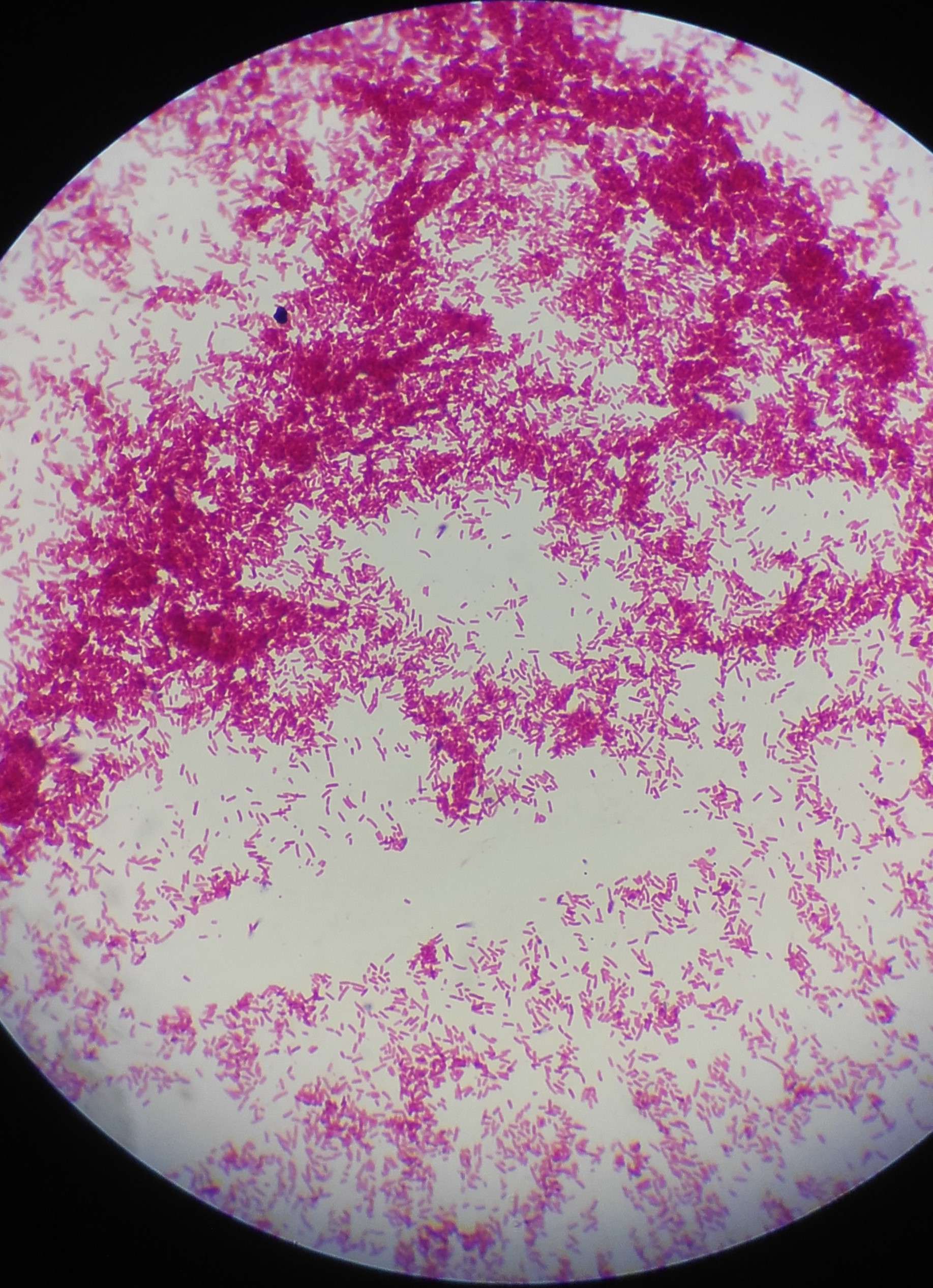
| Gram staining properties | Positive |
| Shape | Rod |
| Mobility | No |
| Flagellar presence | Yes |
| Number of membranes | 1 |

Image source: Wikipedia/Wikimedia
| Ecology, Host, and Life Cycle | |
|---|---|
| Oxygen requirements | Facultative anaerobe |
| Optimal temperature | 37 |
| Temperature range | Mesophilic |
| Habitat | HostAssociated |
| Biotic relationship | Free living |
| Host(s) | Homo sapiens, Gallus gallus, Metazoa |
| Cell arrangement | Chains |
| Sporulation | Nonsporulating |
| Energy source | Not Available |
| Pathogenicity | Not Available |
Gene Summary
Adenine Count
645814 bp
Thymine Count
639818 bp
Guanine Count
381113 bp
Cytosine Count
372888 bp
Genome Length
2039742 bp
Protein-coding Genes
1863 genes
Non-Coding Genes
66 genes
# of Chromosomes/Plasmids
1
Genes
| Name | Locus Tag | UniProt ID | Strand Orientation | Gene Start/End | Protein Molecular Weight |
|---|---|---|---|---|---|
| hypothetical protein | AYP87_09785 | Not Available | Positive | 1663575 - 1663856 | 10865.2 |
| multidrug dmt transporter permease | AYP87_09790 | Not Available | Negative | 1663875 - 1664804 | 34083.2 |
| multidrug dmt transporter permease | AYP87_09795 | Not Available | Negative | 1664882 - 1665802 | 33379.4 |
| multidrug dmt transporter permease | AYP87_09800 | Not Available | Negative | 1665885 - 1666364 | 17205.7 |
| hypothetical protein | AYP87_09805 | Not Available | Negative | 1666616 - 1667260 | 24452.8 |
| hypothetical protein | AYP87_09810 | Not Available | Negative | 1667275 - 1667907 | 24316.5 |
| hypothetical protein | AYP87_09815 | Not Available | Positive | 1668019 - 1668768 | 28504.2 |
| transposase | AYP87_09820 | Not Available | Positive | 1669030 - 1670256 | 47013.5 |
| aspartate kinase | AYP87_09825 | Not Available | Negative | 1670487 - 1671842 | 50477.8 |
| diaminopimelate decarboxylase | AYP87_09830 | Not Available | Positive | 1672301 - 1673611 | 48339.0 |
Pathways
765 pathways
Health Effects
No health effects information available for this bacterium.