Kingdom
Bacillati
Phylum
Bacillota
Class
Bacilli
Order
Lactobacillales
Family
Lactobacillaceae
Genus
Lactobacillus
Description
Taxonomy
| Kingdom | Bacillati |
|---|---|
| Phylum | Bacillota |
| Class | Bacilli |
| Order | Lactobacillales |
| Family | Lactobacillaceae |
| Genus | Lactobacillus |
| Species | Lactobacillus crispatus |
| Strain | strain UMNLC11 crispatus9E6S24191 |
Profile
| Physiology | |
|---|---|
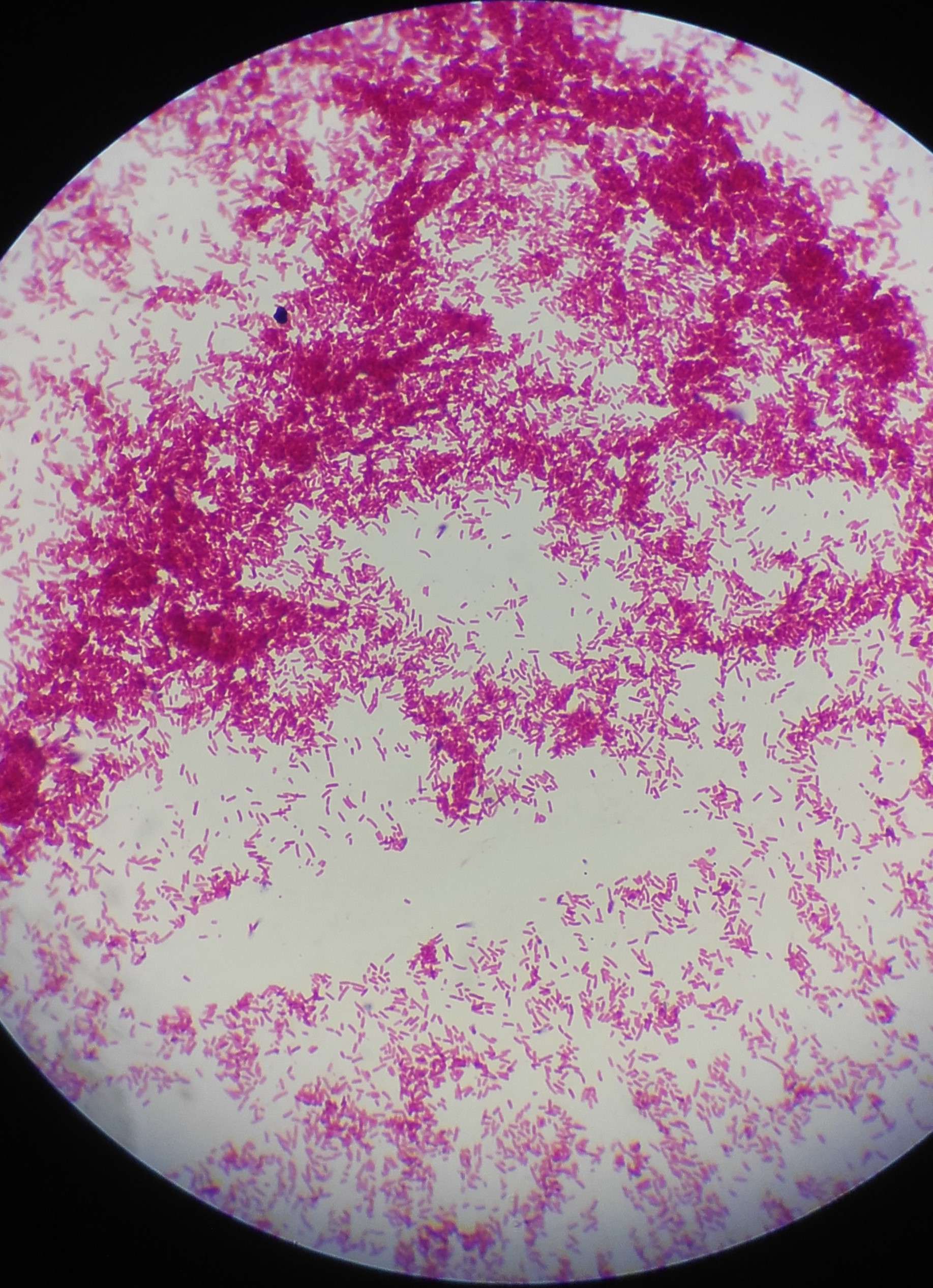
| Gram staining properties | Positive |
| Shape | Rod |
| Mobility | No |
| Flagellar presence | Yes |
| Number of membranes | 1 |

Image source: Wikipedia/Wikimedia
| Ecology, Host, and Life Cycle | |
|---|---|
| Oxygen requirements | Facultative anaerobe |
| Optimal temperature | 37 |
| Temperature range | Mesophilic |
| Habitat | HostAssociated |
| Biotic relationship | Free living |
| Host(s) | Homo sapiens, Gallus gallus, Metazoa |
| Cell arrangement | Chains |
| Sporulation | Nonsporulating |
| Energy source | Not Available |
| Pathogenicity | Not Available |
Gene Summary
Adenine Count
645814 bp
Thymine Count
639818 bp
Guanine Count
381113 bp
Cytosine Count
372888 bp
Genome Length
2039742 bp
Protein-coding Genes
1863 genes
Non-Coding Genes
66 genes
# of Chromosomes/Plasmids
1
Genes
| Name | Locus Tag | UniProt ID | Strand Orientation | Gene Start/End | Protein Molecular Weight |
|---|---|---|---|---|---|
| purine nucleosidase | AYP87_02085 | Not Available | Negative | 1403364 - 1404290 | 33695.8 |
| potassium transporter kup | AYP87_02090 | Not Available | Negative | 1404372 - 1406381 | 74334.8 |
| ribose 5-phosphate isomerase a | AYP87_02095 | Not Available | Negative | 1406520 - 1407212 | 25185.2 |
| ribokinase | AYP87_02100 | Not Available | Negative | 1407212 - 1408138 | 32918.9 |
| duf4931 domain-containing protein | AYP87_02105 | Not Available | Negative | 1408228 - 1409031 | 30628.9 |
| sugar abc transporter substrate-binding protein | AYP87_02110 | Not Available | Positive | 1409195 - 1410499 | 48113.6 |
| hypothetical protein | AYP87_02115 | Not Available | Negative | 1410563 - 1411963 | 53229.8 |
| hypothetical protein | AYP87_02120 | Not Available | Positive | 1412113 - 1412610 | 18509.7 |
| hypothetical protein | AYP87_02125 | Not Available | Negative | 1412672 - 1413592 | 34888.2 |
| glutamine abc transporter permease | AYP87_02130 | Not Available | Negative | 1413668 - 1414321 | 24254.6 |
Pathways
765 pathways
Health Effects
No health effects information available for this bacterium.