Kingdom
Bacillati
Phylum
Bacillota
Class
Bacilli
Order
Lactobacillales
Family
Lactobacillaceae
Genus
Lactobacillus
Description
Taxonomy
| Kingdom | Bacillati |
|---|---|
| Phylum | Bacillota |
| Class | Bacilli |
| Order | Lactobacillales |
| Family | Lactobacillaceae |
| Genus | Lactobacillus |
| Species | Lactobacillus crispatus |
| Strain | strain UMNLC8 crispatus9D6S21197 |
Profile
| Physiology | |
|---|---|
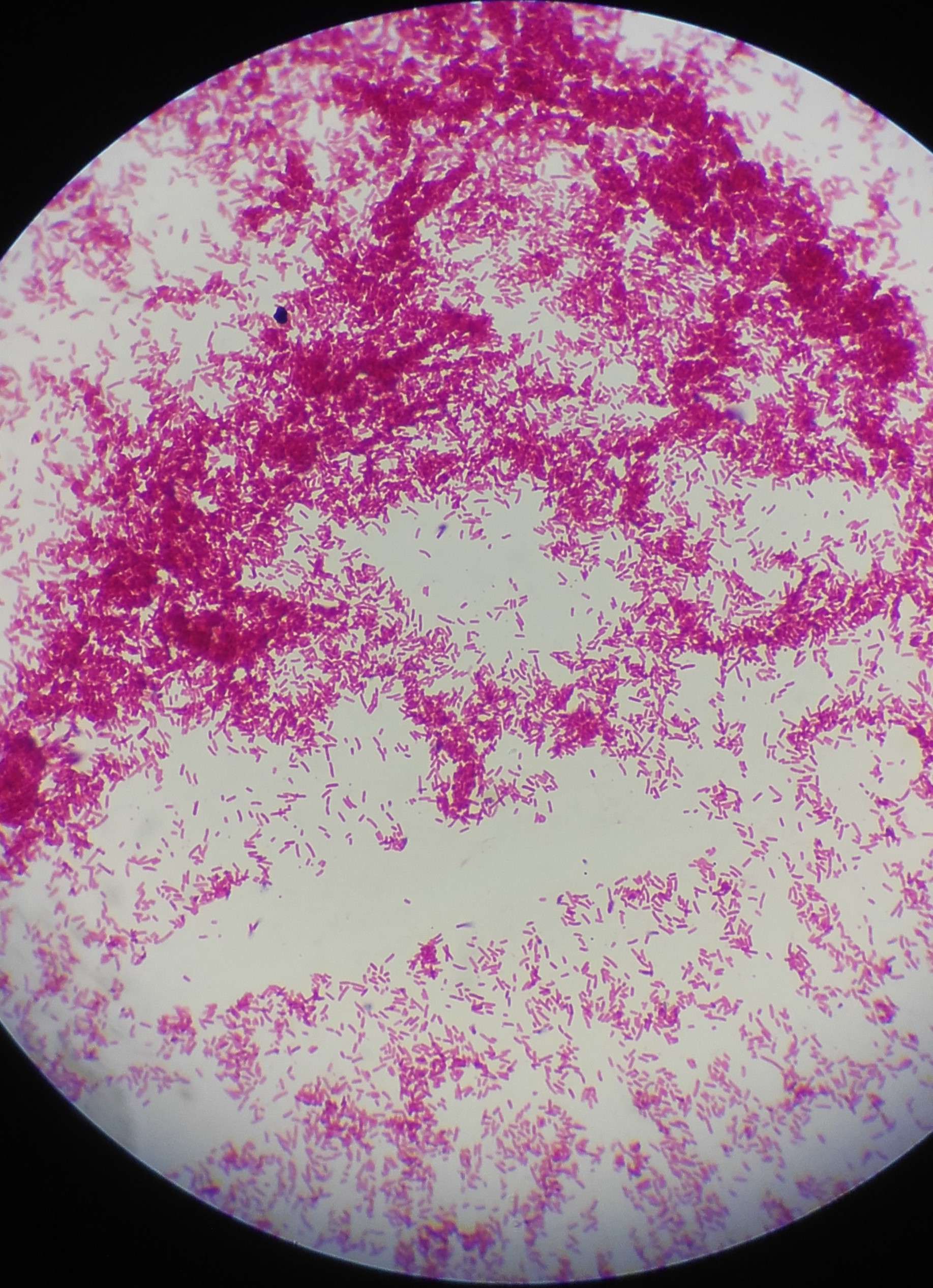
| Gram staining properties | Positive |
| Shape | Rod |
| Mobility | No |
| Flagellar presence | Yes |
| Number of membranes | 1 |

Image source: Wikipedia/Wikimedia
| Ecology, Host, and Life Cycle | |
|---|---|
| Oxygen requirements | Facultative anaerobe |
| Optimal temperature | 37 |
| Temperature range | Mesophilic |
| Habitat | HostAssociated |
| Biotic relationship | Free living |
| Host(s) | Homo sapiens, Gallus gallus, Metazoa |
| Cell arrangement | Chains |
| Sporulation | Nonsporulating |
| Energy source | Not Available |
| Pathogenicity | Not Available |
Gene Summary
Adenine Count
649818 bp
Thymine Count
645753 bp
Guanine Count
388534 bp
Cytosine Count
370084 bp
Genome Length
2054274 bp
Protein-coding Genes
1854 genes
Non-Coding Genes
97 genes
# of Chromosomes/Plasmids
1
Genes
| Name | Locus Tag | UniProt ID | Strand Orientation | Gene Start/End | Protein Molecular Weight |
|---|---|---|---|---|---|
| transcriptional regulator | AYP84_01210 | Not Available | Positive | 679151 - 679996 | 31096.7 |
| cytochrome d ubiquinol oxidase subunit i | AYP84_01215 | Not Available | Positive | 680323 - 681753 | 53989.8 |
| cytochrome d ubiquinol oxidase subunit ii | AYP84_01220 | Not Available | Positive | 681755 - 682771 | 37649.0 |
| thiol reductant abc exporter subunit cydd | AYP84_01225 | Not Available | Positive | 682771 - 684489 | 64430.8 |
| thiol reductant abc exporter subunit cydc | AYP84_01230 | Not Available | Positive | 684479 - 686227 | 66170.1 |
| bifunctional demethylmenaquinone methyltransferase/2-methoxy-6-polyprenyl-1,4-benzoquinol methylase | AYP84_01235 | Not Available | Positive | 686237 - 686938 | 26285.2 |
| farnesyl pyrophosphate synthetase | AYP84_01240 | Not Available | Negative | 686935 - 687924 | 36917.5 |
| 1,4-dihydroxy-2-naphthoate polyprenyltransferase | AYP84_01245 | Not Available | Positive | 687984 - 688883 | 33937.5 |
| nadh dehydrogenase | AYP84_01250 | Not Available | Positive | 688898 - 690118 | 44752.4 |
| hypothetical protein | AYP84_01255 | Not Available | Positive | 690318 - 690992 | 26131.3 |
Pathways
765 pathways
Health Effects
No health effects information available for this bacterium.