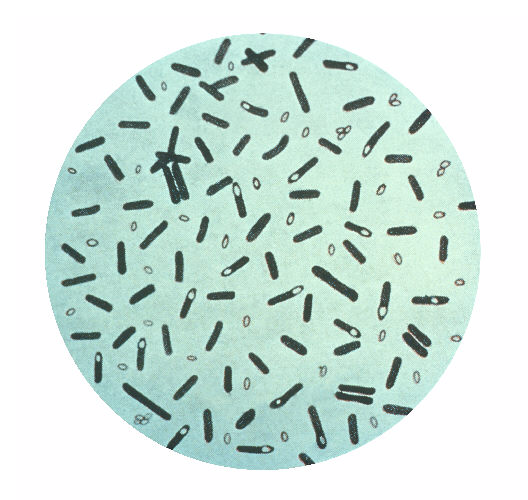
Clostridium botulinum strain ATCC 23387

Gram-positiveRodMotileAnaerobe

Kingdom

Bacillati

Phylum

Bacillota

Class

Clostridia

Order

Eubacteriales

Family

Clostridiaceae

Genus

Clostridium

Description

Clostridium botulinum strain ATCC 23387 is a Gram-positive, rod-shaped bacterium that thrives in anaerobic conditions, making it an obligate anaerobe. It is classified as a chemoorganotroph, obtaining energy through the breakdown of organic compounds. This strain exhibits a diverse cell arrangement, commonly found in singles, pairs, and chains. C. botulinum ATCC 23387 is motile, possessing flagella that facilitate its movement. It has a mesophilic temperature range, with an optimal growth temperature of 37°C. The bacterium is free-living and has a single replicon and membrane structure, indicating a relatively simple cellular organization. This strain is particularly noteworthy due to its association with health effects in humans, primarily linked to wound botulism and botulism itself, which can arise from the production of botulinum toxin. The presence of this bacterium in various habitats underlines its adaptability and potential risk to human health, especially in environments where it can proliferate in anaerobic conditions. Understanding C. botulinum ATCC 23387's characteristics is crucial for assessing its ecological role and health implications. Its ability to thrive in diverse habitats and produce potent neurotoxins highlights the importance of monitoring its presence in food and clinical settings to prevent botulism outbreaks.

Taxonomy

KingdomBacillati
PhylumBacillota
ClassClostridia
OrderEubacteriales
FamilyClostridiaceae
GenusClostridium
SpeciesClostridium botulinum
Strainstrain ATCC 23387

Profile

Physiology
Gram staining propertiesPositive
ShapeRod
MobilityYes
Flagellar presenceYes
Number of membranes1
Image of Clostridium botulinum strain ATCC 23387
Image source: Wikipedia/Wikimedia
Ecology, Host, and Life Cycle
Oxygen requirementsAnaerobe
Optimal temperature37
Temperature rangeMesophilic
HabitatMultiple
Biotic relationshipFree living
Host(s)Homo sapiens, Bos, Metazoa
Cell arrangementPairs - Singles - Chains
SporulationNot Available
Energy sourceChemoorganotroph
PathogenicityNot Available

Genome Summary

Clostridium botulinum strain ATCC 23387 contig_58, whole genome

Gene Summary

Adenine Count

1332491 bp

Thymine Count

1447207 bp

Guanine Count

471250 bp

Cytosine Count

566726 bp

Genome Length

3817674 bp

Protein-coding Genes

3250 genes

Non-Coding Genes

211 genes

# of Chromosomes/Plasmids

1

Genes

NameLocus TagUniProt IDStrand OrientationGene Start/EndProtein Molecular Weight
sporulation proteinACP50_17745P37475Positive3793940 - 379632188575.8
trna(ile)-lysidine synthetaseACP50_17750Q0TMI0Positive3796460 - 379786654676.7
hypoxanthine phosphoribosyltransferaseACP50_17755P37472Positive3797872 - 379841120113.5
cell division protein ftshACP50_17760A0PXM8Positive3798485 - 380029065797.4
formate--tetrahydrofolate ligaseACP50_17765B2TI29Positive3800512 - 380218260324.5
pantothenate kinaseACP50_17770B2TI22Positive3802310 - 380308328293.4
tim barrel oxidoreductase nifr3ACP50_17775P37567Positive3803089 - 380405436067.8
hypothetical proteinACP50_17780Not AvailablePositive3804122 - 380494632189.2
transcription elongation factor greaACP50_17785B2TI25Positive3805061 - 380554317757.1
lysyl-trna synthetaseACP50_17790Q0TMI7Positive3805589 - 380709457318.4

Displaying genes 3441 – 3450 of 3461 in total

Pathways

0 pathways

No pathways found

No metabolic pathways have been associated with this bacterium yet.

Metabolites

159 records
Metabolite IDMetabolite nameStructureCAS number
BASm0000217alpha-ribazoleC14H18N2O4Chemical structure of alpha-ribazoleNot available
Average278.3037Da
Monoisotopic278.126657074Da
BASm0000237(R)-4'-phosphopantothenateC9H18NO8PChemical structure of (R)-4'-phosphopantothenateNot available
Average299.2149Da
Monoisotopic299.0770031Da
BASm00002512-dehydropantoateC6H9O4Chemical structure of 2-dehydropantoateNot available
Average145.1333Da
Monoisotopic145.050083776Da
BASm0000377(S)-malateC4H4O5Chemical structure of (S)-malateNot available
Average132.0716Da
Monoisotopic132.005873238Da
BASm0000387(6R)-5,10-methylene-5,6,7,8-tetrahydrofolateC20H21N7O6Chemical structure of (6R)-5,10-methylene-5,6,7,8-tetrahydrofolateNot available
Average455.432Da
Monoisotopic455.1564286Da
BASm0000400(R)-10-hydroxyoctadecanoateC18H35O3Chemical structure of (R)-10-hydroxyoctadecanoateNot available
Average299.476Da
Monoisotopic299.2591686Da
BASm00006985-dehydro-2-deoxy-D-gluconateC6H9O6Chemical structure of 5-dehydro-2-deoxy-D-gluconateNot available
Average177.133Da
Monoisotopic177.04046159Da
BASm0000719chloramphenicol 3-acetateC13H14Cl2N2O6Chemical structure of chloramphenicol 3-acetateNot available
Average365.16Da
Monoisotopic364.0228916Da
BASm00008763-hydroxypyruvateC3H3O4Chemical structure of 3-hydroxypyruvateNot available
Average103.054Da
Monoisotopic103.003682157Da
BASm0001086scyllo-inososeC6H10O6Chemical structure of scyllo-inososeNot available
Average178.14Da
Monoisotopic178.0477381Da

Displaying 1–10 of 159 metabolites

Health Effects

Health ConditionRelationReference
Wound botulismCausesPMC8283217
BotulismCausesPMC2693436
BotulismCausesPMC13317340
BotulismCausesPMC3232984
BotulismCausesPMC5113727
BotulismCausesPMC7904509

Displaying health effects 1 – 6 of 6 in total