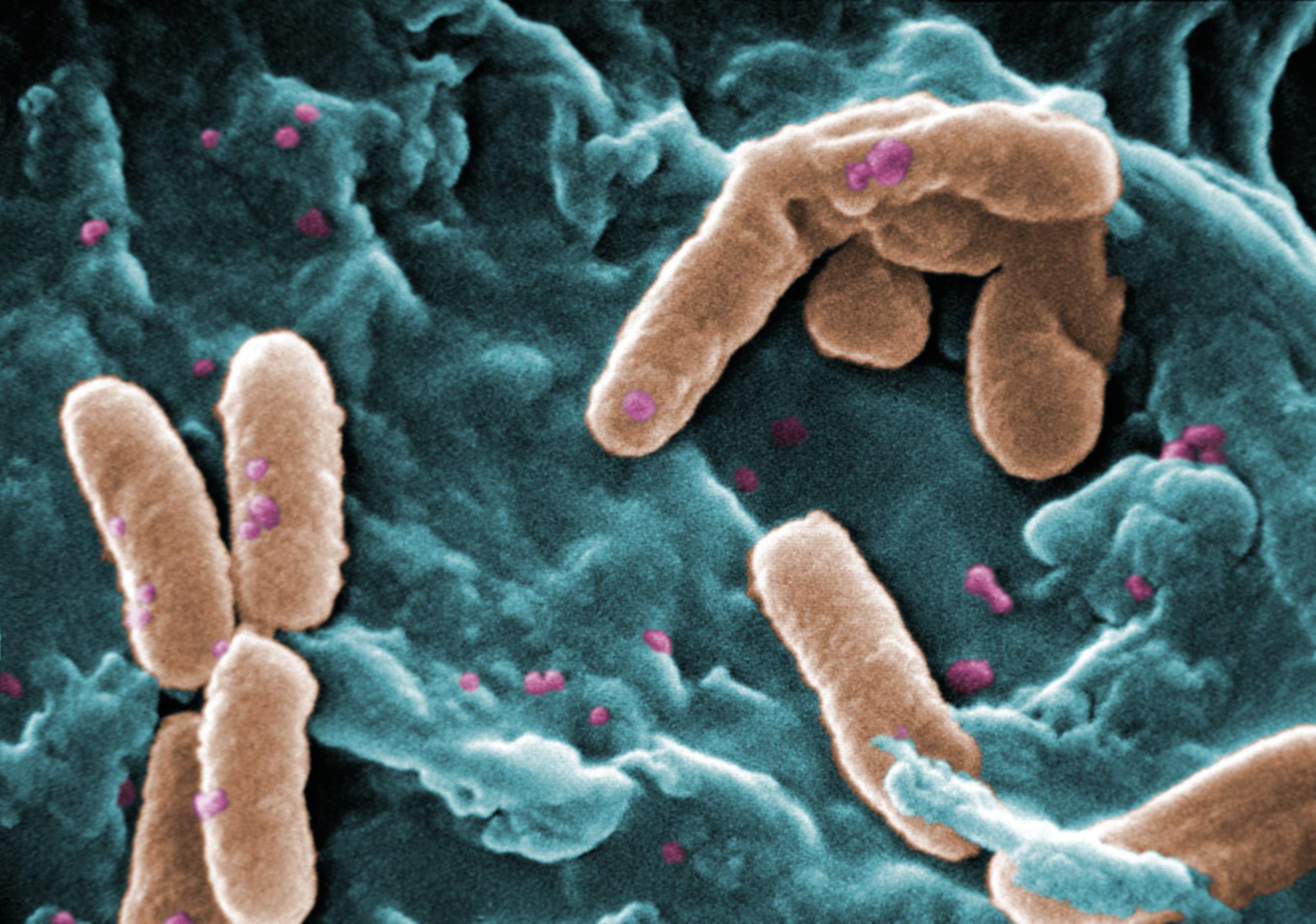
Pseudomonas fluorescens strain C3

Gram-negativeRodMotileAerobe

Kingdom

Pseudomonadati

Phylum

Pseudomonadota

Class

Gammaproteobacteria

Order

Pseudomonadales

Family

Pseudomonadaceae

Genus

Pseudomonas

Description

Pseudomonas fluorescens strain C3 is a gram-negative, rod-shaped bacterium that exhibits mobility due to the presence of flagella. It is classified as a heterotroph, deriving its energy from organic compounds while being strictly aerobic, necessitating oxygen for growth. This strain thrives optimally at a temperature of 25°C and falls within the mesophilic temperature range. The bacterium is characterized by its free-living biotic relationship, indicating it does not rely on a host for survival. However, it has been associated with various hosts, including Homo sapiens, multiple metazoans, and several plant species such as Triticum aestivum, Solanum tuberosum, and Hordeum vulgare. This diversity in hosts suggests a broad ecological presence across different environments. Pseudomonas fluorescens strain C3 possesses one replicon and is surrounded by two membranes, typical of gram-negative bacteria. Its ability to inhabit multiple habitats highlights its ecological versatility, allowing it to adapt to various environmental conditions. Despite its free-living nature, Pseudomonas fluorescens strain C3 has been implicated in bacterial infections, indicating potential pathogenicity, particularly in animal hosts. This dual role as both a free-living organism and a potential pathogen underscores the ecological complexity of Pseudomonas fluorescens strain C3, reflecting its significance in both environmental microbiology and clinical contexts.

Taxonomy

KingdomPseudomonadati
PhylumPseudomonadota
ClassGammaproteobacteria
OrderPseudomonadales
FamilyPseudomonadaceae
GenusPseudomonas
SpeciesPseudomonas fluorescens
Strainstrain C3

Profile

Physiology
Gram staining propertiesNegative
ShapeRod
MobilityYes
Flagellar presenceYes
Number of membranes2
Image of Pseudomonas fluorescens strain C3
Image source: Wikipedia/Wikimedia
Ecology, Host, and Life Cycle
Oxygen requirementsAerobe
Optimal temperature25
Temperature rangeMesophilic
HabitatMultiple
Biotic relationshipFree living
Host(s)Homo sapiens, Metazoa, Viridiplantae
Cell arrangementSingles
SporulationNot Available
Energy sourceHeterotroph
PathogenicityAnimal

Genome Summary

Pseudomonas fluorescens strain C3


Gene Summary

Adenine Count

1370077 bp

Thymine Count

1381324 bp

Guanine Count

1982575 bp

Cytosine Count

1970504 bp

Genome Length

6705574 bp

Protein-coding Genes

5843 genes

Non-Coding Genes

170 genes

# of Chromosomes/Plasmids

1

Genes

NameLocus TagUniProt IDStrand OrientationGene Start/EndProtein Molecular Weight
Tail fiber proteinVC34_17385Not AvailableNegative3858283 - 3861498114251.0
Tail assembly protein iVC34_17390O64334Negative3861495 - 386211521612.1
Putative lipoproteinVC34_17395Not AvailableNegative3862173 - 386259214601.6
Putative tail component proteinVC34_17400Not AvailableNegative3862650 - 386335726444.3
Putative minor tail protein lVC34_17405Not AvailableNegative3863360 - 386402523989.7
Putative minor tail protein mVC34_17410Not AvailableNegative3864049 - 386437812401.7
Putative prophage tail length tape measure proteinVC34_17415O64330Negative3864388 - 3867390105140.0
Hypothetical proteinVC34_17420Not AvailableNegative3867418 - 386769010033.0
Hypothetical proteinVC34_17425Not AvailableNegative3867738 - 386812113792.3
Tail constituent proteinVC34_17430Not AvailableNegative3868131 - 386877822428.6

Displaying genes 1 – 10 of 6013 in total

Pathways

0 pathways

No pathways found

No metabolic pathways have been associated with this bacterium yet.

Metabolites

393 records
Metabolite IDMetabolite nameStructureCAS number
BASm0000217alpha-ribazoleC14H18N2O4Chemical structure of alpha-ribazoleNot available
Average278.3037Da
Monoisotopic278.126657074Da
BASm0000237(R)-4'-phosphopantothenateC9H18NO8PChemical structure of (R)-4'-phosphopantothenateNot available
Average299.2149Da
Monoisotopic299.0770031Da
BASm00002502,5-didehydro-D-gluconateC6H7O7Chemical structure of 2,5-didehydro-D-gluconate53736-12-2
Average191.1156Da
Monoisotopic191.019177578Da
BASm00002512-dehydropantoateC6H9O4Chemical structure of 2-dehydropantoateNot available
Average145.1333Da
Monoisotopic145.050083776Da
BASm00002532-oxopent-4-enoateC5H5O3Chemical structure of 2-oxopent-4-enoateNot available
Average113.093Da
Monoisotopic113.024417601Da
BASm00002543-hydroxy-2-methylpropanoateC4H7O3Chemical structure of 3-hydroxy-2-methylpropanoateNot available
Average103.098Da
Monoisotopic103.0400677Da
BASm00002583-(carbamoylamino)propanoateC4H7N2O3Chemical structure of 3-(carbamoylamino)propanoateNot available
Average131.112Da
Monoisotopic131.046215673Da
BASm00002593alpha,12alpha-dihydroxy-7-oxo-5beta-cholanateC24H37O5Chemical structure of 3alpha,12alpha-dihydroxy-7-oxo-5beta-cholanateNot available
Average405.556Da
Monoisotopic405.264647871Da
BASm0000377(S)-malateC4H4O5Chemical structure of (S)-malateNot available
Average132.0716Da
Monoisotopic132.005873238Da
BASm0000387(6R)-5,10-methylene-5,6,7,8-tetrahydrofolateC20H21N7O6Chemical structure of (6R)-5,10-methylene-5,6,7,8-tetrahydrofolateNot available
Average455.432Da
Monoisotopic455.1564286Da

Displaying 1–10 of 393 metabolites

Health Effects

Health ConditionRelationReference
Bacterial infectionsCausesPMC7578172

Displaying health effects 1 – 1 of 1 in total