Kingdom
Pseudomonadati
Phylum
Pseudomonadota
Class
Gammaproteobacteria
Order
Pseudomonadales
Family
Pseudomonadaceae
Genus
Pseudomonas
Description
Taxonomy
| Kingdom | Pseudomonadati |
|---|---|
| Phylum | Pseudomonadota |
| Class | Gammaproteobacteria |
| Order | Pseudomonadales |
| Family | Pseudomonadaceae |
| Genus | Pseudomonas |
| Species | Pseudomonas fluorescens |
| Strain | strain UM270 |
Profile
| Physiology | |
|---|---|
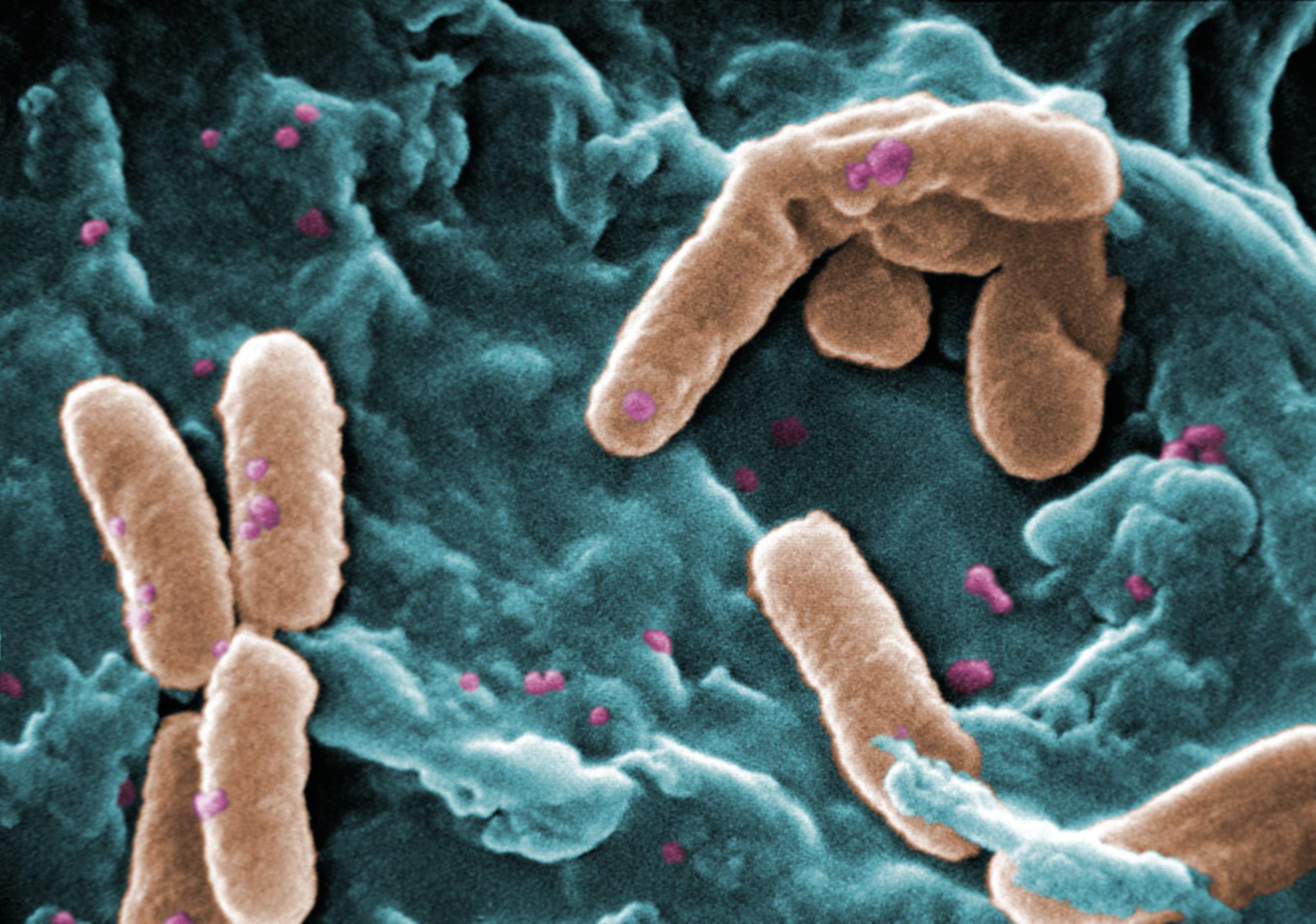
| Gram staining properties | Negative |
| Shape | Rod |
| Mobility | Yes |
| Flagellar presence | Yes |
| Number of membranes | 2 |

Image source: Wikipedia/Wikimedia
| Ecology, Host, and Life Cycle | |
|---|---|
| Oxygen requirements | Aerobe |
| Optimal temperature | 25 |
| Temperature range | Mesophilic |
| Habitat | Multiple |
| Biotic relationship | Free living |
| Host(s) | Homo sapiens, Metazoa, Viridiplantae |
| Cell arrangement | Singles |
| Sporulation | Not Available |
| Energy source | Heterotroph |
| Pathogenicity | Animal |
Gene Summary
Adenine Count
1141392 bp
Thymine Count
1135312 bp
Guanine Count
1878810 bp
Cytosine Count
1892460 bp
Genome Length
6047974 bp
Protein-coding Genes
5328 genes
Non-Coding Genes
129 genes
# of Chromosomes/Plasmids
1
Genes
| Name | Locus Tag | UniProt ID | Strand Orientation | Gene Start/End | Protein Molecular Weight |
|---|---|---|---|---|---|
| arac family transcriptional regulator | RL74_07335 | Not Available | Negative | 1595104 - 1596063 | 36186.5 |
| catechol 1,2-dioxygenase | RL74_07340 | Not Available | Negative | 1596170 - 1597099 | 34064.8 |
| muconolactone delta-isomerase | RL74_07345 | Not Available | Negative | 1597154 - 1597444 | 11206.6 |
| muconate cycloisomerase | RL74_07350 | Not Available | Negative | 1597455 - 1598603 | 41143.7 |
| transcriptional regulator | RL74_07355 | Not Available | Positive | 1598730 - 1599623 | 32961.2 |
| sam-dependent methyltransferase | RL74_07360 | Not Available | Negative | 1599820 - 1600515 | 25553.9 |
| metallo-beta-lactamase | RL74_07365 | Not Available | Negative | 1600634 - 1602082 | 53272.3 |
| arac family transcriptional regulator | RL74_07370 | Not Available | Positive | 1602279 - 1603148 | 32781.8 |
| hypothetical protein | RL74_07375 | Not Available | Negative | 1603161 - 1603679 | 18525.7 |
| hypothetical protein | RL74_07380 | Not Available | Negative | 1603843 - 1605249 | 51704.6 |
Pathways
0 pathways
No pathways found
No metabolic pathways have been associated with this bacterium yet.