
Kingdom
Pseudomonadati
Phylum
Bacteroidota
Class
Cytophagia
Order
Cytophagales
Family
Spirosomataceae
Genus
Dyadobacter
Description
Taxonomy
| Kingdom | Pseudomonadati |
|---|---|
| Phylum | Bacteroidota |
| Class | Cytophagia |
| Order | Cytophagales |
| Family | Spirosomataceae |
| Genus | Dyadobacter |
| Species | Dyadobacter psychrophilus |
| Strain | strain DSM 22270 |
Profile
| Physiology | |
|---|---|
| Gram staining properties | Gram-negative |
| Shape | ovoid |
| Mobility | non-motile |
| Flagellar presence | Yes |
| Number of membranes | Not Available |
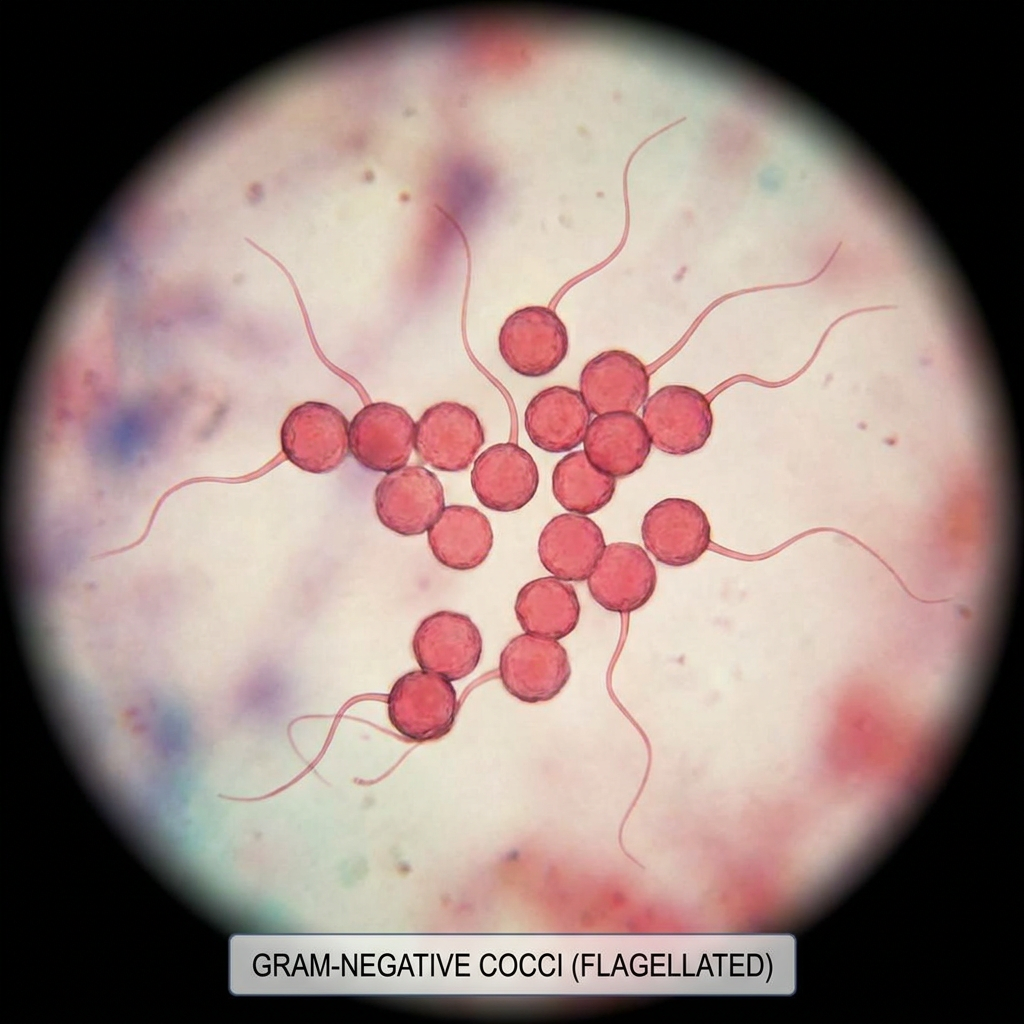
AI-generated image based on bacteria physiology
| Ecology, Host, and Life Cycle | |
|---|---|
| Oxygen requirements | aerobic |
| Optimal temperature | 16 |
| Temperature range | psychrotolerant |
| Habitat | cold or Arctic habitats |
| Biotic relationship | Not Available |
| Host(s) | Not Available |
| Cell arrangement | Not Available |
| Sporulation | Not Available |
| Energy source | Not Available |
| Pathogenicity | Not Available |
Gene Summary
Adenine Count
1856661 bp
Thymine Count
1843845 bp
Guanine Count
1512599 bp
Cytosine Count
1521300 bp
Genome Length
6736930 bp
Protein-coding Genes
5718 genes
Non-Coding Genes
43 genes
# of Chromosomes/Plasmids
1
Genes
| Name | Locus Tag | UniProt ID | Strand Orientation | Gene Start/End | Protein Molecular Weight |
|---|---|---|---|---|---|
| phospholipid/cholesterol/gamma-hch transport system substrate-binding protein | SAMN05660293_04210 | Not Available | Negative | 4994372 - 4995304 | 33401.8 |
| n-acetylmuramoyl-l-alanine amidase | SAMN05660293_04211 | Not Available | Negative | 4995379 - 4996173 | 29204.0 |
| lps assembly outer membrane protein lptd (organic solvent tolerance protein osta) | SAMN05660293_04212 | Not Available | Positive | 4996249 - 4999155 | 107070.0 |
| protein of unknown function | SAMN05660293_04213 | Not Available | Negative | 4999226 - 4999621 | 13693.5 |
| pyruvate/2-oxoglutarate/acetoin dehydrogenase complex, dehydrogenase (e1) component | SAMN05660293_04214 | Not Available | Positive | 4999831 - 5002239 | 90074.7 |
| sugar transferase | SAMN05660293_04215 | Not Available | Positive | 5002481 - 5002840 | 14025.3 |
| sugar o-acyltransferase, sialic acid o-acetyltransferase neud family | SAMN05660293_04216 | Not Available | Positive | 5002874 - 5003545 | 23663.6 |
| perosamine synthetase | SAMN05660293_04217 | Not Available | Positive | 5003505 - 5004599 | 39873.9 |
| fkbp-type peptidyl-prolyl cis-trans isomerase | SAMN05660293_04218 | Not Available | Negative | 5004650 - 5005519 | 31919.2 |
| dna-(apurinic or apyrimidinic site) lyase /endonuclease iii | SAMN05660293_04219 | Not Available | Negative | 5005597 - 5006259 | 24941.4 |
Pathways
0 pathways
No pathways found
No metabolic pathways have been associated with this bacterium yet.
Health Effects
No health effects information available for this bacterium.
