
Kingdom
Bacillati
Phylum
Actinomycetota
Class
Actinomycetes
Order
Geodermatophilales
Family
Geodermatophilaceae
Genus
Geodermatophilus
Description
Taxonomy
| Kingdom | Bacillati |
|---|---|
| Phylum | Actinomycetota |
| Class | Actinomycetes |
| Order | Geodermatophilales |
| Family | Geodermatophilaceae |
| Genus | Geodermatophilus |
| Species | Geodermatophilus obscurus |
| Strain | strain DSM 43162 |
Profile
| Physiology | |
|---|---|
| Gram staining properties | Negative |
| Shape | Cocci |
| Mobility | No |
| Flagellar presence | Yes |
| Number of membranes | Not Available |
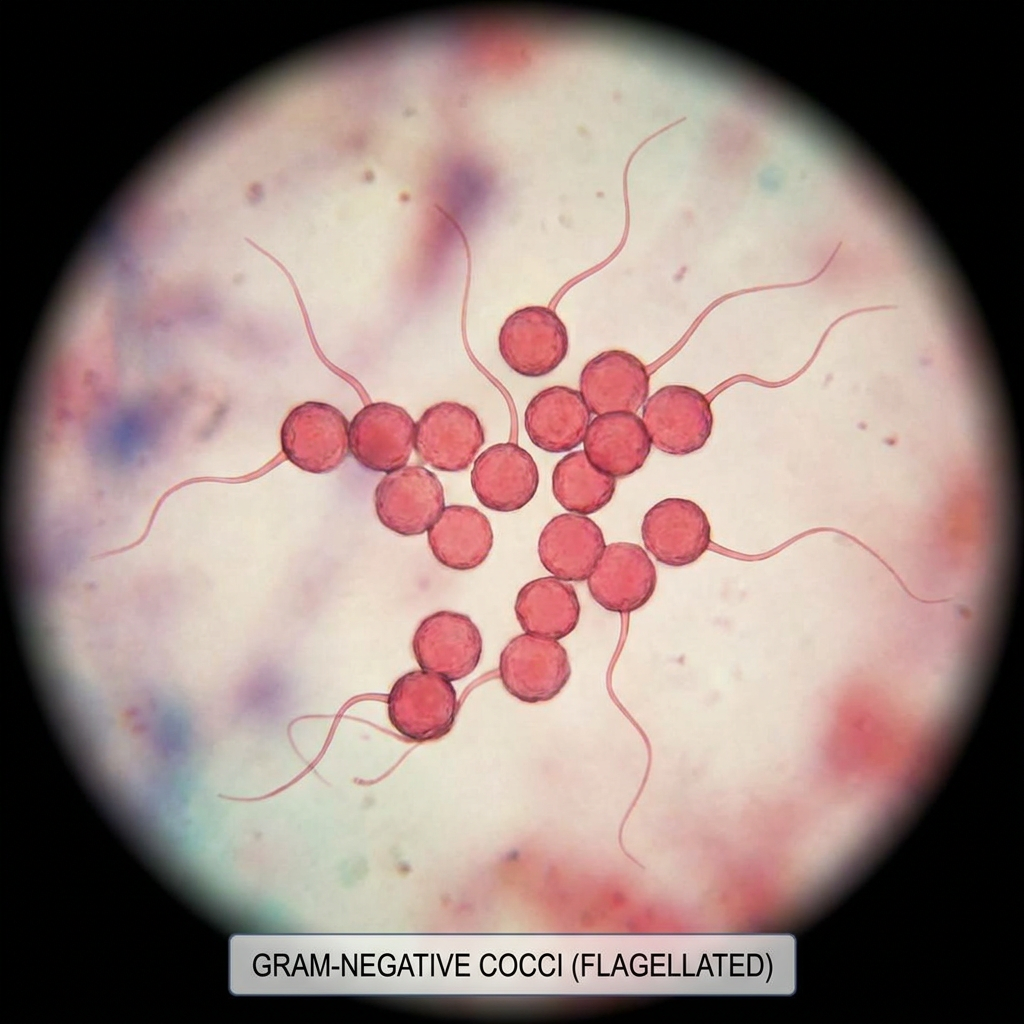
AI-generated image based on bacteria physiology
| Ecology, Host, and Life Cycle | |
|---|---|
| Oxygen requirements | Aerobic |
| Optimal temperature | 29 |
| Temperature range | Mesophilic |
| Habitat | rock varnish in deserts |
| Biotic relationship | Free living |
| Host(s) | Not Available |
| Cell arrangement | Filaments |
| Sporulation | Not Available |
| Energy source | Chemoorganotroph |
| Pathogenicity | Not Available |
Gene Summary
Adenine Count
672646 bp
Thymine Count
669679 bp
Guanine Count
1946950 bp
Cytosine Count
1943672 bp
Genome Length
5238583 bp
Protein-coding Genes
5003 genes
Non-Coding Genes
60 genes
# of Chromosomes/Plasmids
1
Genes
| Name | Locus Tag | UniProt ID | Strand Orientation | Gene Start/End | Protein Molecular Weight |
|---|---|---|---|---|---|
| solute:na+ symporter, sss family | SAMN05660350_03107 | Not Available | Negative | 3191480 - 3193141 | 59164.0 |
| galactokinase | SAMN05660350_03108 | Not Available | Negative | 3193171 - 3194328 | 39884.3 |
| udpglucose--hexose-1-phosphate uridylyltransferase | SAMN05660350_03109 | Not Available | Negative | 3194325 - 3195413 | 40541.9 |
| Trna-glu | Not Available | Not Available | Positive | 3195557 - 3195629 | Not Available |
| Trna-glu | Not Available | Not Available | Positive | 3195731 - 3195803 | Not Available |
| Trna-gln | Not Available | Not Available | Positive | 3195848 - 3195922 | Not Available |
| glutamyl-trna synthetase | SAMN05660350_03113 | Not Available | Negative | 3197172 - 3198662 | 53924.1 |
| 2-keto-4-pentenoate hydratase/2-oxohepta-3-ene-1,7-dioic acid hydratase (catechol pathway) | SAMN05660350_03114 | Not Available | Negative | 3198659 - 3199471 | 28110.5 |
| hypothetical protein | SAMN05660350_03115 | Not Available | Positive | 3199532 - 3199912 | 13532.8 |
| quinol monooxygenase ygin | SAMN05660350_03116 | Not Available | Positive | 3199938 - 3200267 | 12169.3 |
Pathways
0 pathways
No pathways found
No metabolic pathways have been associated with this bacterium yet.
Health Effects
No health effects information available for this bacterium.
