Kingdom
Pseudomonadati
Phylum
Pseudomonadota
Class
Alphaproteobacteria
Order
Rhodobacterales
Family
Paracoccaceae
Genus
Paracoccus
Description
Taxonomy
| Kingdom | Pseudomonadati |
|---|---|
| Phylum | Pseudomonadota |
| Class | Alphaproteobacteria |
| Order | Rhodobacterales |
| Family | Paracoccaceae |
| Genus | Paracoccus |
| Species | Paracoccus pantotrophus |
| Strain | strain DSM 1403 |
Profile
| Physiology | |
|---|---|
| Gram staining properties | Not Available |
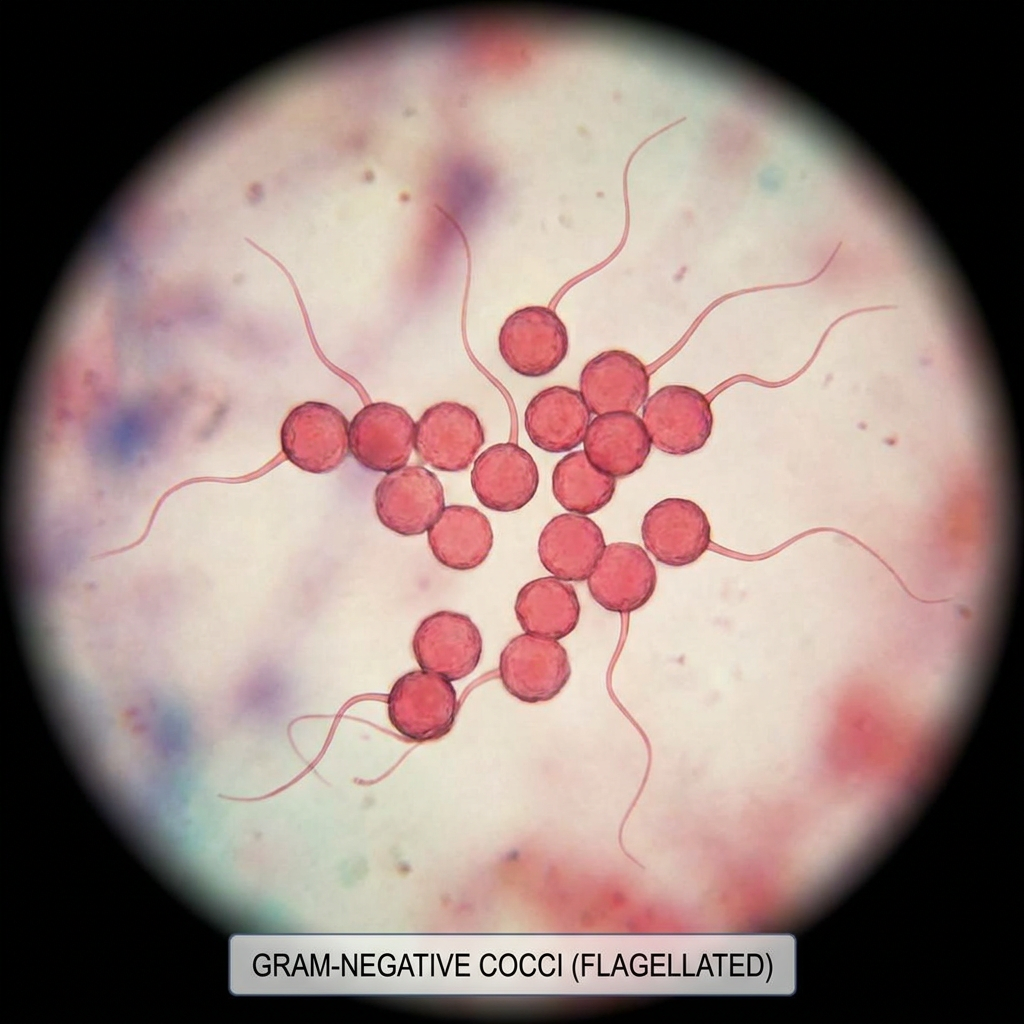
| Shape | Cocci |
| Mobility | Not Available |
| Flagellar presence | Yes |
| Number of membranes | Not Available |
| Ecology, Host, and Life Cycle | |
|---|---|
| Oxygen requirements | Not Available |
| Optimal temperature | Not Available |
| Temperature range | Not Available |
| Habitat | activated sludge |
| Biotic relationship | Not Available |
| Host(s) | Not Available |
| Cell arrangement | Not Available |
| Sporulation | Not Available |
| Energy source | Not Available |
| Pathogenicity | Not Available |
Gene Summary
Adenine Count
873177 bp
Thymine Count
875419 bp
Guanine Count
1838488 bp
Cytosine Count
1843143 bp
Genome Length
5431076 bp
Protein-coding Genes
5246 genes
Non-Coding Genes
152 genes
# of Chromosomes/Plasmids
1
Genes
| Name | Locus Tag | UniProt ID | Strand Orientation | Gene Start/End | Protein Molecular Weight |
|---|---|---|---|---|---|
| myo-inositol-1(or 4)-monophosphatase | SAMN04244548_04905 | Not Available | Negative | 4926876 - 4927691 | 28302.6 |
| transcriptional regulator, contains xre-family hth domain | SAMN04244548_04906 | Not Available | Negative | 4927776 - 4928135 | 13746.6 |
| nadph:quinone reductase | SAMN04244548_04907 | Not Available | Positive | 4928315 - 4929283 | 32986.2 |
| hypothetical protein | SAMN04244548_04908 | Not Available | Positive | 4929406 - 4930176 | 27675.2 |
| hypothetical protein | SAMN04244548_04909 | Not Available | Negative | 4930356 - 4931120 | 27158.2 |
| glycine betaine/proline transport system substrate-binding protein | SAMN04244548_04910 | Not Available | Positive | 4931186 - 4932184 | 35914.2 |
| membrane fusion protein, macrolide-specific efflux system | SAMN04244548_04911 | Not Available | Positive | 4932531 - 4933613 | 37162.1 |
| macrolide transport system atp-binding/permease protein | SAMN04244548_04912 | Not Available | Positive | 4933615 - 4935555 | 68051.9 |
| nickel/cobalt transporter regulator | SAMN04244548_04913 | Not Available | Positive | 4935606 - 4935887 | 10180.2 |
| hypothetical protein | SAMN04244548_04914 | Not Available | Negative | 4935948 - 4936298 | 12312.2 |
Pathways
0 pathways
No pathways found
No metabolic pathways have been associated with this bacterium yet.
Health Effects
No health effects information available for this bacterium.