Kingdom
Pseudomonadati
Phylum
Pseudomonadota
Class
Alphaproteobacteria
Order
Rhodobacterales
Family
Paracoccaceae
Genus
Paracoccus
Description
Taxonomy
| Kingdom | Pseudomonadati |
|---|---|
| Phylum | Pseudomonadota |
| Class | Alphaproteobacteria |
| Order | Rhodobacterales |
| Family | Paracoccaceae |
| Genus | Paracoccus |
| Species | Paracoccus pantotrophus |
| Strain | strain DSM 1403 |
Profile
| Physiology | |
|---|---|
| Gram staining properties | Not Available |
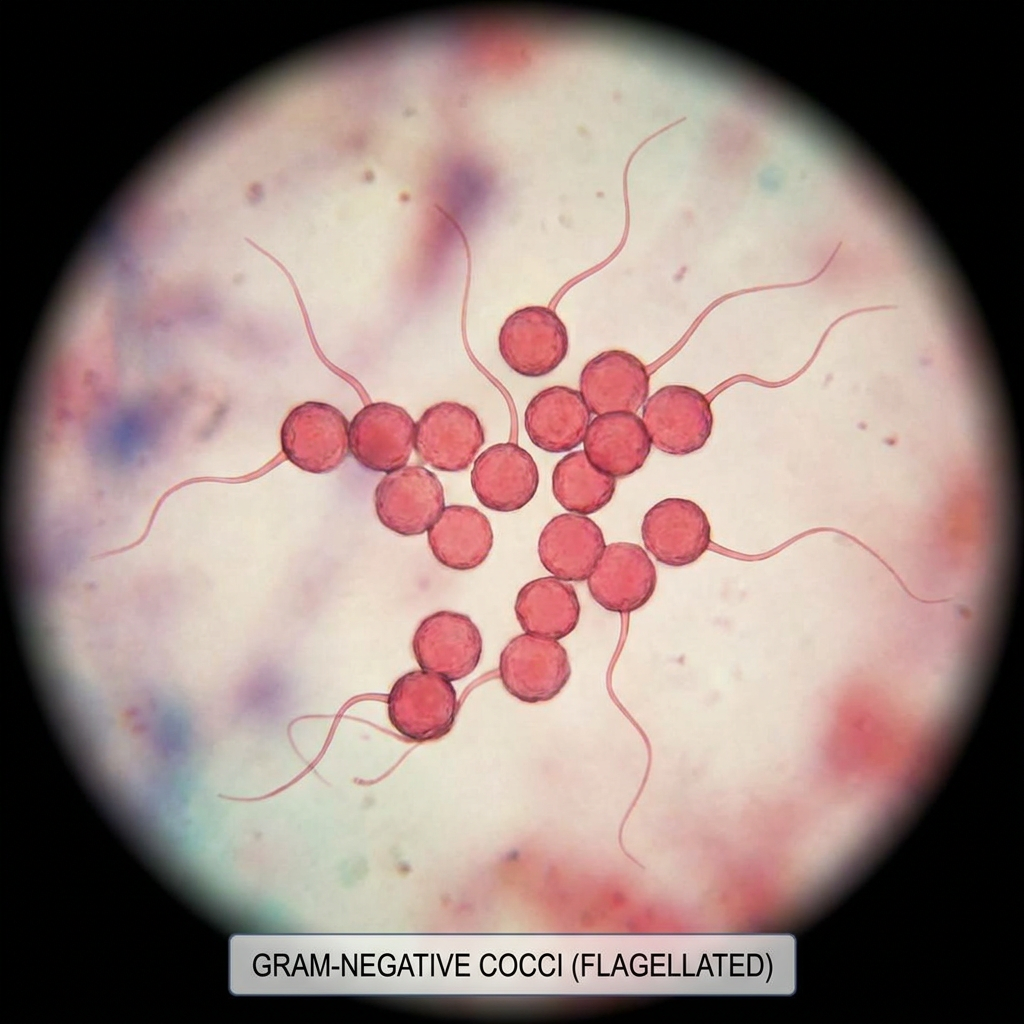
| Shape | Cocci |
| Mobility | Not Available |
| Flagellar presence | Yes |
| Number of membranes | Not Available |
| Ecology, Host, and Life Cycle | |
|---|---|
| Oxygen requirements | Not Available |
| Optimal temperature | Not Available |
| Temperature range | Not Available |
| Habitat | activated sludge |
| Biotic relationship | Not Available |
| Host(s) | Not Available |
| Cell arrangement | Not Available |
| Sporulation | Not Available |
| Energy source | Not Available |
| Pathogenicity | Not Available |
Gene Summary
Adenine Count
873177 bp
Thymine Count
875419 bp
Guanine Count
1838488 bp
Cytosine Count
1843143 bp
Genome Length
5431076 bp
Protein-coding Genes
5246 genes
Non-Coding Genes
152 genes
# of Chromosomes/Plasmids
1
Genes
| Name | Locus Tag | UniProt ID | Strand Orientation | Gene Start/End | Protein Molecular Weight |
|---|---|---|---|---|---|
| hypothetical protein | SAMN04244548_04855 | Not Available | Positive | 4877384 - 4877572 | 7040.09 |
| hypothetical protein | SAMN04244548_04856 | Not Available | Positive | 4877565 - 4877852 | 10415.3 |
| hypothetical protein | SAMN04244548_04857 | Not Available | Positive | 4877947 - 4878282 | 12648.1 |
| integrase core domain-containing protein | SAMN04244548_04858 | Not Available | Negative | 4878628 - 4878864 | 8625.97 |
| uncharacterized conserved protein, duf849 family | SAMN04244548_04859 | Not Available | Positive | 4878955 - 4879828 | 31446.0 |
| acyl-coa thioester hydrolase | SAMN04244548_04860 | Not Available | Positive | 4879833 - 4880246 | 14631.6 |
| putative spermidine/putrescine transport system substrate-binding protein | SAMN04244548_04861 | Not Available | Positive | 4880294 - 4881379 | 38223.9 |
| hypothetical protein | SAMN04244548_04862 | Not Available | Negative | 4881723 - 4882235 | 17998.6 |
| transcriptional regulator, tetr family | SAMN04244548_04863 | Not Available | Positive | 4882347 - 4882631 | 10640.8 |
| transcriptional repressor c-terminal | SAMN04244548_04864 | Not Available | Positive | 4882739 - 4882996 | 8928.94 |
Pathways
0 pathways
No pathways found
No metabolic pathways have been associated with this bacterium yet.
Health Effects
No health effects information available for this bacterium.