Kingdom
Pseudomonadati
Phylum
Pseudomonadota
Class
Alphaproteobacteria
Order
Rhodobacterales
Family
Paracoccaceae
Genus
Paracoccus
Description
Taxonomy
| Kingdom | Pseudomonadati |
|---|---|
| Phylum | Pseudomonadota |
| Class | Alphaproteobacteria |
| Order | Rhodobacterales |
| Family | Paracoccaceae |
| Genus | Paracoccus |
| Species | Paracoccus pantotrophus |
| Strain | strain DSM 1403 |
Profile
| Physiology | |
|---|---|
| Gram staining properties | Not Available |
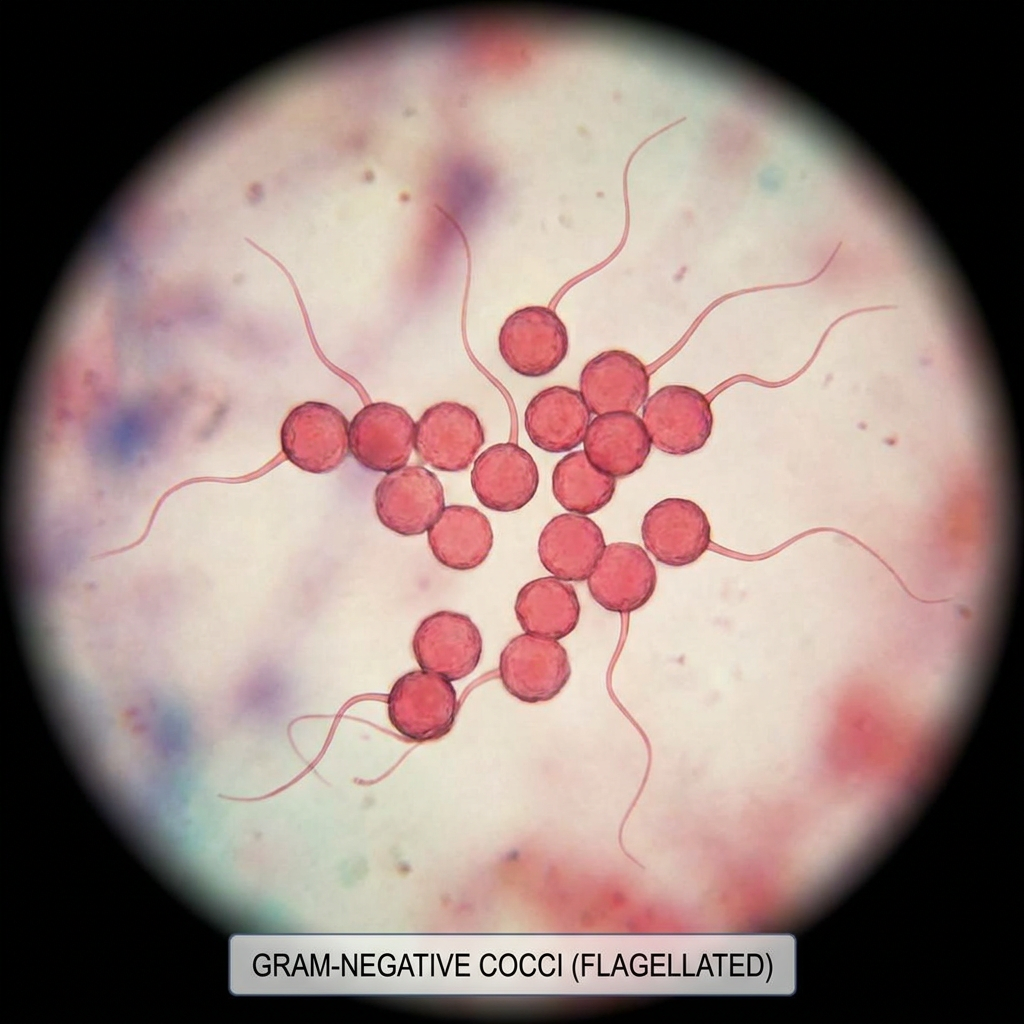
| Shape | Cocci |
| Mobility | Not Available |
| Flagellar presence | Yes |
| Number of membranes | Not Available |
| Ecology, Host, and Life Cycle | |
|---|---|
| Oxygen requirements | Not Available |
| Optimal temperature | Not Available |
| Temperature range | Not Available |
| Habitat | activated sludge |
| Biotic relationship | Not Available |
| Host(s) | Not Available |
| Cell arrangement | Not Available |
| Sporulation | Not Available |
| Energy source | Not Available |
| Pathogenicity | Not Available |
Gene Summary
Adenine Count
873177 bp
Thymine Count
875419 bp
Guanine Count
1838488 bp
Cytosine Count
1843143 bp
Genome Length
5431076 bp
Protein-coding Genes
5246 genes
Non-Coding Genes
152 genes
# of Chromosomes/Plasmids
1
Genes
| Name | Locus Tag | UniProt ID | Strand Orientation | Gene Start/End | Protein Molecular Weight |
|---|---|---|---|---|---|
| periplasmic nitrate reductase subunit napb | SAMN04244548_04805 | Not Available | Negative | 4831752 - 4832237 | 17959.6 |
| periplasmic nitrate reductase subunit napa apoprotein | SAMN04244548_04806 | Not Available | Negative | 4832210 - 4834705 | 92605.8 |
| periplasmic nitrate reductase chaperone napd | SAMN04244548_04807 | Not Available | Negative | 4834702 - 4835040 | 12122.7 |
| nitrate reductase nape | SAMN04244548_04808 | Not Available | Negative | 4835050 - 4835229 | 6686.37 |
| trap transporter, dctm subunit | SAMN04244548_04809 | Not Available | Negative | 4835653 - 4836942 | 45286.7 |
| trap-type c4-dicarboxylate transport system, small permease component | SAMN04244548_04810 | Not Available | Negative | 4836935 - 4837429 | 17985.5 |
| tripartite atp-independent transporter solute receptor, dctp family | SAMN04244548_04811 | Not Available | Negative | 4837436 - 4838404 | 34470.0 |
| phosphoribosyl transferase domain-containing protein | SAMN04244548_04812 | Not Available | Negative | 4838496 - 4839143 | 22961.8 |
| septum site-determining protein minc | SAMN04244548_04813 | Not Available | Positive | 4839432 - 4840178 | 26471.7 |
| septum site-determining protein mind | SAMN04244548_04814 | Not Available | Positive | 4840200 - 4841021 | 29526.7 |
Pathways
0 pathways
No pathways found
No metabolic pathways have been associated with this bacterium yet.
Health Effects
No health effects information available for this bacterium.