Kingdom
Pseudomonadati
Phylum
Pseudomonadota
Class
Alphaproteobacteria
Order
Rhodobacterales
Family
Paracoccaceae
Genus
Paracoccus
Description
Taxonomy
| Kingdom | Pseudomonadati |
|---|---|
| Phylum | Pseudomonadota |
| Class | Alphaproteobacteria |
| Order | Rhodobacterales |
| Family | Paracoccaceae |
| Genus | Paracoccus |
| Species | Paracoccus pantotrophus |
| Strain | strain DSM 1403 |
Profile
| Physiology | |
|---|---|
| Gram staining properties | Not Available |
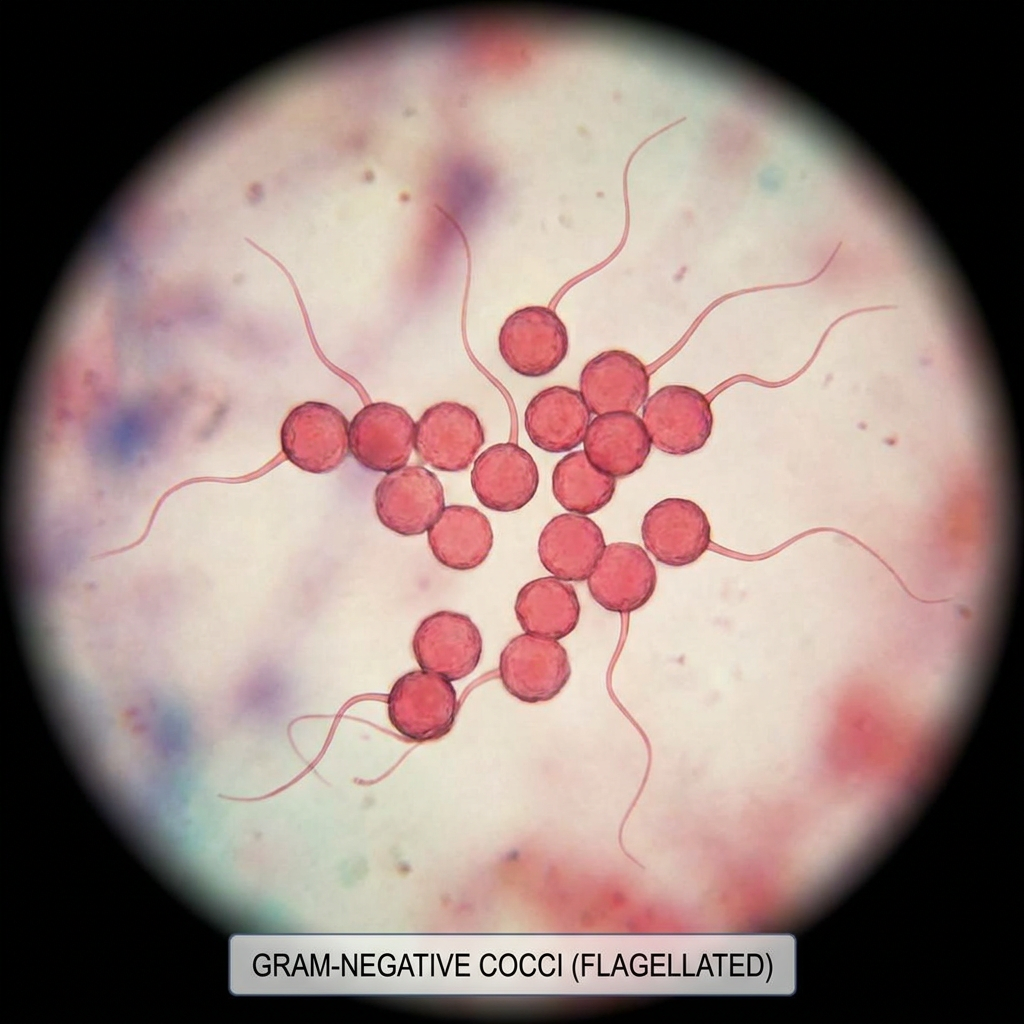
| Shape | Cocci |
| Mobility | Not Available |
| Flagellar presence | Yes |
| Number of membranes | Not Available |
| Ecology, Host, and Life Cycle | |
|---|---|
| Oxygen requirements | Not Available |
| Optimal temperature | Not Available |
| Temperature range | Not Available |
| Habitat | activated sludge |
| Biotic relationship | Not Available |
| Host(s) | Not Available |
| Cell arrangement | Not Available |
| Sporulation | Not Available |
| Energy source | Not Available |
| Pathogenicity | Not Available |
Gene Summary
Adenine Count
873177 bp
Thymine Count
875419 bp
Guanine Count
1838488 bp
Cytosine Count
1843143 bp
Genome Length
5431076 bp
Protein-coding Genes
5246 genes
Non-Coding Genes
152 genes
# of Chromosomes/Plasmids
1
Genes
| Name | Locus Tag | UniProt ID | Strand Orientation | Gene Start/End | Protein Molecular Weight |
|---|---|---|---|---|---|
| gst-like protein | SAMN04244548_04725 | Not Available | Negative | 4748432 - 4749307 | 32771.8 |
| nitt/taut family transport system atp-binding protein | SAMN04244548_04726 | Not Available | Positive | 4749604 - 4750413 | 29568.7 |
| nitt/taut family transport system permease protein | SAMN04244548_04727 | Not Available | Positive | 4750410 - 4751189 | 28769.8 |
| nitt/taut family transport system substrate-binding protein | SAMN04244548_04728 | Not Available | Positive | 4751204 - 4752205 | 34635.6 |
| lysr family transcriptional regulator, nitrogen assimilation regulatory protein | SAMN04244548_04729 | Not Available | Negative | 4752254 - 4753186 | 34029.3 |
| crotonobetainyl-coa:carnitine coa-transferase caib | SAMN04244548_04730 | Not Available | Positive | 4753292 - 4754479 | 42576.7 |
| hydroxymethylglutaryl-coa lyase | SAMN04244548_04731 | Not Available | Positive | 4754481 - 4755434 | 33153.8 |
| fmn-dependent dehydrogenase | SAMN04244548_04732 | Not Available | Negative | 4755263 - 4756096 | 29527.6 |
| peptidoglycan/lps o-acetylase oafa/yrhl, contains acyltransferase and sgnh-hydrolase domains | SAMN04244548_04733 | Not Available | Positive | 4756518 - 4757579 | 39720.4 |
| glycosyltransferase involved in cell wall bisynthesis | SAMN04244548_04734 | Not Available | Negative | 4757790 - 4758875 | 38671.9 |
Pathways
0 pathways
No pathways found
No metabolic pathways have been associated with this bacterium yet.
Health Effects
No health effects information available for this bacterium.