
Kingdom
Bacillati
Phylum
Actinomycetota
Class
Actinomycetes
Order
Geodermatophilales
Family
Geodermatophilaceae
Genus
Geodermatophilus
Description
Taxonomy
| Kingdom | Bacillati |
|---|---|
| Phylum | Actinomycetota |
| Class | Actinomycetes |
| Order | Geodermatophilales |
| Family | Geodermatophilaceae |
| Genus | Geodermatophilus |
| Species | Geodermatophilus obscurus |
| Strain | strain DSM 43161 |
Profile
| Physiology | |
|---|---|
| Gram staining properties | Negative |
| Shape | Cocci |
| Mobility | No |
| Flagellar presence | Yes |
| Number of membranes | Not Available |
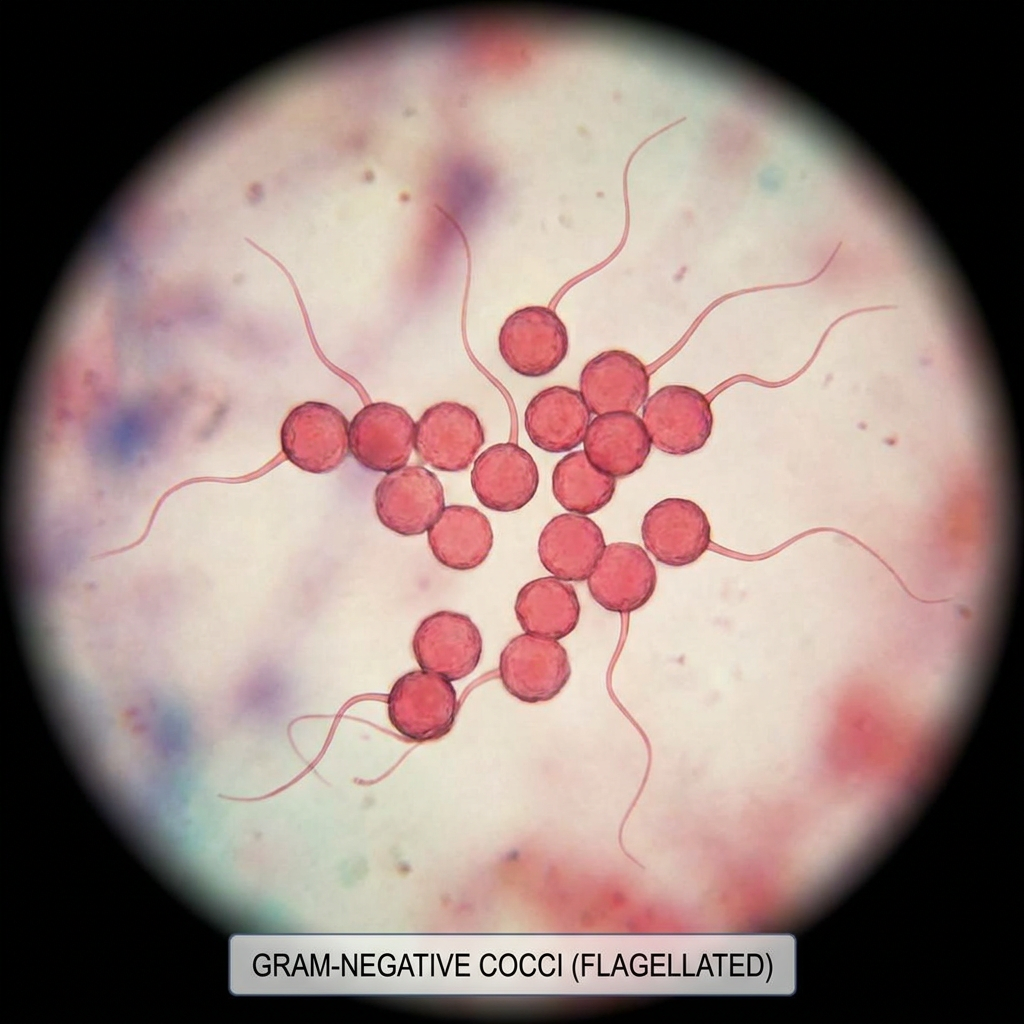
AI-generated image based on bacteria physiology
| Ecology, Host, and Life Cycle | |
|---|---|
| Oxygen requirements | Aerobic |
| Optimal temperature | 29 |
| Temperature range | Mesophilic |
| Habitat | rock varnish in deserts |
| Biotic relationship | Free living |
| Host(s) | Not Available |
| Cell arrangement | Filaments |
| Sporulation | Not Available |
| Energy source | Chemoorganotroph |
| Pathogenicity | Not Available |
Gene Summary
Adenine Count
Not Available
Thymine Count
Not Available
Guanine Count
Not Available
Cytosine Count
Not Available
Genome Length
Not Available
Protein-coding Genes
4697 genes
Non-Coding Genes
56 genes
# of Chromosomes/Plasmids
1
Genes
| Name | Locus Tag | UniProt ID | Strand Orientation | Gene Start/End | Protein Molecular Weight |
|---|---|---|---|---|---|
| histidine kinase-like atpase domain-containing protein | SAMN05660359_00595 | Not Available | Positive | 658507 - 658977 | 17015.0 |
| enamine deaminase rida, house cleaning of reactive enamine intermediates, yjgf/yer057c/uk114 family | SAMN05660359_00596 | Not Available | Negative | 658995 - 659477 | 16546.0 |
| pas domain s-box-containing protein/diguanylate cyclase (ggdef) domain-containing protein | SAMN05660359_00597 | Not Available | Positive | 659552 - 661795 | 78553.8 |
| pyruvate carboxylase | SAMN05660359_00598 | Not Available | Negative | 661823 - 665197 | 119670.0 |
| snoal-like polyketide cyclase | SAMN05660359_00599 | Not Available | Negative | 665286 - 665537 | 8524.48 |
| cyclomaltodextrinase | SAMN05660359_00600 | Not Available | Positive | 665818 - 667131 | 47386.9 |
| atp-binding cassette, subfamily c | SAMN05660359_00601 | Not Available | Negative | 667121 - 668767 | 55375.3 |
| atp-binding cassette, subfamily c, cydd | SAMN05660359_00602 | Not Available | Negative | 668764 - 670449 | 58020.3 |
| cytochrome bd-i ubiquinol oxidase subunit 2 apoprotein | SAMN05660359_00603 | Not Available | Negative | 670463 - 671497 | 38775.6 |
| cytochrome bd-i ubiquinol oxidase subunit 1 apoprotein | SAMN05660359_00604 | Not Available | Negative | 671500 - 672924 | 53370.6 |
Pathways
0 pathways
No pathways found
No metabolic pathways have been associated with this bacterium yet.
Health Effects
No health effects information available for this bacterium.
