
Kingdom
Pseudomonadati
Phylum
Pseudomonadota
Class
Alphaproteobacteria
Order
Rhodospirillales
Family
Rhodospirillaceae
Genus
Magnetospirillum
Description
Taxonomy
| Kingdom | Pseudomonadati |
|---|---|
| Phylum | Pseudomonadota |
| Class | Alphaproteobacteria |
| Order | Rhodospirillales |
| Family | Rhodospirillaceae |
| Genus | Magnetospirillum |
| Species | Magnetospirillum fulvum |
| Strain | No strain |
Profile
| Physiology | |
|---|---|
| Gram staining properties | Not Available |
| Shape | curved/spiral |
| Mobility | Not Available |
| Flagellar presence | Not Available |
| Number of membranes | Not Available |
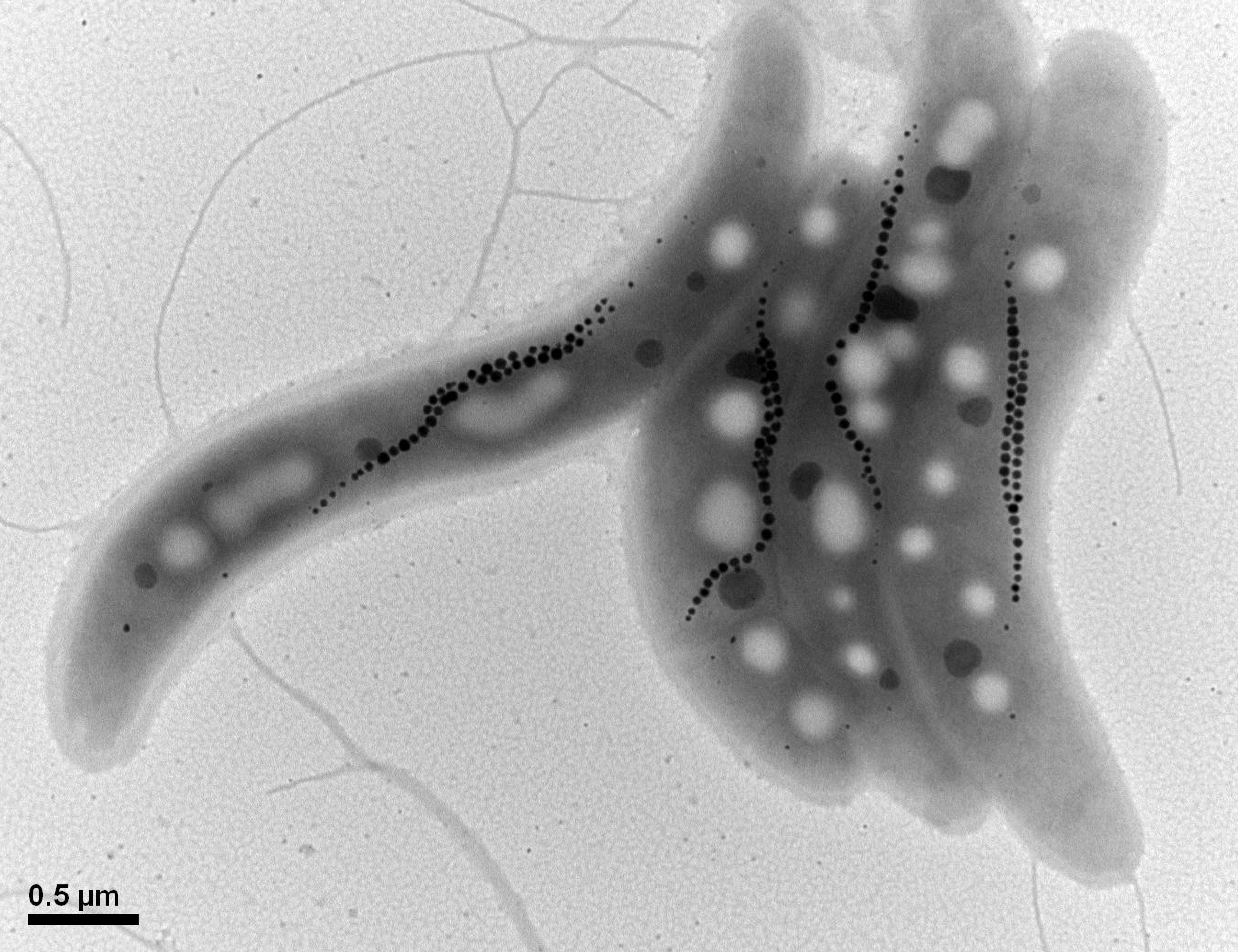
Image source: Wikipedia/Wikimedia
| Ecology, Host, and Life Cycle | |
|---|---|
| Oxygen requirements | anaerobic |
| Optimal temperature | Not Available |
| Temperature range | Not Available |
| Habitat | Not Available |
| Biotic relationship | Not Available |
| Host(s) | Not Available |
| Cell arrangement | Not Available |
| Sporulation | Not Available |
| Energy source | Not Available |
| Pathogenicity | Not Available |
Gene Summary
Adenine Count
673139 bp
Thymine Count
666885 bp
Guanine Count
1227974 bp
Cytosine Count
1233569 bp
Genome Length
3805060 bp
Protein-coding Genes
3326 genes
Non-Coding Genes
59 genes
# of Chromosomes/Plasmids
1
Genes
| Name | Locus Tag | UniProt ID | Strand Orientation | Gene Start/End | Protein Molecular Weight |
|---|---|---|---|---|---|
| tusa-related sulfurtransferase | SAMN04244559_02136 | Not Available | Negative | 2363256 - 2363486 | 8372.99 |
| hydrogenobyrinic acid a,c-diamide synthase (glutamine-hydrolysing) /cobyrinate a,c-diamide synthase | SAMN04244559_02137 | Not Available | Negative | 2363432 - 2364907 | 52126.4 |
| prokaryotic molybdopterin-containing oxidoreductase family, membrane subunit | SAMN04244559_02138 | Not Available | Negative | 2364904 - 2366064 | 40268.1 |
| prokaryotic molybdopterin-containing oxidoreductase family, iron-sulfur binding subunit | SAMN04244559_02139 | Not Available | Negative | 2366081 - 2366794 | 24644.8 |
| hypothetical protein | SAMN04244559_02140 | Not Available | Negative | 2366791 - 2367135 | 12084.7 |
| nadph-dependent glutamate synthase beta chain | SAMN04244559_02141 | Not Available | Negative | 2367141 - 2369054 | 68582.0 |
| fe-s oxidoreductase | SAMN04244559_02142 | Not Available | Negative | 2369068 - 2370570 | 54353.6 |
| nitrate reductase gamma subunit | SAMN04244559_02143 | Not Available | Negative | 2370563 - 2371267 | 25071.0 |
| trna 2-thiouridine synthesizing protein e | SAMN04244559_02144 | Not Available | Negative | 2371286 - 2371618 | 12283.8 |
| trna 2-thiouridine synthesizing protein b | SAMN04244559_02145 | Not Available | Negative | 2371647 - 2371949 | 10788.0 |
Pathways
0 pathways
No pathways found
No metabolic pathways have been associated with this bacterium yet.
Health Effects
No health effects information available for this bacterium.
