
Kingdom
Pseudomonadati
Phylum
Pseudomonadota
Class
Alphaproteobacteria
Order
Rhodobacterales
Family
Paracoccaceae
Genus
Paracoccus
Description
Taxonomy
| Kingdom | Pseudomonadati |
|---|---|
| Phylum | Pseudomonadota |
| Class | Alphaproteobacteria |
| Order | Rhodobacterales |
| Family | Paracoccaceae |
| Genus | Paracoccus |
| Species | Paracoccus chinensis |
| Strain | strain CGMCC 1.7655 |
Profile
| Physiology | |
|---|---|
| Gram staining properties | Gram-negative |
| Shape | ovoid |
| Mobility | Not Available |
| Flagellar presence | Yes |
| Number of membranes | Not Available |
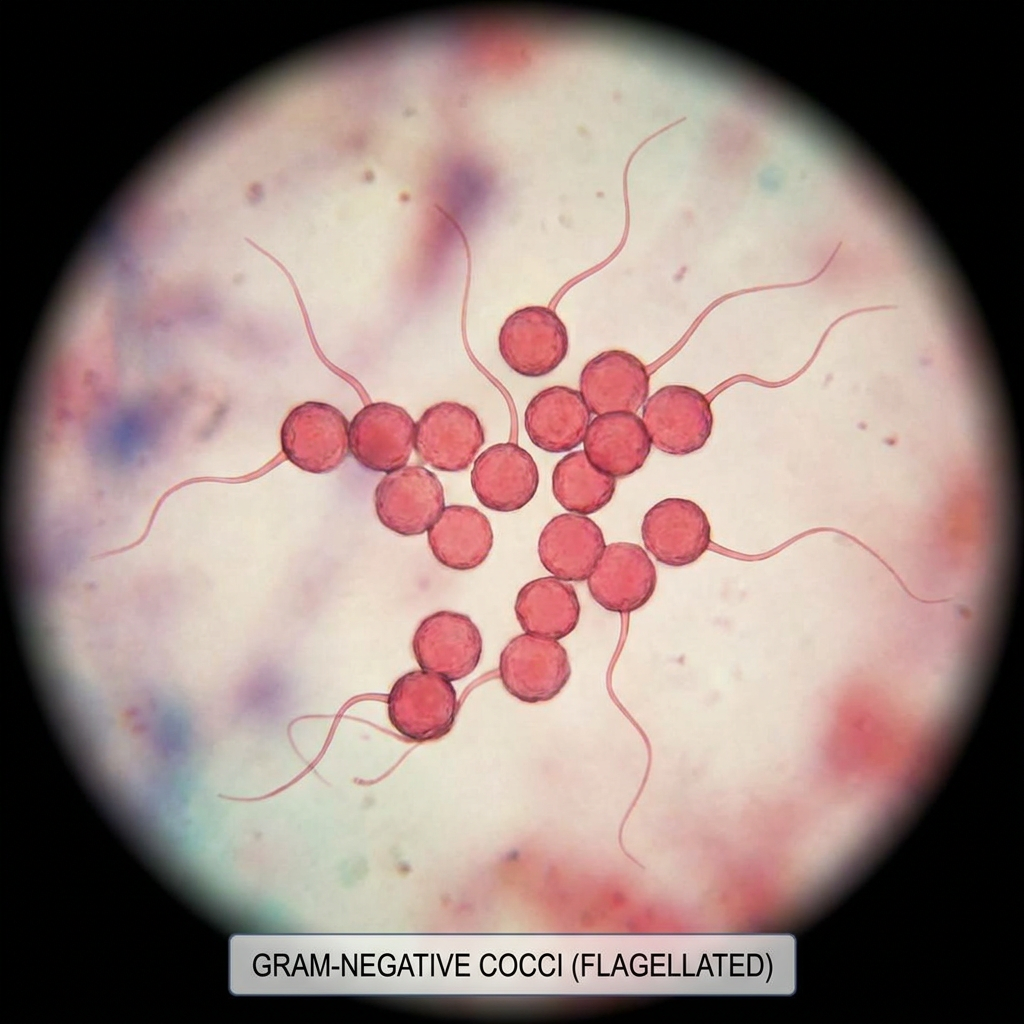
AI-generated image based on bacteria physiology
| Ecology, Host, and Life Cycle | |
|---|---|
| Oxygen requirements | aerobic |
| Optimal temperature | 32 |
| Temperature range | mesophilic |
| Habitat | Not Available |
| Biotic relationship | Not Available |
| Host(s) | Not Available |
| Cell arrangement | Not Available |
| Sporulation | non-spore-forming |
| Energy source | Not Available |
| Pathogenicity | Not Available |
Gene Summary
Adenine Count
578446 bp
Thymine Count
579732 bp
Guanine Count
1232228 bp
Cytosine Count
1242464 bp
Genome Length
3632870 bp
Protein-coding Genes
3503 genes
Non-Coding Genes
102 genes
# of Chromosomes/Plasmids
1
Genes
| Name | Locus Tag | UniProt ID | Strand Orientation | Gene Start/End | Protein Molecular Weight |
|---|---|---|---|---|---|
| n-acetylglucosamine-6-phosphate deacetylase | SAMN04487971_11179 | Not Available | Positive | 2544072 - 2545181 | 38178.4 |
| membrane fusion protein, multidrug efflux system | SAMN04487971_11180 | Not Available | Positive | 2545230 - 2546615 | 47276.0 |
| multidrug efflux pump | SAMN04487971_11181 | Not Available | Positive | 2546615 - 2549737 | 110547.0 |
| hemolysin-type calcium-binding repeat-containing protein | SAMN04487971_11182 | Not Available | Negative | 2549785 - 2550729 | 31522.9 |
| aspartate semialdehyde dehydrogenase | SAMN04487971_11183 | Not Available | Negative | 2551034 - 2552056 | 37428.8 |
| leucyl aminopeptidase | SAMN04487971_11184 | Not Available | Positive | 2552217 - 2553605 | 48373.8 |
| nlpc/p60 family protein | SAMN04487971_11185 | Not Available | Positive | 2553605 - 2554435 | 29371.1 |
| saccharopine dehydrogenase (nad+, l-lysine-forming) | SAMN04487971_11186 | Not Available | Positive | 2554498 - 2555559 | 38255.8 |
| saccharopine dehydrogenase (nadp+, l-glutamate forming) | SAMN04487971_11187 | Not Available | Positive | 2555556 - 2556695 | 41494.2 |
| glucose/arabinose dehydrogenase, beta-propeller fold | SAMN04487971_11188 | Not Available | Positive | 2556887 - 2558074 | 41821.2 |
Pathways
0 pathways
No pathways found
No metabolic pathways have been associated with this bacterium yet.
Health Effects
No health effects information available for this bacterium.