
Kingdom
Pseudomonadati
Phylum
Pseudomonadota
Class
Alphaproteobacteria
Order
Rhodobacterales
Family
Paracoccaceae
Genus
Paracoccus
Description
Taxonomy
| Kingdom | Pseudomonadati |
|---|---|
| Phylum | Pseudomonadota |
| Class | Alphaproteobacteria |
| Order | Rhodobacterales |
| Family | Paracoccaceae |
| Genus | Paracoccus |
| Species | Paracoccus chinensis |
| Strain | strain CGMCC 1.7655 |
Profile
| Physiology | |
|---|---|
| Gram staining properties | Gram-negative |
| Shape | ovoid |
| Mobility | Not Available |
| Flagellar presence | Yes |
| Number of membranes | Not Available |
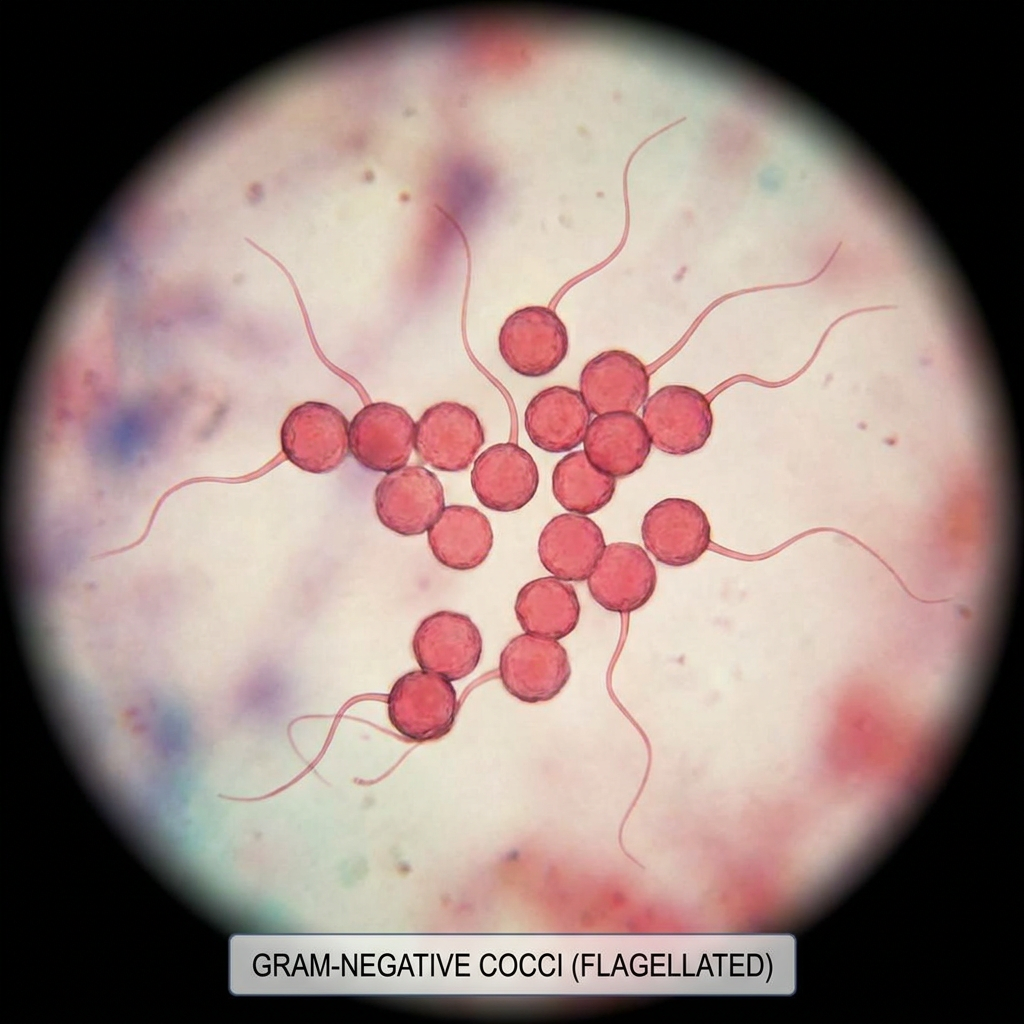
AI-generated image based on bacteria physiology
| Ecology, Host, and Life Cycle | |
|---|---|
| Oxygen requirements | aerobic |
| Optimal temperature | 32 |
| Temperature range | mesophilic |
| Habitat | Not Available |
| Biotic relationship | Not Available |
| Host(s) | Not Available |
| Cell arrangement | Not Available |
| Sporulation | non-spore-forming |
| Energy source | Not Available |
| Pathogenicity | Not Available |
Gene Summary
Adenine Count
578446 bp
Thymine Count
579732 bp
Guanine Count
1232228 bp
Cytosine Count
1242464 bp
Genome Length
3632870 bp
Protein-coding Genes
3503 genes
Non-Coding Genes
102 genes
# of Chromosomes/Plasmids
1
Genes
| Name | Locus Tag | UniProt ID | Strand Orientation | Gene Start/End | Protein Molecular Weight |
|---|---|---|---|---|---|
| peptidase family m48 | SAMN04487971_1099 | Not Available | Positive | 2195478 - 2196272 | 27500.7 |
| acetolactate synthase, small subunit | SAMN04487971_10910 | Not Available | Negative | 2196439 - 2196999 | 20127.2 |
| acetolactate synthase, large subunit | SAMN04487971_10911 | Not Available | Negative | 2197012 - 2198775 | 64220.2 |
| arginine-trna-protein transferase | SAMN04487971_10912 | Not Available | Negative | 2198929 - 2199741 | 30838.7 |
| glutamate-ammonia-ligase adenylyltransferase | SAMN04487971_10913 | Not Available | Positive | 2200004 - 2202871 | 103580.0 |
| glycosyltransferase, catalytic subunit of cellulose synthase and poly-beta-1,6-n-acetylglucosamine synthase | SAMN04487971_10914 | Not Available | Negative | 2203010 - 2205070 | 76308.5 |
| carbamoyl-phosphate synthase small subunit | SAMN04487971_10915 | Not Available | Negative | 2205141 - 2206292 | 41456.1 |
| hypothetical protein | SAMN04487971_10916 | Not Available | Positive | 2206408 - 2206869 | 16673.1 |
| cytidylate kinase | SAMN04487971_10917 | Not Available | Negative | 2206963 - 2207550 | 20332.3 |
| glycine/d-amino acid oxidase | SAMN04487971_10918 | Not Available | Negative | 2207631 - 2208803 | 42153.1 |
Pathways
0 pathways
No pathways found
No metabolic pathways have been associated with this bacterium yet.
Health Effects
No health effects information available for this bacterium.