Kingdom
Pseudomonadati
Phylum
Pseudomonadota
Class
Gammaproteobacteria
Order
Moraxellales
Family
Moraxellaceae
Genus
Psychrobacter
Description
Taxonomy
| Kingdom | Pseudomonadati |
|---|---|
| Phylum | Pseudomonadota |
| Class | Gammaproteobacteria |
| Order | Moraxellales |
| Family | Moraxellaceae |
| Genus | Psychrobacter |
| Species | Psychrobacter pacificensis |
| Strain | strain DSM 23406 |
Profile
| Physiology | |
|---|---|
| Gram staining properties | Not Available |
| Shape | Not Available |
| Mobility | Not Available |
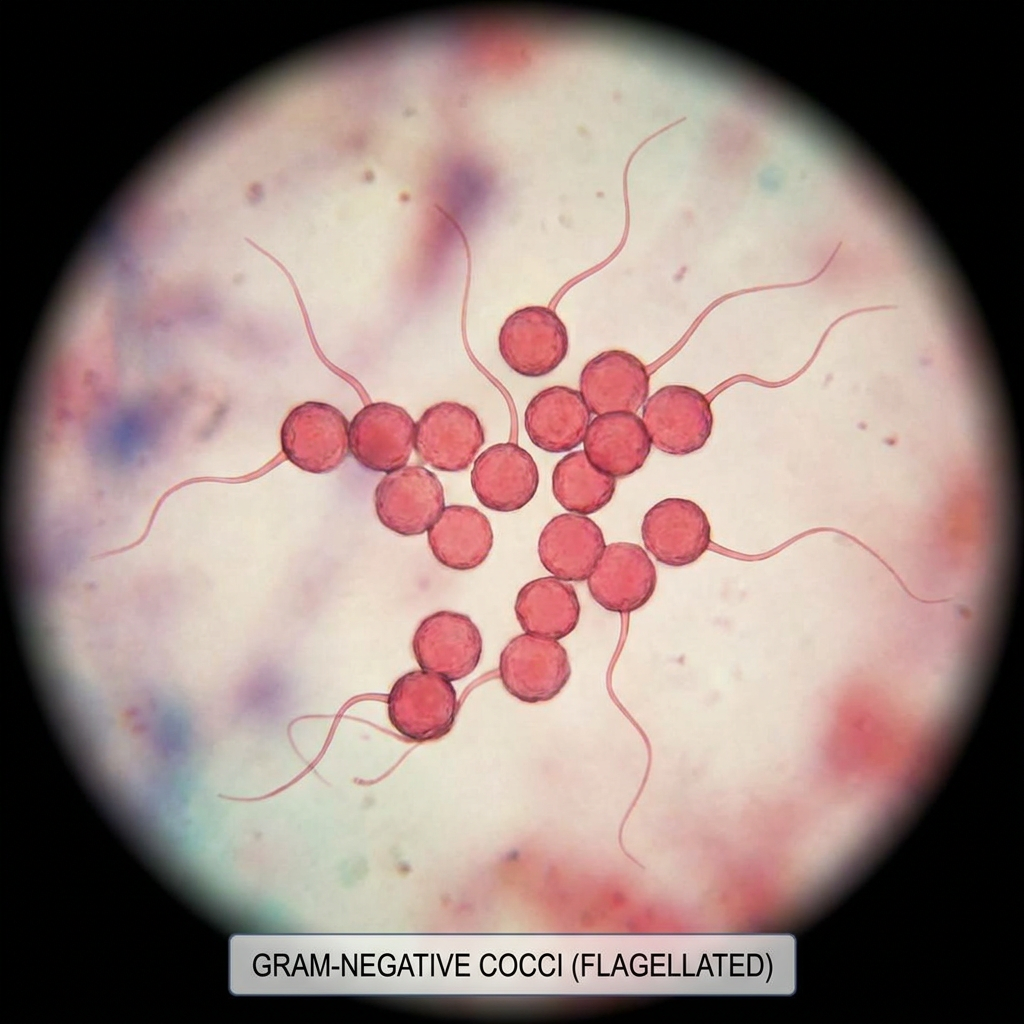
| Flagellar presence | Yes |
| Number of membranes | Not Available |
| Ecology, Host, and Life Cycle | |
|---|---|
| Oxygen requirements | Not Available |
| Optimal temperature | Not Available |
| Temperature range | Not Available |
| Habitat | marine-biofouling material |
| Biotic relationship | Not Available |
| Host(s) | Not Available |
| Cell arrangement | Not Available |
| Sporulation | Not Available |
| Energy source | Not Available |
| Pathogenicity | Not Available |
Gene Summary
Adenine Count
858285 bp
Thymine Count
856280 bp
Guanine Count
686972 bp
Cytosine Count
659353 bp
Genome Length
3062581 bp
Protein-coding Genes
2622 genes
Non-Coding Genes
89 genes
# of Chromosomes/Plasmids
1
Genes
| Name | Locus Tag | UniProt ID | Strand Orientation | Gene Start/End | Protein Molecular Weight |
|---|---|---|---|---|---|
| two-component system, ompr family, sensor histidine kinase qsec | SAMN05660405_00951 | Not Available | Positive | 1107026 - 1108510 | 55849.1 |
| predicted fe2+/mn2+ transporter, vit1/ccc1 family | SAMN05660405_00952 | Not Available | Positive | 1108589 - 1109287 | 24356.6 |
| short-chain dehydrogenase | SAMN05660405_00953 | Not Available | Negative | 1109326 - 1110177 | 30913.2 |
| taurine dioxygenase, alpha-ketoglutarate-dependent | SAMN05660405_00954 | Not Available | Negative | 1110255 - 1111238 | 36371.0 |
| long-chain acyl-coa synthetase (amp-forming) | SAMN05660405_00955 | Not Available | Negative | 1111278 - 1112900 | 58206.2 |
| thermostable hemolysin | SAMN05660405_00956 | Not Available | Negative | 1112957 - 1113808 | 31429.6 |
| hypothetical protein | SAMN05660405_00957 | Not Available | Negative | 1113942 - 1114061 | 4582.73 |
| hypothetical protein | SAMN05660405_00958 | Not Available | Positive | 1114200 - 1114352 | 5494.53 |
| glutathione s-transferase | SAMN05660405_00959 | Not Available | Positive | 1114391 - 1115038 | 25133.4 |
| transposase and inactivated derivatives | SAMN05660405_00960 | Not Available | Negative | 1115154 - 1115579 | 16834.0 |
Pathways
0 pathways
No pathways found
No metabolic pathways have been associated with this bacterium yet.
Health Effects
No health effects information available for this bacterium.