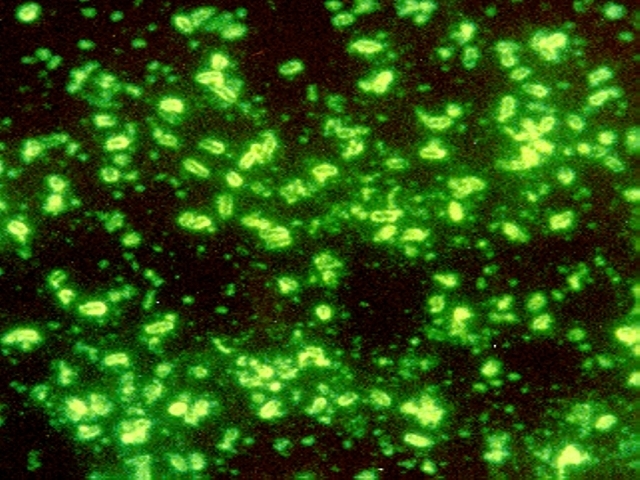
Yersinia frederiksenii

Rod

Kingdom

Pseudomonadati

Phylum

Pseudomonadota

Class

Gammaproteobacteria

Order

Enterobacterales

Family

Yersiniaceae

Genus

Yersinia

Description

Yersinia frederiksenii is a Gram-negative bacterium characterized by its rod shape and the presence of flagella, which contribute to its motility. This species is found in various environments, including food sources, indicating its potential role in foodborne illnesses or contamination. It has been documented to infect Homo sapiens and other Metazoa, suggesting its capability to interact with diverse biological systems. The genetic composition of Yersinia frederiksenii includes two replicons, which may be relevant for its adaptability and survival in various ecological niches. The presence of multiple replicons can provide advantages in metabolic diversity and resilience against environmental stresses. The two specific accession numbers, CQEN00000000.1 and CQEP00000000.1, relate to the genetic sequences associated with this bacterium, which can be essential for further research into its pathogenic mechanisms, ecological roles, and potential impacts on human health. Considering its habitat in food and the capability to infect hosts, Yersinia frederiksenii may serve as an indicator of environmental and food safety issues. The understanding of its ecological interactions and pathogenic potential is crucial for developing strategies to monitor and control its presence in food systems, highlighting the need for continued research into its role in microbiological safety and public health.

Taxonomy

KingdomPseudomonadati
PhylumPseudomonadota
ClassGammaproteobacteria
OrderEnterobacterales
FamilyYersiniaceae
GenusYersinia
SpeciesYersinia frederiksenii
StrainNo strain

Profile

Physiology
Gram staining propertiesNegative
ShapeRod
MobilityNot Available
Flagellar presenceYes
Number of membranesNot Available
Image of Yersinia frederiksenii
Image source: Wikipedia/Wikimedia
Ecology, Host, and Life Cycle
Oxygen requirementsNot Available
Optimal temperatureNot Available
Temperature rangeNot Available
Habitatenvironment; food
Biotic relationshipNot Available
Host(s)Homo sapiens, Metazoa
Cell arrangementNot Available
SporulationNot Available
Energy sourceNot Available
PathogenicityNot Available

Genome Summary

Yersinia frederiksenii genome assembly 4821_6#3, scaffold

Gene Summary

Adenine Count

1333504 bp

Thymine Count

1344869 bp

Guanine Count

1236546 bp

Cytosine Count

1202346 bp

Genome Length

5118009 bp

Protein-coding Genes

4452 genes

Non-Coding Genes

262 genes

# of Chromosomes/Plasmids

2

Genes

NameLocus TagUniProt IDStrand OrientationGene Start/EndProtein Molecular Weight
methionyl-trna synthetaseERS008521_04703A1JTX6Negative5034346 - 503637375669.2
putative atpaseERS008521_04704P0AF09Positive5036655 - 503776740012.7
invasinERS008521_04705Not AvailablePositive5037896 - 504012774403.7
uncharacterised proteinERS008521_04706Not AvailablePositive5040282 - 50405369981.41
luxr family transcriptional regulatory proteinERS008521_04707Not AvailablePositive5040581 - 504121024304.8
putative glycosyl hydrolaseERS008521_04708P33363Negative5041349 - 504371885885.4
sodium:galactoside symporter family proteinERS008521_04709P75683Negative5043722 - 504511051115.3
uncharacterised proteinERS008521_04710Not AvailableNegative5045239 - 50454307236.75
putative membrane transport proteinERS008521_04711Not AvailableNegative5046202 - 504667817238.2
utra domainERS008521_04712Not AvailablePositive5046834 - 50470979586.55

Displaying genes 4661 – 4670 of 9075 in total

Pathways

0 pathways

No pathways found

No metabolic pathways have been associated with this bacterium yet.

Metabolites

584 records
Metabolite IDMetabolite nameStructureCAS number
BASm0000217alpha-ribazoleC14H18N2O4Chemical structure of alpha-ribazoleNot available
Average278.3037Da
Monoisotopic278.126657074Da
BASm0000237(R)-4'-phosphopantothenateC9H18NO8PChemical structure of (R)-4'-phosphopantothenateNot available
Average299.2149Da
Monoisotopic299.0770031Da
BASm00002502,5-didehydro-D-gluconateC6H7O7Chemical structure of 2,5-didehydro-D-gluconate53736-12-2
Average191.1156Da
Monoisotopic191.019177578Da
BASm00002512-dehydropantoateC6H9O4Chemical structure of 2-dehydropantoateNot available
Average145.1333Da
Monoisotopic145.050083776Da
BASm00002593alpha,12alpha-dihydroxy-7-oxo-5beta-cholanateC24H37O5Chemical structure of 3alpha,12alpha-dihydroxy-7-oxo-5beta-cholanateNot available
Average405.556Da
Monoisotopic405.264647871Da
BASm0000272(E)-4-coumarateC9H7O3Chemical structure of (E)-4-coumarateNot available
Average163.1501Da
Monoisotopic163.0395191Da
BASm0000274aldehydo-D-galacturonateC6H9O7Chemical structure of aldehydo-D-galacturonateNot available
Average193.132Da
Monoisotopic193.0353762Da
BASm0000377(S)-malateC4H4O5Chemical structure of (S)-malateNot available
Average132.0716Da
Monoisotopic132.005873238Da
BASm0000387(6R)-5,10-methylene-5,6,7,8-tetrahydrofolateC20H21N7O6Chemical structure of (6R)-5,10-methylene-5,6,7,8-tetrahydrofolateNot available
Average455.432Da
Monoisotopic455.1564286Da
BASm0000401(S)-2-succinylamino-6-oxoheptanedioateC11H12NO8Chemical structure of (S)-2-succinylamino-6-oxoheptanedioateNot available
Average286.218Da
Monoisotopic286.0579371Da

Displaying 1–10 of 584 metabolites

Health Effects

No health effects information available for this bacterium.